
Cannabis Education
Medicinal Cannabis Consultant: Role, Responsibilities and Patient Safety in Australia
Aug
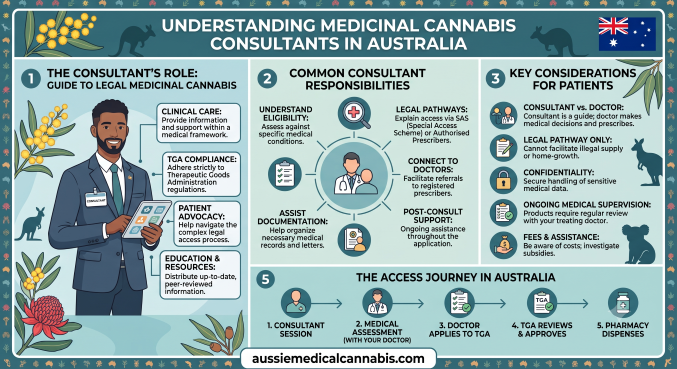
A medicinal cannabis consultant generally refers to a healthcare professional who provides information, clinical assessment, or ongoing care relating to medicinal cannabis within their professional scope.
In Australia medicinal cannabis consultant is not itself a single nationally protected healthcare profession. Depending on the setting, the person may be a medical practitioner, specialist, pharmacist, nurse practitioner, or another appropriately qualified healthcare professional.
Medicinal cannabis is regulated within Australia’s broader therapeutic-goods and medicines framework. The Therapeutic Goods Administration (TGA) oversees therapeutic goods nationally, while state and territory laws can also affect prescribing and supply.
What Does a Medicinal Cannabis Consultant Do?
A qualified healthcare professional involved in medicinal cannabis care may:
- Review a patient’s medical history
- Consider current medicines and possible interactions
- Discuss available scientific evidence
- Explain potential benefits and risks
- Monitor treatment outcomes
- Review adverse effects
- Provide general medicine-safety information
Clinical decisions should be based on the patient’s circumstances and available evidence rather than simply choosing a cannabis “strain.”
CBD and THC
Two of the best-known cannabinoids are CBD (cannabidiol) and THC (tetrahydrocannabinol).
| Feature | CBD | THC |
|---|---|---|
| Intoxicating | Generally no | Yes |
| Psychoactive effects | Generally absent | Possible |
| Research areas | Certain neurological conditions and other applications | Pain, nausea, spasticity and other areas |
| Potential medicine interactions | Yes | Yes |
THC can temporarily affect concentration, coordination, reaction time and judgement, which is particularly important for activities such as driving.
Patient Safety
Medicinal cannabis can cause adverse effects. Depending on the product and individual, these may include:
- Drowsiness
- Dizziness
- Fatigue
- Dry mouth
- Reduced concentration
- Changes in appetite
Cannabinoids can also interact with other medicines. A healthcare professional can therefore consider a person’s existing medicines and medical history when assessing safety.
Australia’s Regulatory Framework
Australia’s medicinal cannabis system includes regulatory pathways administered by the TGA, including the Special Access Scheme and Authorised Prescriber Scheme. Clinical trials are another pathway through which medicinal cannabis products may be investigated.
Many medicinal cannabis products supplied in Australia are unapproved therapeutic goods, meaning they are not included in the Australian Register of Therapeutic Goods (ARTG).
The TGA also establishes standards relating to medicinal cannabis product quality, including requirements under Therapeutic Goods Order No. 93 (TGO 93).
What Should Patients Look For in a Healthcare Professional?
For safety, patients should look for an appropriately qualified and registered healthcare professional rather than relying solely on a person describing themselves as a “cannabis consultant.”
Useful considerations include:
- Appropriate Australian healthcare registration
- Experience relevant to the patient’s medical circumstances
- Clear explanation of benefits and risks
- Transparent discussion of evidence
- Attention to medicine interactions
- Appropriate follow-up and monitoring
Frequently Asked Questions
Is “medicinal cannabis consultant” an official profession?
Not as one single nationally defined profession. The term can describe different healthcare professionals working within their respective professional scopes.
Does a consultant only discuss cannabis strains?
No. Evidence-based clinical assessment focuses on factors such as cannabinoid composition, medical history, potential benefits, risks and medicine interactions.
Can medicinal cannabis cause side effects?
Yes. Drowsiness, dizziness, fatigue, dry mouth and reduced concentration are among possible adverse effects.
Is medicinal cannabis regulated in Australia?
Yes. Medicinal cannabis is regulated through Australia’s therapeutic-goods framework, together with applicable state and territory requirements.
Where can reliable information be found?
The Therapeutic Goods Administration provides current information about medicinal cannabis, regulatory pathways, product standards and safety.
Conclusion
A medicinal cannabis consultant is generally a healthcare professional who provides clinical information, assessment or ongoing care relating to medicinal cannabis. In Australia, safe medicinal cannabis care depends on qualified healthcare professionals, evidence-based decision-making, product-quality requirements and appropriate regulatory oversight.
For current information, consult the Therapeutic Goods Administration – Medicinal Cannabis and Australian Government Department of Health, Disability and Ageing – Medicinal Cannabis.
