
Cannabis Education
Hash Oil Australia: An Educational Guide
Aug
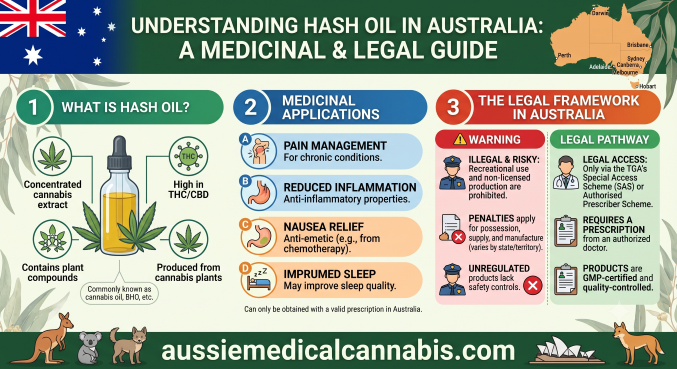
Hash oil is a general term used for concentrated cannabis extracts containing cannabinoids such as tetrahydrocannabinol (THC) and/or cannabidiol (CBD). The term can refer to products with very different chemical compositions, so it should not automatically be treated as a description of one specific medicine.
In Australia, cannabis-derived products exist within a tightly regulated legal framework. Some cannabis medicines are available as regulated therapeutic products, while unregulated cannabis extracts are not equivalent to medicinal cannabis products supplied through Australia’s healthcare system.
Understanding the difference is important when researching hash oil Australia, cannabis oil, CBD oil, and medicinal cannabis.
What Is Hash Oil?
Hash oil is a concentrated cannabis extract.
Depending on the particular product, it may contain varying amounts of:
- THC
- CBD
- Other cannabinoids
- Terpenes
- Other naturally occurring cannabis compounds
Because different extraction and manufacturing processes can produce substantially different products, the term “hash oil” does not describe a standardised medicine.
A laboratory-tested medicinal cannabis product provides considerably more information about its cannabinoid composition than an informal product description.
Hash Oil vs Cannabis Oil
The terms hash oil and cannabis oil are sometimes used interchangeably, but they can refer to different types of products.
| Term | General Meaning |
|---|---|
| Hash oil | Informal term generally associated with concentrated cannabis extracts |
| Cannabis oil | Broad term covering oils containing cannabis-derived cannabinoids |
| CBD oil | Oil containing cannabidiol, with THC content depending on the product |
| Medicinal cannabis oil | A regulated therapeutic product used within Australia’s medical framework |
The name of a product alone is therefore insufficient to determine its composition or safety.
THC and CBD in Cannabis Oils
The two best-known cannabinoids are THC and CBD.
THC
THC is the primary psychoactive cannabinoid in cannabis. It can affect:
- Attention
- Reaction time
- Coordination
- Memory
- Judgement
- Perception
CBD
CBD is generally considered non-intoxicating. However, this does not mean that CBD products are completely free of side effects or medicine interactions.
Both cannabinoids continue to be investigated for potential therapeutic applications.
Is Hash Oil Legal in Australia?
Australian cannabis laws distinguish between regulated medicinal cannabis and unregulated cannabis products.
The Therapeutic Goods Administration regulates medicinal cannabis within Australia’s therapeutic-goods framework. Some cannabis-derived medicines are included in the Australian Register of Therapeutic Goods, while many medicinal cannabis products are supplied through regulated pathways for unapproved therapeutic goods.
The legality of a particular cannabis product depends on factors including:
- Its composition
- Intended use
- Regulatory status
- How it is supplied
- Applicable Commonwealth law
- State or territory legislation
Consequently, the phrase “hash oil” alone cannot determine whether a particular product is lawful.
Medicinal Cannabis Oil in Australia
Australia has a regulated framework for medicinal cannabis.
Products may contain:
- CBD
- THC
- CBD and THC
- Other cannabinoids
Medicinal cannabis products can be supplied through regulated healthcare pathways, subject to the applicable requirements.
The TGA provides information about pathways including the Special Access Scheme and Authorised Prescriber Scheme.
This medical framework is different from a recreational cannabis retail system.
Why Product Quality Matters
Cannabis extracts can vary significantly in cannabinoid concentration.
Unregulated products may not provide reliable information about:
- THC concentration
- CBD concentration
- Contaminants
- Manufacturing conditions
- Product consistency
- Storage conditions
Regulated therapeutic products are subject to applicable quality and manufacturing requirements.
Australia’s Therapeutic Goods Order No. 93 (TGO 93) establishes standards relating to medicinal cannabis products.
Potential Side Effects
Cannabinoid-containing products can cause adverse effects.
Possible effects include:
- Drowsiness
- Dizziness
- Fatigue
- Dry mouth
- Reduced concentration
- Changes in appetite
THC-containing products can additionally cause temporary impairment of:
- Coordination
- Reaction time
- Judgement
- Memory
- Attention
Individual responses vary depending on the product and person.
Medicine Interactions
CBD and THC can interact with other medicines.
This is particularly important for people taking multiple prescription medicines.
Healthcare professionals may consider:
- Current medicines
- Medical history
- Liver function
- Potential drug interactions
- Previous treatment responses
before determining whether a cannabinoid medicine is appropriate.
Hash Oil and Driving
THC can affect skills necessary for safe driving.
Potential effects include:
- Slower reaction time
- Reduced attention
- Impaired coordination
- Altered judgement
Australian driving laws vary between states and territories. People using THC-containing medicinal cannabis should understand the laws that apply in their jurisdiction and discuss driving safety with their healthcare professional.
Medical Cannabis vs Unregulated Cannabis Oil
| Feature | Regulated Medicinal Cannabis | Unregulated Cannabis Oil |
| Product standards | Subject to applicable regulatory requirements | May be unknown |
| Cannabinoid information | Generally specified | May be unreliable |
| Medical oversight | Healthcare framework | Not necessarily |
| Manufacturing controls | Applicable requirements | May be unknown |
| Safety monitoring | Regulatory framework applies | Limited |
This distinction is important when discussing cannabis oil in Australia.
Current Medical Research
Researchers continue studying cannabinoids for several medical conditions.
Areas of research include:
- Certain forms of treatment-resistant epilepsy
- Chronic pain
- Multiple sclerosis-related symptoms
- Chemotherapy-associated nausea and vomiting
- Selected palliative-care symptoms
The strength of evidence varies substantially between conditions and formulations.
Importantly, evidence concerning a particular cannabinoid medicine should not automatically be applied to every cannabis extract marketed as “hash oil.”
Australian Regulatory Authorities
Several organisations have responsibilities relevant to medicinal cannabis.
Therapeutic Goods Administration
The TGA regulates therapeutic goods and provides information about medicinal cannabis products and regulatory pathways.
Office of Drug Control
The Office of Drug Control (ODC) administers important aspects of Australia’s controlled-drug framework, including licensing arrangements for medicinal cannabis cultivation and production.
State and Territory Authorities
State and territory governments also have responsibilities involving medicines, controlled substances, prescribing, dispensing, and enforcement.
Where to Learn More
For authoritative information, consult: https://aussiemedicalcannabis.com/
- Therapeutic Goods Administration – Medicinal Cannabis
- Australian Government Department of Health, Disability and Ageing – Medicinal Cannabis
- Office of Drug Control – Medicinal Cannabis
- Healthdirect Australia
PubMed Research
Frequently Asked Questions
1. What is hash oil?
Hash oil is an informal term for concentrated cannabis extracts that can contain cannabinoids such as THC and CBD.
2. Is hash oil the same as medicinal cannabis oil?
Not necessarily. Medicinal cannabis products are regulated therapeutic products with specified compositions and applicable quality requirements. “Hash oil” is a broad informal term that does not guarantee a particular composition or regulatory status.
3. Is cannabis oil legal in Australia?
Some cannabis-derived medicines are legally supplied within Australia’s regulated medicinal cannabis framework. The legal status of an individual product depends on its composition, regulatory status, intended use, and applicable laws.
4. Can cannabis oil cause side effects?
Yes. Possible effects include drowsiness, dizziness, fatigue, dry mouth and reduced concentration. THC-containing products can also temporarily impair coordination and judgement.
5. Does CBD oil contain THC?
It depends on the specific formulation. Some CBD products contain little or no THC, while others contain both CBD and THC. Product composition should be verified from reliable regulatory or product information.
6. Is hash oil stronger than ordinary cannabis?
Concentrated cannabis extracts can contain substantially higher cannabinoid concentrations than plant material, but products vary widely. The term “hash oil” does not establish a specific potency.
Conclusion
Hash oil is a broad term for concentrated cannabis extracts and should not be confused automatically with regulated medicinal cannabis products. In Australia, cannabis-derived medicines operate within a regulated therapeutic framework involving the TGA, the Office of Drug Control, and relevant state and territory authorities.
For patient safety, the most important considerations are known cannabinoid composition, product quality, clinical evidence, potential side effects, medicine interactions, and applicable Australian laws. Because cannabis products can differ substantially, reliable government and healthcare information is preferable to relying on informal product descriptions.
