
Cannabis Education
THC Edibles: Understanding Oral Cannabis Products
Aug
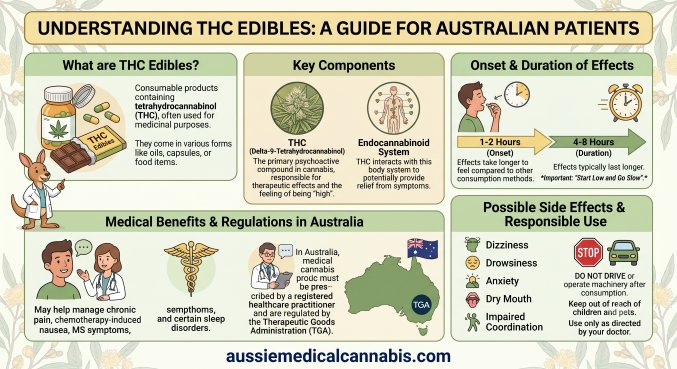
THC edibles are food or beverage products that contain tetrahydrocannabinol (THC), the primary psychoactive cannabinoid found in the Cannabis sativa plant. Unlike inhaled cannabis, edibles are consumed orally and absorbed through the digestive system, resulting in a different pattern of effects.
At aussie medical cannabis, THC-containing medicinal cannabis products are available only through regulated medical pathways where clinically appropriate. Unregulated cannabis edibles differ significantly from regulated medicinal products in quality, cannabinoid content, and manufacturing standards.
This educational guide explains what THC edibles are, how they affect the body, current scientific evidence, potential risks, and Australia’s regulatory framework.
What Are THC Edibles?
THC edibles are products that contain THC and are intended to be consumed by mouth.
Examples include regulated medicinal oral formulations and, in jurisdictions where permitted, food products containing THC. The cannabinoid content, quality, and legal status vary depending on the product and the country.
In Australia, therapeutic cannabis products supplied through lawful medical pathways are manufactured under quality standards intended to ensure consistency and safety.
How THC Edibles Work
After oral consumption, THC passes through the digestive system before being absorbed into the bloodstream.
It then interacts primarily with CB1 receptors in the brain as part of the body’s endocannabinoid system (ECS).
The ECS helps regulate many functions, including:
- Pain perception
- Mood
- Appetite
- Sleep
- Memory
- Stress responses
Because orally consumed THC is processed by the liver before reaching the bloodstream, its effects differ from inhaled THC.
How Oral THC Differs From Inhaled THC
Researchers have found important differences between oral and inhaled cannabis.
These include:
- A slower onset of effects after oral consumption.
- Longer-lasting effects due to digestive absorption and liver metabolism.
- Greater variability between individuals depending on digestion, body composition, and other factors.
These differences are important in both clinical research and patient education.
Potential Therapeutic Areas Under Investigation
Research involving regulated THC-containing medicinal products has explored several medical conditions.
Chronic Pain
Some evidence suggests THC-containing medicinal products may help selected patients with certain forms of chronic pain.
Chemotherapy-Induced Nausea and Vomiting
THC has been investigated for managing nausea and vomiting associated with chemotherapy when standard therapies are insufficient.
Multiple Sclerosis
Some cannabinoid medicines have demonstrated benefits for reducing muscle stiffness and spasticity in selected patients with multiple sclerosis.
Palliative Care
Researchers continue studying THC-containing medicines for symptom management in palliative care, including pain, nausea, appetite changes, and sleep disturbance.
Possible Side Effects
Like many medicines, THC-containing products may cause side effects.
Reported effects include:
- Drowsiness
- Dizziness
- Dry mouth
- Fatigue
- Increased heart rate
- Reduced concentration
- Impaired coordination
- Anxiety in some individuals
- Temporary confusion
Not everyone experiences the same side effects, and responses vary considerably.
Mental Health Considerations
THC affects brain regions involved in mood, perception, and cognition.
Some individuals may experience:
- Anxiety
- Panic
- Paranoia
- Altered perception
- Temporary memory impairment
People with certain mental health conditions may be more susceptible to these effects.
THC Edibles and Driving
THC may impair attention, reaction time, judgment, and coordination.
Because of these effects, products containing THC may affect a person’s ability to drive safely. Australian road laws vary between states and territories, and people prescribed THC-containing medicines should understand the legal requirements that apply where they live.
THC Edibles vs CBD Products
| Feature | THC Products | CBD Products |
|---|---|---|
| Psychoactive | Yes | Generally no |
| Produces intoxication | Yes | Typically no |
| Temporary memory impairment | Possible | Not typically reported |
| Research Areas | Pain, nausea, spasticity | Epilepsy, anxiety research, inflammation |
| Driving Considerations | May impair driving | Depends on the product and applicable laws |
Australian Regulation
Aussie Medical cannabis products containing THC are regulated through Commonwealth legislation together with state and territory requirements.
Healthcare professionals consider:
- Medical history
- Previous treatments
- Available evidence
- Potential benefits
- Possible risks
before determining whether a regulated THC-containing medicinal product may be appropriate.
Current Scientific Research
Researchers continue investigating THC-containing medicines for:
- Chronic pain
- Cancer symptom management
- Neurological disorders
- Appetite disorders
- Palliative medicine
- Multiple sclerosis
- Chemotherapy-related symptoms
While evidence supports some therapeutic applications, research continues in many areas.
Educational Comparison Table
| Topic | Oral THC Products | Inhaled THC Products |
| Route of Administration | Oral | Inhaled |
| Absorption | Through the digestive system | Through the lungs |
| Duration of Effects | Generally longer | Generally shorter |
| Medical Research | Ongoing | Ongoing |
Where to Learn More
Reliable educational information is available at https://aussiemedicalcannabis.com/
- Therapeutic Goods Administration – Medicinal Cannabis
- Australian Government Department of Health, Disability and Ageing – Medicinal Cannabis
- Healthdirect Australia
PubMed Reference
Frequently Asked Questions
1. What are THC edibles?
THC edibles are orally consumed products that contain tetrahydrocannabinol (THC), the primary psychoactive cannabinoid found in cannabis.
2. How do THC edibles differ from inhaled cannabis?
Orally consumed THC is absorbed through the digestive system and processed by the liver, which generally results in a slower onset and longer-lasting effects compared with inhaled cannabis.
3. What medical conditions have THC-containing products been studied for?
Research has investigated THC-containing medicinal products for chronic pain, chemotherapy-induced nausea and vomiting, multiple sclerosis-related spasticity, and selected symptoms in palliative care.
4. Can THC edibles cause side effects?
Yes. Possible side effects include drowsiness, dizziness, impaired concentration, anxiety, dry mouth, and temporary changes in perception.
5. Are THC edibles legal in Australia?
THC-containing medicinal cannabis products are available only through Australia’s regulated therapeutic framework. Recreational cannabis laws vary between jurisdictions and remain restricted in most of Australia.
Conclusion
THC edibles are one form of orally administered cannabis product that differs significantly from inhaled cannabis because of the way THC is absorbed and processed by the body. Research supports the use of some regulated THC-containing medicinal products for selected conditions, while many other applications remain under investigation. Like all medicines, THC-containing products may produce side effects and are not suitable for everyone. Australians seeking reliable information should rely on qualified healthcare professionals, official health authorities, and peer-reviewed scientific research.
