
Cannabis Education
Difference Between THC and CBD
Aug
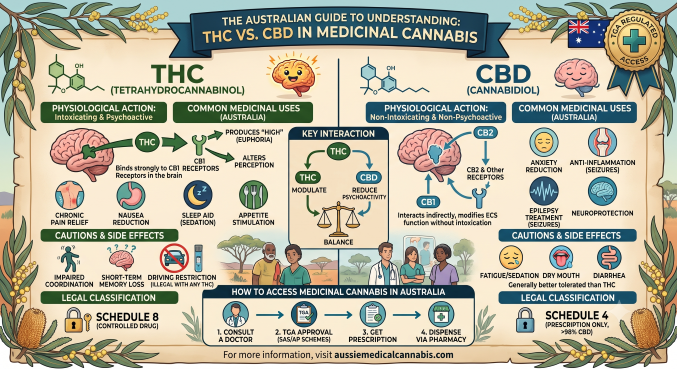
At Aussie medical cannabis, Tetrahydrocannabinol (THC) and cannabidiol (CBD) are the two best-known cannabinoids found in the Cannabis sativa plant. Although they originate from the same plant, they have very different effects on the body and are used for different therapeutic purposes within Australia’s regulated medicinal cannabis framework.
Understanding the differences between THC and CBD is important for patients, caregivers, healthcare professionals, and anyone interested in evidence-based information about medicinal cannabis. This guide explains how these cannabinoids work, how they differ, their potential therapeutic applications, possible side effects, and what Australian regulations require.
What Is THC?
THC (tetrahydrocannabinol) is the primary psychoactive cannabinoid found in cannabis.
It interacts strongly with cannabinoid receptors in the brain, particularly CB1 receptors, which contributes to effects on:
- Mood
- Perception
- Memory
- Appetite
- Pain perception
- Coordination
Because of these effects, THC may cause intoxication and can impair judgment and reaction time.
What Is CBD?
CBD (cannabidiol) is another naturally occurring cannabinoid found in cannabis.
Unlike THC, CBD is generally considered non-intoxicating and does not typically produce the “high” associated with cannabis.
Researchers continue to investigate CBD for its potential role in managing certain symptoms associated with conditions such as epilepsy, chronic pain, anxiety, and inflammation, although evidence varies depending on the condition.
How THC and CBD Work
Both THC and CBD interact with the body’s endocannabinoid system (ECS), which helps regulate many physiological functions.
The ECS contributes to:
- Sleep
- Pain perception
- Mood
- Appetite
- Memory
- Immune responses
- Stress regulation
THC activates cannabinoid receptors more directly, while CBD appears to influence the ECS and several other signalling pathways indirectly.
Key Differences Between THC and CBD
Psychoactive Effects
The biggest difference is intoxication.
- THC: Produces psychoactive effects and may cause a “high.”
- CBD: Generally does not produce intoxicating effects.
Medical Research
Both cannabinoids are being studied extensively, but for different therapeutic applications.
Research involving THC includes:
- Chronic pain
- Chemotherapy-induced nausea
- Appetite stimulation
- Multiple sclerosis-related spasticity
Research involving CBD includes:
- Treatment-resistant epilepsy
- Chronic pain
- Anxiety disorders
- Inflammatory conditions
Evidence is stronger for some conditions than others, and research is ongoing.
Side Effects
Possible THC Side Effects
- Drowsiness
- Dizziness
- Increased heart rate
- Dry mouth
- Anxiety in some individuals
- Impaired coordination
- Reduced reaction time
Possible CBD Side Effects
- Fatigue
- Dry mouth
- Diarrhoea
- Reduced appetite
- Drowsiness
- Interactions with certain medicines
Side effects vary between individuals and products.
Educational Comparison Table
| Feature | CBD | THC |
|---|---|---|
| Psychoactive | Generally no | Yes |
| Produces a “High” | Typically no | Yes |
| Main Research Areas | Epilepsy, anxiety, inflammation, chronic pain | Pain, nausea, appetite, muscle spasticity |
| Driving Considerations | Depends on the product and jurisdiction | May impair driving |
| Australian Medical Access | Regulated medicinal pathways | Regulated medicinal pathways |
Can THC and CBD Be Used Together?
Some prescribed medicinal cannabis products contain:
- CBD only
- THC only
- A combination of CBD and THC
The cannabinoid profile depends on the product and the clinical circumstances. Healthcare professionals determine the most appropriate treatment based on individual patient needs.
THC, CBD and Driving in Australia
Driving laws vary across Australian states and territories.
Products containing THC may affect driving ability and may also have legal implications under roadside drug testing laws. Patients prescribed medicinal cannabis should understand the requirements that apply in their jurisdiction and follow their healthcare professional’s advice.
Australian Regulation
Medicinal cannabis products are regulated in Australia through Commonwealth legislation together with state and territory requirements.
Healthcare professionals consider factors such as:
- Medical history
- Current medicines
- Clinical evidence
- Potential risks and benefits
before prescribing medicinal cannabis where appropriate.
Current Scientific Research
Researchers continue studying THC and CBD for potential therapeutic roles in:
- Chronic pain
- Epilepsy
- Multiple sclerosis
- Anxiety
- Inflammatory disorders
- Palliative care
- Cancer symptom management
Although evidence supports certain uses, many applications continue to be investigated through clinical research.
Where to Explore More
For further educational reading, consider these topics at https://aussiemedicalcannabis.com/
- Understanding Cannabinoids
- Australian Medicinal Cannabis Laws
- The Endocannabinoid System
Australian References
- Therapeutic Goods Administration – Medicinal Cannabis
- Australian Government Department of Health, Disability and Ageing – Medicinal Cannabis
- Office of Drug Control – Medicinal Cannabis
PubMed Reference
Frequently Asked Questions
1. What is the main difference between THC and CBD?
THC is the primary psychoactive cannabinoid and may produce intoxication, while CBD is generally considered non-intoxicating.
2. Can CBD make you feel high?
CBD alone does not typically produce the “high” associated with THC.
3. Are THC and CBD both used in medicinal cannabis?
Yes. Depending on the condition and clinical judgment, regulated medicinal cannabis products may contain CBD, THC, or a combination of both.
4. Is THC legal in Australia?
THC-containing medicinal cannabis products are available only through regulated medical pathways. Recreational cannabis laws vary by jurisdiction and remain restrictive in most of Australia.
5. Which cannabinoid has more scientific evidence?
Both THC and CBD have been extensively studied, but the strength of evidence differs depending on the medical condition being investigated.
Frequently Searched Terms
| Frequently Searched Terms |
| good potting soil for weed |
| best soil for cannabis |
| growing mmj indoors |
| growing marijuana indoors |
Conclusion
THC and CBD are the two most studied cannabinoids, but they differ significantly in their effects, therapeutic applications, and safety considerations. THC is responsible for the intoxicating effects of cannabis, whereas CBD is generally non-intoxicating and is being investigated for a range of potential medical uses. Understanding these differences can help Australians make informed decisions and interpret research more accurately. As scientific knowledge continues to evolve, patients should rely on qualified healthcare professionals and trusted health authorities for guidance on medicinal cannabis.
