
Cannabis Education
Cannabis Overdose Effects
Aug
At Aussie medical cannabis, as medicinal cannabis becomes more widely discussed in Australia, many people ask whether it is possible to overdose on cannabis and what symptoms might occur. While cannabis does not typically cause fatal overdose in the same way as opioids, alcohol, or certain other substances, consuming too much cannabis—particularly products containing high levels of tetrahydrocannabinol (THC)—can lead to significant physical and psychological symptoms that may require medical attention.
Understanding the signs of cannabis overconsumption is important for patients, caregivers, and the general public. This guide explains what is commonly meant by a “cannabis overdose,” the symptoms that may occur, when emergency medical assessment is appropriate, and what current scientific evidence says.
What Is a Cannabis Overdose?
The term “cannabis overdose” generally refers to consuming enough cannabis to cause unpleasant or potentially dangerous symptoms rather than a fatal toxic overdose.
Symptoms are more commonly associated with:
- High-THC products
- Accidental overconsumption
- Edible cannabis products, where effects may be delayed
- Individual sensitivity
- Interactions with alcohol or other drugs
Responses vary considerably between individuals.
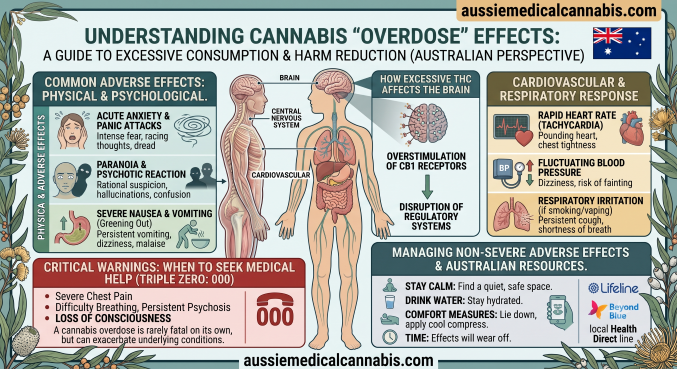
Common Cannabis Overdose Effects
People experiencing cannabis overconsumption may develop symptoms such as:
- Severe anxiety
- Panic attacks
- Confusion
- Dizziness
- Extreme drowsiness
- Poor coordination
- Increased heart rate
- Dry mouth
- Nausea
- Vomiting
Some people may also experience temporary difficulty concentrating or impaired judgment.
Psychological Symptoms
THC can affect the brain in several ways.
Possible psychological symptoms include:
- Intense anxiety
- Fear or panic
- Paranoia
- Disorientation
- Confusion
- Hallucinations in some individuals
- Temporary psychotic symptoms in susceptible people
These symptoms are generally temporary but may require medical assessment if severe.
Physical Symptoms
Cannabis overconsumption may also produce physical effects including:
- Rapid heartbeat
- Low blood pressure on standing
- Dizziness
- Tremors
- Sweating
- Fatigue
- Difficulty walking steadily
Older adults and people with underlying cardiovascular disease may be at increased risk of complications.
Edibles and Delayed Effects
Cannabis edibles may have delayed onset compared with inhaled products.
Because effects can take longer to appear, some individuals may consume additional amounts before the initial dose has taken effect, increasing the likelihood of overconsumption.
When Should Medical Care Be Sought?
Emergency medical assessment should be sought if someone experiences:
- Difficulty breathing
- Chest pain
- Seizures
- Loss of consciousness
- Persistent vomiting
- Severe confusion
- Violent behaviour
- Symptoms that rapidly worsen
Children who accidentally consume cannabis products should receive immediate medical evaluation.
Potential Risk Factors
Some factors may increase the likelihood of severe symptoms.
These include:
- High-THC products
- Combining cannabis with alcohol or other drugs
- Underlying mental health conditions
- Heart disease
- Older age
- First-time exposure
- Accidental ingestion by children
Long-Term Considerations
Repeated heavy cannabis use has been associated in some studies with increased risks of:
- Cannabis use disorder
- Memory and attention difficulties
- Anxiety in some individuals
- Psychotic disorders in susceptible people
Research continues to investigate these associations and the factors that influence individual risk.
Educational Comparison Table
| Mild Overconsumption Symptoms | Symptoms Requiring Urgent Medical Assessment |
|---|---|
| Dry mouth | Loss of consciousness |
| Dizziness | Chest pain |
| Drowsiness | Difficulty breathing |
| Mild anxiety | Seizures |
| Increased appetite | Severe confusion or persistent agitation |
Cannabis and Australian Law
In Australia, medicinal cannabis is regulated through Commonwealth and state or territory legislation. Products are prescribed for selected patients under regulated medical pathways. Recreational cannabis laws differ between jurisdictions, and unauthorized possession or supply remains illegal in most parts of Australia.
Patients should always use prescribed medicines according to their healthcare professional’s advice and the product instructions.
Prevention and Safety
General public health recommendations include:
- Use medicines only as prescribed.
- Store cannabis products securely and out of the reach of children.
- Avoid mixing cannabis with alcohol or other drugs unless specifically advised by a healthcare professional.
- Seek medical advice if concerning symptoms occur.
Where to Explore More
For additional educational information, consider reading from Aussie medical cannabis blogs:
- Understanding CBD and THC
- Australian medicinal cannabis regulations
- Safe medicine use and patient information
Australian References
- Healthdirect Australia – Cannabis Information
- Therapeutic Goods Administration – Medicinal Cannabis
- Australian Government Department of Health, Disability and Ageing – Medicinal Cannabis
PubMed Reference
Frequently Asked Questions
1. Can you overdose on cannabis?
A person can experience significant adverse effects after consuming too much cannabis, particularly high-THC products. Fatal overdose from cannabis alone is considered uncommon, but severe symptoms can still require medical attention.
2. What are the most common symptoms?
Common symptoms include anxiety, dizziness, rapid heart rate, confusion, drowsiness, nausea, and impaired coordination.
3. Are cannabis edibles more likely to cause overconsumption?
Edible products can have delayed effects, which may increase the risk of consuming more than intended before the first dose has taken effect.
4. When should someone seek emergency care?
Emergency medical assessment is appropriate for symptoms such as chest pain, difficulty breathing, seizures, loss of consciousness, or severe confusion.
5. Can prescribed medicinal cannabis also cause side effects?
Yes. Like many medicines, prescribed medicinal cannabis can cause side effects. Patients should follow their healthcare professional’s advice and report concerning symptoms promptly.
Frequently Searched Terms
| Frequently Searched Terms |
| canna hydro |
| canna nutrients |
| canna terra professional |
| canna terra |
Conclusion
Although cannabis does not typically cause fatal overdose in the same way as some other substances, consuming excessive amounts—particularly products containing higher levels of THC—can result in distressing and sometimes serious symptoms. Recognising the signs of cannabis overconsumption, understanding when medical care is needed, and using medicines responsibly are important steps in reducing health risks. Australians seeking reliable information should rely on qualified healthcare professionals, official health authorities, and peer-reviewed scientific research.
