
Cannabis Education
Different Types of Cannabinoids
Aug
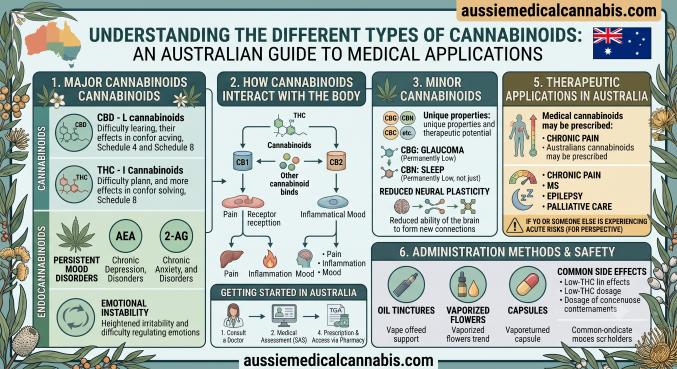
At Aussie medical cannabis, we consider Cannabinoids as naturally occurring chemical compounds found in the Cannabis sativa plant. Scientists have identified more than 100 different cannabinoids, each with unique chemical structures and potential biological effects. While cannabidiol (CBD) and tetrahydrocannabinol (THC) are the most well-known, researchers continue to study many other cannabinoids, including cannabigerol (CBG), cannabinol (CBN), cannabichromene (CBC), and tetrahydrocannabivarin (THCV).
Interest in cannabinoids has grown significantly in Australia following the expansion of medicinal cannabis research and regulated prescribing pathways. However, understanding the differences between cannabinoids is important because they do not all produce the same effects or have the same level of scientific evidence.
This educational guide explains the major cannabinoids, how they interact with the body, and what current research says about their potential therapeutic roles.
What Are Cannabinoids?
Cannabinoids are compounds that interact with the body’s endocannabinoid system (ECS), a biological network involved in maintaining internal balance.
The ECS helps regulate:
- Pain perception
- Mood
- Sleep
- Appetite
- Memory
- Immune responses
- Stress
- Inflammation
Different cannabinoids interact with the ECS in different ways, contributing to their varied biological effects.
Major Types of Cannabinoids
1. Cannabidiol (CBD)
CBD is one of the most extensively researched cannabinoids.
Key characteristics include:
- Generally non-intoxicating
- Studied for chronic pain, epilepsy, anxiety, inflammation, and sleep disorders
- Available through regulated medicinal cannabis pathways in Australia
CBD continues to be one of the primary focuses of medicinal cannabis research worldwide.
2. Tetrahydrocannabinol (THC)
THC is the primary psychoactive cannabinoid in cannabis.
Potential characteristics include:
- Produces intoxicating effects
- Studied for chronic pain, chemotherapy-induced nausea, muscle spasticity, and appetite stimulation
- May impair driving and reaction time
THC-containing medicinal products are available only through regulated medical pathways in Australia.
3. Cannabigerol (CBG)
CBG is sometimes referred to as the “parent cannabinoid” because many other cannabinoids originate from its precursor compounds during plant development.
Researchers are investigating CBG for its potential role in:
- Inflammation
- Neuroprotection
- Gastrointestinal health
Clinical evidence remains limited.
4. Cannabinol (CBN)
CBN develops as THC naturally degrades over time.
Researchers continue studying its potential effects, including possible roles in:
- Sleep
- Pain
- Inflammation
Current evidence is limited and further research is required.
5. Cannabichromene (CBC)
CBC is a non-intoxicating cannabinoid receiving increasing scientific interest.
Early laboratory studies suggest potential anti-inflammatory and neuroprotective properties, although clinical evidence remains limited.
6. Tetrahydrocannabivarin (THCV)
THCV differs chemically from THC and may produce different biological effects.
Researchers continue investigating THCV for potential roles in:
- Appetite regulation
- Metabolic health
- Blood sugar regulation
More human clinical studies are needed.
7. Cannabidivarin (CBDV)
CBDV is another non-intoxicating cannabinoid under investigation.
Research is exploring possible applications in neurological disorders, although evidence remains preliminary.
Comparison Table
| Cannabinoid | Intoxicating | Current Research Focus | Evidence Strength |
|---|---|---|---|
| CBD | No | Anxiety, epilepsy, chronic pain, inflammation | Strong for some conditions, evolving for others |
| THC | Yes | Pain, nausea, appetite, spasticity | Extensive |
| CBG | No | Inflammation, neuroprotection | Emerging |
| CBN | Generally no | Sleep, pain | Limited |
| CBC | No | Inflammation, neuroprotection | Early-stage |
| THCV | Variable | Metabolic health | Early-stage |
| CBDV | No | Neurological conditions | Emerging |
How Cannabinoids Work
Cannabinoids interact with several receptors throughout the body.
These interactions may influence:
- Nervous system signalling
- Immune responses
- Inflammatory pathways
- Pain processing
- Mood regulation
Scientists continue to study these complex interactions to better understand potential therapeutic applications.
Natural vs Synthetic Cannabinoids
Cannabinoids can be broadly classified into three categories.
Natural Plant Cannabinoids (Phytocannabinoids)
These occur naturally within cannabis plants.
Examples include:
- CBD
- THC
- CBG
- CBC
- CBN
- THCV
Endocannabinoids
These are naturally produced by the human body.
Examples include:
- Anandamide
- 2-AG (2-Arachidonoylglycerol)
They help regulate many normal physiological processes.
Synthetic Cannabinoids
Synthetic cannabinoids are laboratory-produced compounds designed to interact with cannabinoid receptors.
Some have approved medical uses, while others are illicit substances associated with significant health risks.
Cannabinoids and Australian Regulation
Medicinal cannabis products in Australia are regulated through federal and state or territory frameworks.
Products differ considerably in:
- Cannabinoid composition
- THC content
- CBD concentration
- Intended therapeutic purpose
Patients should only use prescribed medicinal cannabis products under the guidance of a qualified healthcare professional.
Current Research
Researchers continue investigating cannabinoids for possible roles in:
- Chronic pain
- Epilepsy
- Anxiety disorders
- Multiple sclerosis
- Parkinson’s disease
- Inflammatory conditions
- Palliative care
While evidence supports some uses, many potential applications remain under active investigation.
Educational Comparison Table
| Category | CBD | THC | Emerging Cannabinoids |
| Psychoactive | No | Yes | Usually no |
| Medical Research | Extensive | Extensive | Early-stage |
| Evidence Base | Stronger for selected conditions | Stronger for selected conditions | Limited but growing |
| Australian Medical Use | Regulated | Regulated | Depends on approved products and evidence |
Where to Explore More
Continue learning about medicinal cannabis and cannabinoid science through educational resources from Aussie medical cannabis such as:
- Understanding CBD and THC
- Australian medicinal cannabis regulations
- The endocannabinoid system
- Evidence-based cannabinoid research
Australian References
- Therapeutic Goods Administration – Medicinal Cannabis
- Australian Government Department of Health, Disability and Ageing – Medicinal Cannabis
- Office of Drug Control – Medicinal Cannabis
PubMed Reference
Frequently Asked Questions
1. What are cannabinoids?
Cannabinoids are naturally occurring compounds found in cannabis plants that interact with the body’s endocannabinoid system. More than 100 cannabinoids have been identified.
2. Which cannabinoid is best known?
CBD and THC are the two most extensively researched cannabinoids and are the primary components of many medicinal cannabis products.
3. Do all cannabinoids cause intoxication?
No. CBD, CBG, CBC, and several other cannabinoids are generally considered non-intoxicating, whereas THC is the primary psychoactive cannabinoid.
4. Why are researchers studying minor cannabinoids?
Emerging cannabinoids such as CBG, CBC, THCV, and CBDV may have unique biological effects, but more clinical research is needed to understand their therapeutic potential.
5. Are cannabinoids regulated in Australia?
Yes. Medicinal cannabis products are regulated under Australian law, with prescribing and supply occurring through approved medical pathways where appropriate.
Frequently Searched Terms
| Frequently Searched Terms |
| medicinal cannabinoids sunshine coast |
| CBD oil sunshine coast |
| can you drive with CBD oil in Australia |
Conclusion
Cannabinoids are a diverse group of naturally occurring compounds with different biological properties and varying levels of scientific evidence. While CBD and THC remain the most extensively researched, interest in CBG, CBN, CBC, THCV, and other cannabinoids continues to grow. Ongoing research is improving our understanding of how these compounds interact with the endocannabinoid system and their potential therapeutic applications. Australians seeking information about cannabinoids should rely on trusted health authorities, peer-reviewed research, and guidance from qualified healthcare professionals.
