
Cannabis Education
What Is Cannabidiol (CBD)
Jul
What Is Cannabidiol (CBD)? Everything Australians Should Know
Cannabidiol, commonly known as CBD, is one of the most researched naturally occurring compounds found in the Cannabis sativa plant. Unlike tetrahydrocannabinol (THC), CBD does not produce the intoxicating effects commonly associated with cannabis. Instead, researchers continue to investigate CBD for its potential therapeutic properties across a range of medical conditions.
Interest in cannabidiol has grown significantly in Australia following the expansion of the country’s medicinal cannabis framework. While CBD products are available under regulated pathways, understanding what CBD is, how it works, its potential benefits, and its limitations is essential for anyone seeking evidence-based information.
This guide explains cannabidiol from an educational perspective, explores current scientific evidence, and outlines Australia’s regulatory approach to medicinal cannabis.
What Is Cannabidiol?
Cannabidiol (CBD) is a naturally occurring cannabinoid found in cannabis plants.
Scientists have identified more than 100 cannabinoids, but CBD and THC remain the two most extensively researched.
Unlike THC, CBD:
- Does not typically produce intoxication.
- Has a different interaction with the body’s endocannabinoid system.
- Is being studied for a variety of therapeutic applications.
- Has a lower potential for abuse than THC according to current evidence.
CBD may be formulated into medicinal products including oils, capsules, oral liquids, sprays, and other dosage forms prescribed through regulated medical pathways.
How Does CBD Work?
CBD interacts with the body’s endocannabinoid system (ECS), a biological network involved in maintaining balance across many physiological functions.
The ECS helps regulate:
- Sleep
- Mood
- Pain perception
- Immune responses
- Memory
- Appetite
- Stress responses
- Inflammation
Unlike THC, CBD does not strongly bind to CB1 receptors in the brain. Instead, researchers believe CBD influences multiple biological pathways that may contribute to its potential therapeutic effects.
Potential Benefits of Cannabidiol
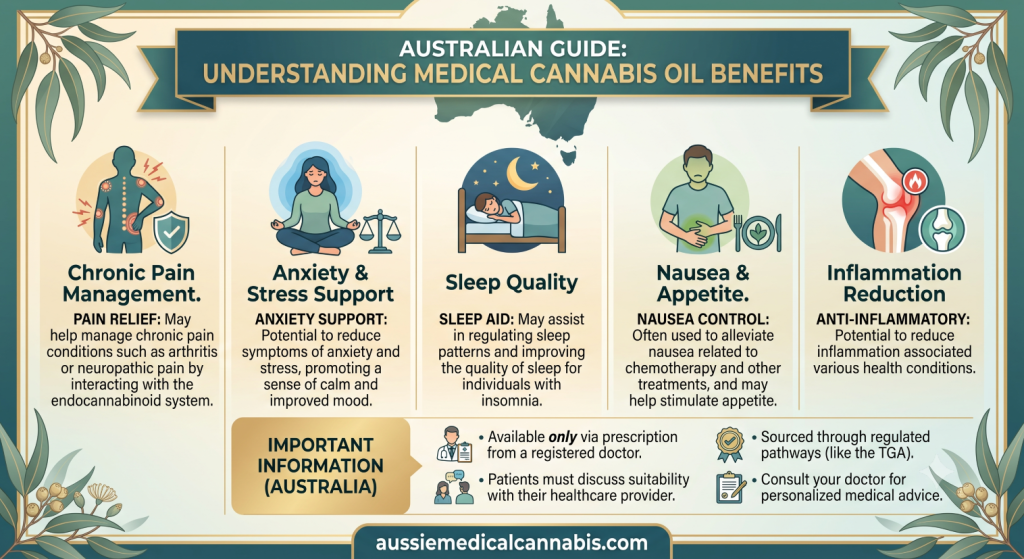
Current research continues to investigate CBD for numerous medical conditions. While evidence is stronger for some uses than others, several potential benefits have emerged.
1. Chronic Pain Management
CBD has been studied for chronic pain associated with conditions such as:
- Arthritis
- Neuropathic pain
- Fibromyalgia
- Multiple sclerosis
Some patients report symptom improvement, although responses vary between individuals.
2. Anxiety Disorders
One of the most researched applications of CBD involves anxiety.
Studies suggest CBD may help reduce anxiety symptoms in some people by influencing serotonin-related pathways within the brain.
Researchers continue to investigate CBD for:
- Generalised anxiety disorder
- Social anxiety disorder
- Stress-related symptoms
More large-scale clinical trials are still required.
3. Epilepsy
One of the strongest areas of evidence for CBD relates to certain rare forms of treatment-resistant epilepsy.
Prescription CBD medicines have demonstrated effectiveness in reducing seizure frequency for some patients under specialist medical supervision.
4. Sleep Support
CBD may indirectly improve sleep by addressing factors that interfere with restful sleep, including:
- Pain
- Anxiety
- Stress
Although many patients report better sleep quality, research findings remain mixed
5. Inflammation
CBD possesses anti-inflammatory properties in laboratory and early clinical studies.
Researchers continue exploring its potential role in inflammatory conditions including:
- Arthritis
- Inflammatory bowel disease
- Autoimmune disorders
Evidence remains under investigation.
6. Mental Wellbeing
Researchers are investigating CBD’s potential role in supporting mental wellbeing.
Current evidence remains preliminary, and CBD should not replace established mental health treatments unless recommended by a qualified healthcare professional.
CBD vs THC
Although CBD and THC originate from the same plant, they differ considerably.
| Feature | CBD | THC |
|---|---|---|
| Psychoactive | No intoxicating effect | Psychoactive |
| Feeling “High” | No | Yes |
| Medical Research | Extensive and growing | Extensive |
| Driving Considerations | Depends on the product and jurisdiction | May impair driving; laws apply |
| Prescription Availability | Regulated pathways | Regulated pathways |
Is CBD Legal in Australia?
Australia regulates CBD under the broader medicinal cannabis framework.
Depending on the product and individual circumstances, access may involve:
- Assessment by an authorised healthcare professional
- Prescription through approved pathways where required
- Dispensing by a licensed pharmacy
Patients should only use CBD products in accordance with Australian laws and medical advice.
Possible Side Effects
Although CBD is generally considered well tolerated, side effects may occur.
These can include:
- Drowsiness
- Dry mouth
- Fatigue
- Reduced appetite
- Diarrhoea
- Changes in liver enzyme levels (in some patients)
- Drug interactions with certain prescription medicines
Patients should always discuss existing medications with their healthcare provider.
Current Research
CBD research continues expanding worldwide.
Scientists are investigating its potential role in:
- Chronic pain
- Anxiety disorders
- Epilepsy
- Parkinson’s disease
- Alzheimer’s disease
- Multiple sclerosis
- Inflammatory diseases
- Palliative care
Many findings remain promising, although researchers emphasize the need for additional high-quality clinical trials.
Australian Regulation of CBD
Australia maintains one of the world’s more structured medicinal cannabis regulatory systems.
Government agencies oversee:
- Product quality
- Manufacturing standards
- Clinical prescribing pathways
- Patient safety
- Pharmacovigilance
This framework aims to ensure medicinal cannabis products meet appropriate standards for quality and safety.
Educational Comparison Table
| Topic | Cannabidiol (CBD) | Tetrahydrocannabinol (THC) |
| Primary Effect | Non-intoxicating | Psychoactive |
| Common Research Areas | Anxiety, epilepsy, inflammation | Pain, nausea, appetite, spasticity |
| Medical Supervision | Recommended | Required through regulated pathways |
| Potential Side Effects | Mild to moderate | May include impairment and intoxication |
Where to Explore More
For additional educational resources, visit:
- https://aussiemedicalcannabis.com/medicinal-cannabis-laws-australia
- https://aussiemedicalcannabis.com/cbd-vs-thc-guide
- https://aussiemedicalcannabis.com/medical-cannabis-patient-guide
Australian References
- Therapeutic Goods Administration – Medicinal Cannabis
- Australian Government Department of Health, Disability and Ageing – Medicinal Cannabis
- Office of Drug Control – Medicinal Cannabis
PubMed Reference
Frequently Asked Questions
1. What is cannabidiol (CBD)?
CBD is a naturally occurring cannabinoid found in cannabis plants that does not typically produce intoxicating effects. It is being studied for several potential therapeutic applications.
2. Does CBD make you feel high?
CBD itself is generally considered non-intoxicating. Products containing THC, however, may produce psychoactive effects.
3. Is CBD legal in Australia?
CBD products are regulated in Australia. Access depends on the product and applicable Australian laws, and many products require a prescription through approved medical pathways.
4. What conditions is CBD being researched for?
Current research includes chronic pain, epilepsy, anxiety, inflammation, sleep disorders, and other medical conditions. Evidence varies depending on the condition.
5. Is CBD safe?
CBD is generally well tolerated in many people, but side effects and interactions with other medicines are possible. Patients should seek advice from a qualified healthcare professional before using CBD products.
Frequently Searched Terms
| Frequently Searched Terms |
| how to get a medical weed card |
| dispensed reviews |
| dispensed strains |
| dispensed Australia reviews |
| dispensed natural therapy clinic reviews |
Conclusion
Cannabidiol (CBD) has become one of the most extensively researched cannabinoids due to its potential therapeutic properties and lack of intoxicating effects. While evidence supports its use for some medical conditions, many applications continue to be investigated through clinical research. In Australia, CBD products are regulated within the medicinal cannabis framework, emphasizing patient safety, product quality, and medical oversight. Anyone interested in CBD should rely on evidence-based information and consult a qualified healthcare professional regarding its suitability for their individual circumstances.
