
Cannabis Education
Cannabis Oil Benefits
Jul
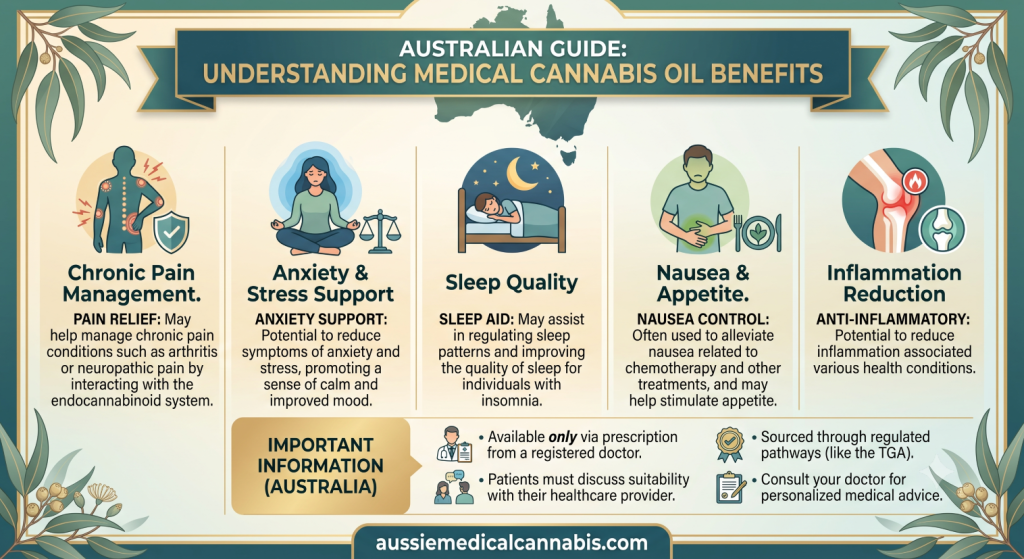
Cannabis oil is a broad term for liquid products containing cannabinoids extracted from the cannabis plant. Depending on the formulation, an oil may be CBD dominant, THC dominant or contain a combination of both cannabinoids. Potential cannabis oil benefits depend on the product’s composition, the condition being treated and the individual patient’s response.
Medicinal cannabis is highly regulated in Australia. It is not automatically appropriate for every symptom, and most products have not been evaluated and registered by the Therapeutic Goods Administration in the same way as standard approved medicines. Patients can explore Australian medicinal cannabis education before discussing treatment options with a qualified practitioner.
Cannabis Oil Quick Facts
| Topic | Educational overview |
|---|---|
| Main cannabinoids | CBD and THC |
| Potential uses | Symptom management in selected conditions |
| Intoxicating component | THC |
| Non-intoxicating cannabinoid | CBD does not ordinarily produce a high |
| Australian status | Generally requires a prescription |
| Product selection | Based on clinical need, not strain popularity |
| Main risks | Sedation, dizziness, impairment and medicine interactions |
| Legal supply | Prescription followed by pharmacy dispensing |
What Are the Potential Benefits of Cannabis Oil?
Research suggests that cannabinoid medicines may help some patients manage specific symptoms. However, the evidence differs considerably between conditions, products and doses.
Potential therapeutic applications considered by healthcare professionals may include:
- Certain severe forms of epilepsy
- Chemotherapy-related nausea and vomiting
- Multiple sclerosis-related spasticity
- Some chronic non-cancer pain
- Selected palliative-care symptoms
Queensland Health notes that medicinal cannabis may be considered for certain symptoms when supporting clinical evidence exists and conventional treatments have not produced an adequate response. It also states that medicinal cannabis is not supported as a primary treatment for cancer.
The TGA’s guidance indicates moderate confidence that some patients with chronic non-cancer pain may experience meaningful pain reduction, although results cannot be generalised to every cannabis oil or every patient.
Therefore, cannabis oil benefits should not be presented as guaranteed outcomes. Treatment decisions require an individual assessment, realistic goals and ongoing review.
CBD Oil Versus THC Oil
| Feature | CBD-dominant oil | THC-dominant oil |
| Main cannabinoid | Cannabidiol | Tetrahydrocannabinol |
| Intoxication | CBD itself is not intoxicating | Can produce intoxication |
| Driving risk | Depends on composition and effects | Significant concern |
| Medicine interactions | Possible | Possible |
| Prescription status | Generally prescription regulated | Controlled prescription medicine |
| Appropriate product | Determined clinically | Determined clinically |
CBD and THC affect the body differently. THC is primarily responsible for the high associated with cannabis, while CBD does not normally create the same intoxicating effect.
Nevertheless, CBD is not risk free. Both CBD- and THC-containing medicines may cause unwanted effects or interact with other medications.
Cannabis Oil Side Effects and Safety
Possible side effects of medicinal cannabis include:
- Fatigue
- Sedation
- Dizziness
- Nausea
- Vomiting
- Confusion
- Dry mouth
- Appetite changes
- Impaired concentration
The TGA lists fatigue, sedation, vertigo, nausea and vomiting among the known adverse effects associated with medicinal cannabis treatment.
THC-containing oils can also impair judgement, coordination and reaction time. This is especially important for patients who drive, operate machinery or work in safety-sensitive occupations.
Patients should disclose all prescription medicines, over-the-counter products and supplements to their practitioner because cannabinoids can affect how other drugs are processed.
Australia Laws on Drugs and Cannabis
Australian drug laws operate through Commonwealth, state and territory legislation. Consequently, legal rules can differ depending on the substance, location and intended use.
In most Australian states and territories, possessing, using, cultivating or selling non-medical cannabis remains unlawful. Medicinal cannabis is treated differently because it can be legally prescribed for symptom management under a regulated healthcare pathway.
A patient may legally obtain a medicinal cannabis product from a pharmacy when it has been prescribed by a doctor or nurse practitioner.
Therapeutic Goods Administration (TGA) – Medicinal Cannabis Hub
https://www.tga.gov.au/resources/explore-topic/medicinal-cannabis-hubHealthdirect Australia – Medicinal Cannabis
https://www.healthdirect.gov.au/medicinal-cannabisQueensland Health – Medicinal Cannabis Treatment Information
https://www.qld.gov.au/health/conditions/all/medicinal-cannabis/treatmentOffice of Drug Control – Medicinal Cannabis
https://www.odc.gov.au/medicinal-cannabis
The usual pathway involves:
- Consulting a registered practitioner
- Reviewing the diagnosis and medical history
- Discussing treatments already attempted
- Assessing risks and possible interactions
- Receiving a prescription when clinically appropriate
- Obtaining the medicine from a pharmacy
- Attending follow-up reviews
Growing cannabis at home for medicinal use is not authorised under the Commonwealth medicinal-cannabis licensing framework. The Office of Drug Control states that licensed cultivation must be for medicinal or scientific purposes and that the legislation does not establish personal cultivation rights.
Additional explanations are available through Australian cannabis-law and patient resources.
Is MDMA Legal in Australia?
MDMA is not generally legal for recreational possession or use in Australia. However, it may be accessed in a narrowly controlled therapeutic setting.
Under the current TGA framework, an authorised psychiatrist may prescribe an unapproved medicine containing MDMA for the treatment of post-traumatic stress disorder. This restricted pathway does not make recreational MDMA legal or create general pharmacy access.
MDMA and psilocybin remain controlled substances and unapproved therapeutic goods. This means they have not been included in the Australian Register of Therapeutic Goods following the standard assessment process for quality, safety and effectiveness.
Cannabis oil and MDMA are also completely different therapeutic substances. Their access pathways, risks, pharmacological effects and clinical purposes should not be confused.
What Is Australian Bastard Cannabis?
Australian Bastard Cannabis is a name associated with an unusual cannabis growth trait characterised by leaves that differ visibly from the familiar serrated cannabis-leaf shape.
The term may also appear as:
- Australian Bastard
- Australian Bastard Cannabis
- ABC cannabis
- Australian cannabis mutation
It is primarily a botanical or cultivation-related term rather than a recognised medicinal product category. The name does not establish THC concentration, CBD content, medical effectiveness or legal status.
A plant’s appearance cannot show whether it is safe, therapeutically appropriate or compliant with Australian regulations. Laboratory analysis is required to identify cannabinoid content and contaminants.
Australian Weed Strains and Medicinal Products
Searches for Australian weed strains often refer to cultivar names, genetics, aromas or reputed effects. However, medicinal cannabis should not be selected simply because a cultivar is described as indica, sativa, hybrid or Australian-grown.
Practitioners generally need more useful information, including:
- Measured THC concentration
- Measured CBD concentration
- Product format
- Batch consistency
- Dose instructions
- Adverse-effect risk
- Interaction potential
- Patient treatment goals
Two flowers carrying similar strain names may have different cannabinoid concentrations or terpene profiles. Furthermore, consumer descriptions such as relaxing, energising or uplifting are subjective and do not guarantee a predictable medical response.
Best Weed in Australia
There is no medically recognised “best weed in Australia.” The most suitable medicinal cannabis product depends on the patient rather than popularity, potency or online reviews.
A practitioner may consider:
- The condition being treated
- Severity and duration of symptoms
- Previous treatment outcomes
- Sensitivity to THC
- Mental-health history
- Cardiovascular health
- Current medicines
- Driving responsibilities
- Treatment cost
- Ability to use the product safely
The most potent product is not automatically the most effective. In fact, unnecessary THC exposure may increase adverse effects without producing a better therapeutic result.
Top THC Strains and High-Potency Products
The phrase “top THC strains” usually describes cannabis cultivars promoted for having high tetrahydrocannabinol concentrations. From a medical perspective, however, higher THC may also increase the possibility of:
- Intoxication
- Anxiety
- Paranoia
- Dizziness
- Cognitive impairment
- Poor coordination
- Rapid heart rate
- Dependence
- Reduced driving ability
Young patients may face additional concerns. The TGA warns that exposure to THC-containing medicinal products carries potential risks for the developing brain.
Therefore, patients should not equate THC strength with treatment quality. A lower-strength or CBD-dominant product may be more appropriate in some circumstances.
Cannabis Oil Versus Dried Flower
| Feature | Cannabis oil | Dried flower |
| Form | Liquid cannabinoid formulation | Dried cannabis flowers |
| Dose measurement | Usually measured in millilitres | Requires product-specific dosing |
| Onset | Generally slower when swallowed | Faster when administered through an approved vaporiser |
| Duration | May last longer | Often shorter |
| Smoke required | No | Smoking is not recommended |
| THC and CBD ratios | Clearly labelled on regulated products | Varies by flower product |
| Selection basis | Clinical assessment | Clinical assessment |
Product format may influence onset, duration and dose control. Patients should follow their prescribed administration instructions and should not independently change from oil to flower.
Frequently Asked Questions
What are the main cannabis oil benefits?
Cannabis oil may help selected patients manage symptoms such as certain seizure disorders, chemotherapy-related nausea, multiple-sclerosis spasticity or some forms of chronic pain. Benefits are not guaranteed.
Is cannabis oil legal in Australia?
Medicinal cannabis oil can be legally supplied with a valid prescription through a pharmacy. Unauthorised possession, importation or supply may be unlawful.
Is MDMA legal for ordinary personal use?
No. Therapeutic MDMA access is restricted to authorised psychiatrists treating PTSD under a controlled pathway. Recreational possession and use are not made legal by this exception.
What is Australian Bastard Cannabis?
It is a term associated with an unusual cannabis growth form or leaf mutation. It is not a standard medicinal product classification.
What are the best weed strains for medical use?
There is no universally best strain. Product selection should be based on cannabinoid composition, clinical evidence, safety and individual patient needs.
Are top THC strains more effective?
Not necessarily. Higher THC can increase impairment and adverse effects. The appropriate THC level depends on the patient and treatment objective.
Where to Explore Educational Information
Visit Aussie Medical Cannabis to explore educational information about cannabis oil benefits, CBD and THC, Australian drug laws, medicinal cannabis products and lawful prescription pathways.
Cannabinoid medicines should be approached as regulated medical treatments rather than lifestyle products. Patients should rely on verified product information, qualified healthcare advice and regular treatment reviews.
