
Cannabis Education
Side Effects of Medical Marijuana: An Evidence-Based Guide for Australians
Aug
Medical marijuana, also known as medicinal cannabis, is increasingly used within Australia’s regulated healthcare system for selected medical conditions when supported by clinical evidence. Medicinal cannabis products may contain cannabidiol (CBD), tetrahydrocannabinol (THC), or a combination of both cannabinoids. While these medicines may provide therapeutic benefits for some patients, they can also cause side effects that vary depending on the individual, the cannabinoid profile, and the product used.
Understanding the possible side effects of Australia’s medical marijuana is important for patients, caregivers, and healthcare professionals. Like all medicines, cannabinoid products require careful consideration of potential benefits and risks.
This educational guide explains common and less common side effects, factors that may influence individual responses, current scientific evidence, and Australia’s regulatory framework.
What Is Medical Marijuana?
Medical marijuana refers to regulated medicinal cannabis products used for therapeutic purposes under healthcare supervision.
These products may contain:
- Cannabidiol (CBD)
- Tetrahydrocannabinol (THC)
- A combination of CBD and THC
- Other cannabinoids in regulated formulations
Each product has a different cannabinoid profile and may have different therapeutic applications and side-effect profiles.
How Cannabinoids Work
Cannabinoids interact with the body’s endocannabinoid system (ECS).
The ECS plays a role in regulating:
- Pain perception
- Mood
- Sleep
- Appetite
- Memory
- Stress responses
- Immune function
CBD and THC interact with this system differently, which contributes to differences in their effects and side effects.
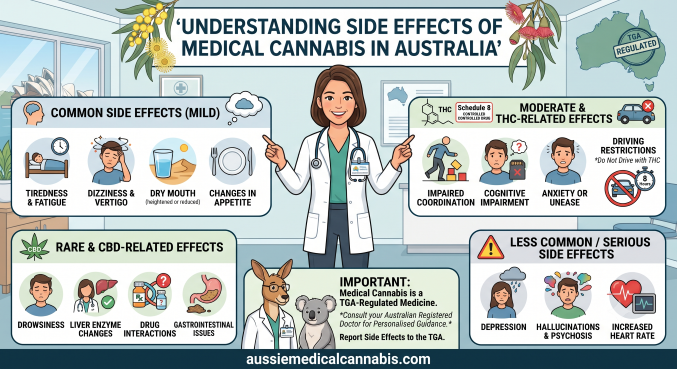
Common Side Effects of Medical Marijuana
Clinical studies have reported several commonly observed side effects.
These may include:
- Drowsiness
- Fatigue
- Dizziness
- Dry mouth
- Reduced concentration
- Appetite changes
- Diarrhoea (more commonly reported with some CBD-containing products)
- Nausea in some individuals
Not everyone experiences these effects, and they may vary depending on the product and the person.
THC-Related Side Effects
Products containing THC may be associated with additional temporary effects, including:
- Impaired coordination
- Slower reaction time
- Temporary memory impairment
- Altered perception
- Increased heart rate
- Anxiety in some individuals
Because THC is psychoactive, it may affect activities that require alertness, such as driving or operating machinery.
CBD-Related Side Effects
CBD is generally considered non-intoxicating, but it may still cause side effects, including:
- Fatigue
- Sleepiness
- Dry mouth
- Diarrhoea
- Changes in appetite
CBD may also interact with certain prescription medicines, making medical supervision important.
Serious Adverse Effects
Serious adverse effects are less common but may occur in some individuals.
Healthcare professionals advise patients to seek medical attention if they experience concerning symptoms, particularly severe reactions or unexpected changes after starting a new medicine.
Healthcare providers also monitor for medicine interactions and other safety concerns during treatment.
Factors That Influence Side Effects
Several factors may affect how a person responds to medicinal cannabis, including:
- The cannabinoid profile (CBD, THC, or a combination)
- Individual metabolism
- Age
- Body weight
- Liver function
- Other medical conditions
- Concurrent prescription medicines
Responses can vary considerably between individuals.
Medicine Interactions
Cannabinoids may interact with medicines used for:
- Epilepsy
- Blood thinning
- Heart disease
- Mental health conditions
- Immune disorders
Healthcare professionals review current medicines before recommending cannabinoid therapy.
Driving and Safety
Products containing THC may temporarily impair attention, judgement, coordination, and reaction time.
Patients should be aware of the driving laws that apply in their state or territory and discuss any safety concerns with their healthcare professional.
Educational Comparison Table
| Topic | CBD-Containing Products | THC-Containing Products |
|---|---|---|
| Psychoactive | Generally no | Yes |
| Common Side Effects | Fatigue, diarrhoea, dry mouth | Drowsiness, dizziness, impaired coordination |
| Temporary Cognitive Effects | Generally uncommon | Possible |
| Medicine Interactions | Possible | Possible |
Australian Regulation
Medicinal cannabis products are regulated in Australia through the Therapeutic Goods Administration (TGA) together with Commonwealth, state, and territory medicines legislation.
Healthcare professionals consider:
- Medical history
- Previous treatments
- Current medicines
- Available scientific evidence
- Potential benefits
- Potential risks
before prescribing medicinal cannabis products where clinically appropriate.
Ongoing Scientific Research
Researchers continue investigating cannabinoids for:
- Chronic pain
- Treatment-resistant epilepsy
- Multiple sclerosis
- Cancer symptom management
- Neurological disorders
- Anxiety disorders
- Inflammatory diseases
Research also continues to improve understanding of long-term safety and adverse effects.
Where to Learn More
Reliable educational information is available at https://aussiemedicalcannabis.com/
- Therapeutic Goods Administration – Medicinal Cannabis
- Australian Government Department of Health, Disability and Ageing – Medicinal Cannabis
- Healthdirect Australia
PubMed Reference
Frequently Asked Questions
1. What are the most common side effects of medical marijuana?
Commonly reported side effects include drowsiness, dizziness, fatigue, dry mouth, reduced concentration, appetite changes, and gastrointestinal symptoms. Individual responses vary.
2. Does CBD have the same side effects as THC?
No. CBD is generally non-intoxicating and has a different side-effect profile than THC, which is psychoactive and may temporarily impair coordination and cognition.
3. Can medical marijuana interact with other medicines?
Yes. Cannabinoids may interact with some prescription medicines, so healthcare professionals review a patient’s medication history before treatment.
4. Can medical marijuana affect driving?
THC-containing products may temporarily impair attention, reaction time, judgement, and coordination. Driving laws vary across Australian states and territories.
5. Is medical marijuana regulated in Australia?
Yes. Medicinal cannabis products are regulated under Australia’s therapeutic goods framework and relevant state and territory legislation.
Conclusion
Medical marijuana can provide therapeutic benefits for some patients, but like all medicines, it may also cause side effects. The type and severity of side effects depend on factors such as the cannabinoid profile, individual health, and other medicines being taken. Australia’s regulatory framework emphasises product quality, clinical oversight, and patient safety, while ongoing research continues to improve understanding of both the benefits and risks of medicinal cannabis.
