
Cannabis Education
Medicinal CBD Oil: An Evidence-Based Guide for Australians
Aug
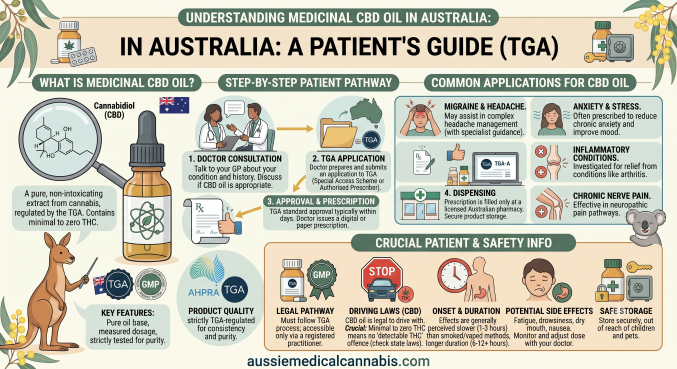
Medicinal CBD oil is a therapeutic product containing cannabidiol (CBD), one of the primary cannabinoids found in the Cannabis sativa plant. Unlike tetrahydrocannabinol (THC), CBD is generally considered non-intoxicating, meaning it does not typically produce the “high” associated with cannabis.
In Australia medicinal CBD oil is regulated within the healthcare system and may be prescribed by an appropriately authorised healthcare professional when clinically appropriate. Researchers continue to investigate CBD for a range of medical conditions while evaluating its effectiveness, safety profile, and long-term outcomes.
This educational guide explains what medicinal CBD oil is, how it works, current areas of scientific research, possible side effects, and Australia’s regulatory framework.
What Is Medicinal CBD Oil?
Medicinal CBD oil is a liquid formulation containing purified or highly refined cannabidiol.
Depending on the product, it may contain:
- Cannabidiol (CBD)
- Trace amounts of other cannabinoids
- Pharmaceutical-grade carrier oils
Unlike THC-dominant products, CBD oils are generally formulated to minimise psychoactive effects while maintaining consistent quality and cannabinoid content.
How Does CBD Oil Work?
CBD interacts with the body’s endocannabinoid system (ECS), a complex signalling network involved in maintaining physiological balance.
The ECS helps regulate:
- Mood
- Sleep
- Pain perception
- Appetite
- Memory
- Immune responses
- Stress regulation
CBD appears to influence the ECS indirectly and may also interact with serotonin and other signalling pathways involved in neurological function.
Potential Therapeutic Uses Being Studied
Researchers continue investigating medicinal CBD oil across several areas of healthcare.
1. Treatment-Resistant Epilepsy
The strongest clinical evidence for CBD relates to certain rare forms of treatment-resistant epilepsy.
Prescription CBD medicines have demonstrated benefits in reducing seizure frequency for selected patients under specialist care.
2. Anxiety Disorders
CBD continues to be studied for anxiety disorders.
Some early clinical studies have shown promising findings, although additional large, high-quality clinical trials are required before firm conclusions can be made.
3. Chronic Pain
Researchers continue investigating whether CBD may contribute to chronic pain management in selected patients.
Evidence remains mixed, and further research is ongoing.
4. Inflammatory Conditions
CBD has attracted interest because of its potential effects on inflammatory pathways.
Scientists continue investigating its possible role in inflammatory and autoimmune diseases.
5. Neurological Disorders
CBD is being studied for several neurological conditions, including:
- Parkinson’s disease
- Alzheimer’s disease
- Multiple sclerosis
- Other neurodegenerative disorders
Current evidence continues to evolve.
6. Sleep Disturbance
Researchers are investigating whether CBD may improve sleep quality in some individuals.
Current findings are mixed, and more research is needed to determine which patients may benefit.
How CBD Differs From THC
Although both cannabinoids come from cannabis, they have important differences.
| Feature | CBD | THC |
|---|---|---|
| Psychoactive | Generally no | Yes |
| Produces intoxication | No | Yes |
| Temporary cognitive impairment | Generally uncommon | Possible |
| Primary research areas | Epilepsy, anxiety, inflammation | Pain, nausea, spasticity |
Possible Side Effects
Like all medicines, CBD oil may cause side effects.
Reported side effects include:
- Fatigue
- Drowsiness
- Dry mouth
- Diarrhoea
- Changes in appetite
- Dizziness
Not everyone experiences side effects, and responses vary depending on the individual and the product used.
Medicine Interactions
CBD may interact with certain prescription medicines.
Healthcare professionals consider factors such as:
- Current medications
- Liver function
- Medical history
- Potential drug interactions
before recommending CBD-containing medicines.
Educational Comparison Table
| Topic | Medicinal CBD Oil | THC-Containing Medicinal Products |
| Psychoactive | Generally no | Yes |
| Produces a “High” | No | Yes |
| Major Research Areas | Epilepsy, anxiety, inflammation | Pain, nausea, spasticity |
| Temporary Driving Impairment | Depends on the product and individual | More likely |
Australian Regulation
Medicinal CBD products are regulated through the Therapeutic Goods Administration (TGA) together with Commonwealth, state, and territory medicines legislation.
Healthcare professionals assess:
- Medical history
- Previous treatments
- Current medicines
- Scientific evidence
- Potential benefits
- Potential risks
before determining whether a CBD medicine is clinically appropriate.
Ongoing Scientific Research
Scientists continue investigating CBD for potential roles in:
- Neurological disorders
- Chronic pain
- Anxiety disorders
- Inflammatory diseases
- Sleep disorders
- Neuroprotection
While evidence is encouraging in some areas, further high-quality research is needed to better understand long-term safety and effectiveness.
Where to Learn More
Reliable educational information is available at https://aussiemedicalcannabis.com/
- Therapeutic Goods Administration – Medicinal Cannabis
- Australian Government Department of Health, Disability and Ageing – Medicinal Cannabis
- Healthdirect Australia
PubMed Reference
Frequently Asked Questions
1. What is medicinal CBD oil?
Medicinal CBD oil is a regulated therapeutic product containing cannabidiol (CBD), a non-intoxicating cannabinoid used within Australia’s healthcare framework where clinically appropriate.
2. Does medicinal CBD oil make you feel high?
CBD is generally considered non-intoxicating and does not typically produce the psychoactive effects associated with THC.
3. What medical conditions has CBD been studied for?
Research has investigated CBD for treatment-resistant epilepsy, anxiety disorders, chronic pain, inflammatory conditions, neurological disorders, and sleep disturbance. Evidence is strongest for certain rare forms of epilepsy.
4. Can medicinal CBD oil cause side effects?
Yes. Possible side effects include fatigue, drowsiness, diarrhoea, dry mouth, dizziness, and changes in appetite. Individual responses vary.
5. Is medicinal CBD oil legal in Australia?
Yes. Medicinal CBD products are regulated under Australian therapeutic goods legislation and may be prescribed by appropriately authorised healthcare professionals where clinically appropriate.
Conclusion
Medicinal CBD oil is an important area of modern medical research and regulated healthcare in Australia. Current evidence supports its use for selected conditions, particularly certain rare forms of treatment-resistant epilepsy, while many other therapeutic applications remain under active investigation. Understanding how CBD works, its potential benefits and risks, and Australia’s regulatory framework helps patients and the public make informed decisions based on current scientific evidence.
