
Cannabis Education
Medical vs Recreational Cannabis: An Educational Guide for Australians
Aug
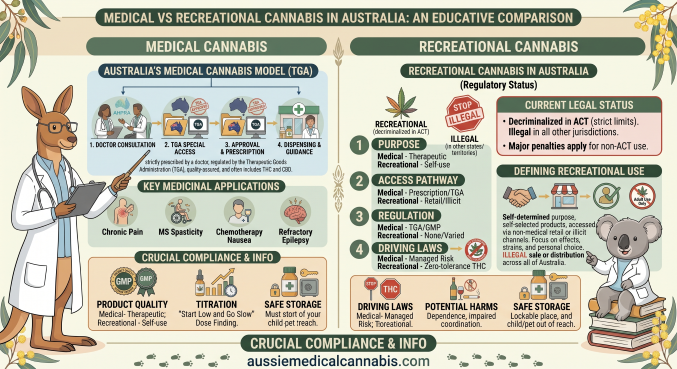
Cannabis is used in different ways depending on the legal framework and intended purpose. The two main categories are medical cannabis and recreational cannabis. Although both originate from the Cannabis sativa plant and contain cannabinoids such as cannabidiol (CBD) and tetrahydrocannabinol (THC), they are subject to very different regulations, quality standards, and intended uses.
In Australia medicinal cannabis is regulated through the healthcare system, while recreational cannabis remains illegal in most jurisdictions. Understanding these differences helps patients and the public make informed decisions based on scientific evidence and Australian law.
This educational guide explains how medical and recreational cannabis differ, current research, Australia’s regulatory framework, and why these distinctions are important.
What Is Medical Cannabis?
Medical cannabis refers to cannabinoid-containing medicines used for therapeutic purposes under healthcare supervision.
These products may contain:
- Cannabidiol (CBD)
- Tetrahydrocannabinol (THC)
- A combination of CBD and THC
- Other cannabinoids in regulated formulations
Healthcare professionals consider the available evidence, potential benefits, and possible risks before deciding whether a medicinal cannabis product is clinically appropriate.
What Is Recreational Cannabis?
Recreational cannabis refers to cannabis used for non-medical purposes.
In jurisdictions where recreational cannabis is legal, governments may regulate:
- Licensed retailers
- Product testing
- Packaging and labelling
- Age restrictions
- Consumer protections
Australia does not have a nationwide legal recreational cannabis market.
Purpose of Use
The primary distinction between medical and recreational cannabis is the intended purpose.
Medical cannabis aims to support treatment or symptom management for selected health conditions under professional care.
Recreational cannabis is intended for personal adult use where permitted by law.
Product Standards
Regulated medicinal cannabis products are manufactured to pharmaceutical quality standards.
These standards may include:
- Consistent cannabinoid content
- Manufacturing quality controls
- Product stability testing
- Batch quality assurance
Regulatory requirements for recreational products vary between countries and jurisdictions.
Clinical Oversight
Medical cannabis is incorporated into healthcare through clinical assessment and ongoing monitoring.
Healthcare professionals may review:
- Medical history
- Previous treatments
- Current medicines
- Potential medicine interactions
- Treatment response
Recreational cannabis is generally not used within a therapeutic treatment plan.
Conditions Studied for Medical Cannabis
Researchers have investigated regulated cannabinoid medicines for selected conditions including:
- Chronic pain
- Treatment-resistant epilepsy
- Chemotherapy-induced nausea and vomiting
- Multiple sclerosis-related spasticity
- Selected symptoms in palliative care
Evidence is stronger for some conditions than others, and research continues.
CBD and THC
The two most researched cannabinoids have different properties.
| Feature | CBD | THC |
|---|---|---|
| Psychoactive | Generally no | Yes |
| Produces intoxication | No | Yes |
| Primary Research Areas | Epilepsy, anxiety research, inflammation | Pain, nausea, spasticity |
| Temporary Cognitive Effects | Generally uncommon | Possible |
Medical vs Recreational Cannabis Comparison
| Feature | Medical Cannabis | Recreational Cannabis |
| Primary Purpose | Therapeutic use | Non-medical adult use |
| Clinical Supervision | Yes | Generally no |
| Regulation | Therapeutic goods and medicines laws | Recreational cannabis laws where legal |
| Product Standards | Pharmaceutical quality standards | Vary by jurisdiction |
| Healthcare Monitoring | Yes | Not typically |
Australian Legal Framework
Australia regulates medicinal cannabis through the Therapeutic Goods Administration (TGA) together with Commonwealth, state, and territory medicines legislation.
Key points include:
- Medicinal cannabis is available within Australia’s regulated healthcare framework.
- Recreational cannabis remains illegal in most Australian jurisdictions.
- Laws may differ between states and territories, particularly regarding possession offences and local enforcement.
Safety Considerations
Like all medicines, cannabinoid products may cause side effects.
Possible side effects include:
- Drowsiness
- Dizziness
- Dry mouth
- Fatigue
- Reduced concentration
THC-containing products may also temporarily impair reaction time, coordination, and judgement.
Healthcare professionals consider these factors when making treatment decisions.
Why Ongoing Research Matters
Scientists continue investigating cannabinoids to better understand:
- Long-term safety
- Clinical effectiveness
- Appropriate therapeutic uses
- Public health outcomes
- Product quality
- Patient selection
Evidence continues to evolve through high-quality clinical research.
Where to Learn More
Reliable educational information is available at https://aussiemedicalcannabis.com/
- Therapeutic Goods Administration – Medicinal Cannabis
- Australian Government Department of Health, Disability and Ageing – Medicinal Cannabis
- Australian Institute of Health and Welfare – Alcohol, Tobacco and Other Drugs
PubMed Reference
Frequently Asked Questions
1. What is the main difference between medical and recreational cannabis?
Medical cannabis is used for therapeutic purposes under healthcare supervision, while recreational cannabis is intended for non-medical adult use where permitted by law.
2. Is medical cannabis regulated in Australia?
Yes. Medicinal cannabis is regulated through Australia’s therapeutic goods and medicines framework.
3. Does medical cannabis contain THC?
Some medicinal cannabis products contain THC, some contain CBD, and others contain a combination of cannabinoids depending on the formulation.
4. Is recreational cannabis legal across Australia?
No. Recreational cannabis remains illegal in most Australian jurisdictions, although laws differ between states and territories.
5. Why are medical cannabis products manufactured to pharmaceutical standards?
Quality standards help promote consistency, product reliability, and patient safety within the healthcare system.
Conclusion
Although medical and recreational cannabis originate from the same plant, they serve different purposes and operate under different legal and regulatory frameworks. Medical cannabis is integrated into healthcare and supported by clinical oversight, while recreational cannabis is intended for non-medical adult use in jurisdictions where it is lawful. Understanding these distinctions, together with the current scientific evidence and Australia’s regulatory approach, supports informed public discussion and evidence-based healthcare.
