
Cannabis Education
Medical Strains of Weed: An Evidence-Based Guide for Australians
Aug
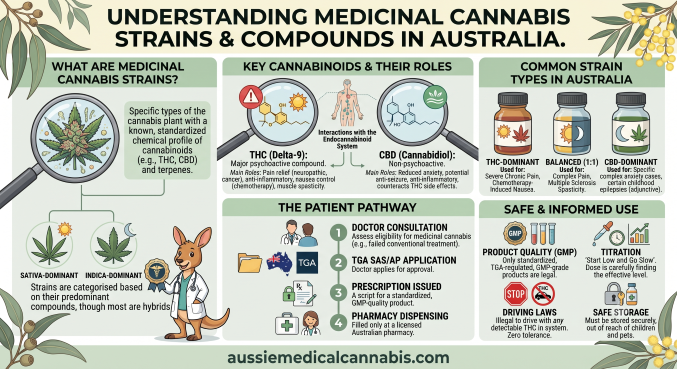
The phrase “medical strains of weed” is commonly used to describe cannabis varieties associated with medicinal cannabis products. However, in modern medicine and scientific research, healthcare professionals generally focus less on strain names and more on the chemical composition of a product—particularly its cannabinoid profile.
In Australia medicinal cannabis products are regulated within the healthcare system. Rather than prescribing a strain by name, healthcare professionals consider factors such as cannabinoid content, available scientific evidence, product quality, and the patient’s individual clinical circumstances.
This guide explains how cannabis varieties are classified, why cannabinoid profiles are important, and how medicinal cannabis products are described in clinical practice.
What Is a Cannabis Strain?
A cannabis strain (also called a cultivar) refers to a variety of cannabis with particular genetic characteristics.
Historically, cannabis has been described using terms such as:
- Cannabis sativa
- Cannabis indica
- Hybrid varieties
Modern research suggests these labels alone do not reliably predict a product’s effects or therapeutic properties.
Why Do Healthcare Professionals Focus on Cannabinoids?
Researchers have identified more than 100 cannabinoids in cannabis.
The two most studied are:
- Cannabidiol (CBD) – generally considered non-intoxicating.
- Tetrahydrocannabinol (THC) – the primary psychoactive cannabinoid.
Modern medicinal cannabis products are commonly characterised by their cannabinoid content rather than their strain name.
Cannabinoid Profiles
Researchers often describe medicinal cannabis products according to their cannabinoid profile.
| Product Type | General Characteristics |
|---|---|
| CBD-dominant | Higher cannabidiol content with little or no THC, depending on the formulation |
| Balanced CBD | Contains both cannabinoids in defined proportions |
| THC-dominant | Higher tetrahydrocannabinol content |
The choice of formulation depends on the medical condition being treated, the available evidence, and clinical judgement.
Why Strain Names Are Less Important in Medicine
The same strain name may represent products with different chemical compositions.
Factors influencing composition include:
- Plant genetics
- Growing conditions
- Harvest timing
- Processing methods
- Manufacturing standards
Because of these differences, healthcare professionals rely on laboratory-tested cannabinoid content rather than strain names alone.
Conditions Studied for Cannabinoid Medicines
Researchers have investigated regulated cannabinoid medicines for selected conditions, including:
- Chronic pain
- Treatment-resistant epilepsy
- Chemotherapy-induced nausea and vomiting
- Multiple sclerosis-related spasticity
- Selected symptoms in palliative care
Evidence varies depending on the condition and the specific cannabinoid formulation.
CBD vs THC
| Feature | CBD | THC |
| Psychoactive | Generally no | Yes |
| Produces intoxication | No | Yes |
| Main research areas | Epilepsy, anxiety research, inflammation | Pain, nausea, spasticity |
| Temporary cognitive effects | Generally uncommon | Possible |
Product Quality in Australia
Regulated medicinal cannabis products are manufactured to quality standards intended to support:
- Consistent cannabinoid content
- Quality assurance
- Product testing
- Manufacturing controls
These standards distinguish regulated medicinal products from unregulated cannabis products.
Australian Regulation
Medicinal cannabis is regulated through the Therapeutic Goods Administration (TGA) together with Commonwealth, state, and territory medicines legislation.
Healthcare professionals consider:
- Medical history
- Previous treatments
- Current medicines
- Available scientific evidence
- Potential benefits
- Potential risks
when determining whether a medicinal cannabis product is clinically appropriate.
Educational Comparison Table
| Topic | Traditional Strain Labels | Modern Medical Classification |
| Main Focus | Plant variety names | Cannabinoid profile and product quality |
| Scientific Reliability | Limited for predicting effects | Higher for describing composition |
| Clinical Use | Secondary consideration | Primary consideration |
Where to Learn More
Reliable educational information is available from:
- Therapeutic Goods Administration – Medicinal Cannabis
- Australian Government Department of Health, Disability and Ageing – Medicinal Cannabis
- Healthdirect Australia
PubMed Reference
Frequently Asked Questions
1. What are medical strains of weed?
The term usually refers to cannabis varieties used in medicinal cannabis products. In clinical practice, healthcare professionals focus on cannabinoid content rather than strain names.
2. Are “sativa” and “indica” important in medicine?
These traditional labels are not considered reliable predictors of a product’s therapeutic effects. Modern medicine relies more on cannabinoid composition and product quality.
3. Why are cannabinoid profiles important?
CBD and THC concentrations help describe a product’s pharmacological properties and are more useful than strain names for clinical decision-making.
4. Are medicinal cannabis products regulated in Australia?
Yes. Medicinal cannabis products are regulated under Australia’s therapeutic goods and medicines framework.
5. What conditions have cannabinoid medicines been studied for?
Research has investigated cannabinoid medicines for chronic pain, treatment-resistant epilepsy, chemotherapy-induced nausea and vomiting, multiple sclerosis-related spasticity, and selected symptoms in palliative care.
Conclusion
While the term “medical strains of weed” is widely used, modern healthcare places greater emphasis on cannabinoid profiles, product quality, and scientific evidence than on strain names. Australia’s regulated medicinal cannabis framework focuses on standardised cannabinoid medicines, helping support consistent quality, patient safety, and evidence-based clinical care.
