
Cannabis Education
Is Medical Marijuana Covered by Medicare? Understanding Australia’s Healthcare System
Aug
Medicinal cannabis has become an increasingly important area of healthcare in Australia as scientific research continues to explore its potential therapeutic applications. Many Australians ask whether medical marijuana is covered by Medicare and whether prescription medicinal cannabis products are subsidised by the government.
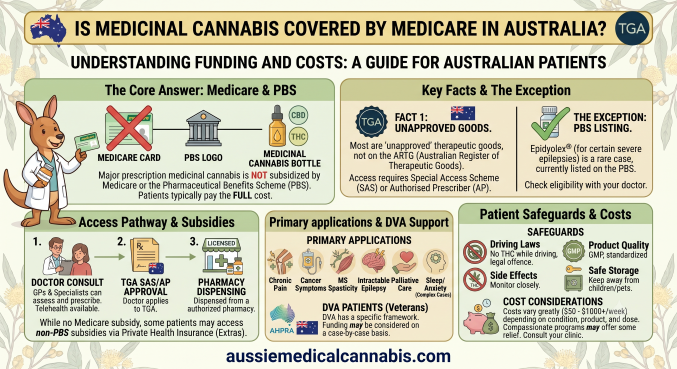
The short answer is that Medicare generally does not pay for most medicinal cannabis products, although Medicare may help cover eligible medical consultations with healthcare professionals. Most medicinal cannabis products available in Australia are unapproved therapeutic goods, meaning they are not routinely subsidised through the Pharmaceutical Benefits Scheme (PBS).
Understanding the difference between Medicare, the PBS, and Australia’s medicinal cannabis framework can help patients better understand how these medicines are regulated and funded.
This educational guide explains Medicare coverage, PBS subsidies, Australia’s medicinal cannabis regulations, and what current government guidance says.
What Is Medicare?
Medicare is Australia’s publicly funded healthcare system.
It helps eligible Australians access healthcare by providing benefits for services such as:
- General practitioner (GP) consultations
- Specialist consultations
- Diagnostic imaging
- Pathology services
- Some hospital services
Medicare primarily assists with healthcare services rather than automatically paying for every prescribed medicine.
What Is the Pharmaceutical Benefits Scheme (PBS)?
The Pharmaceutical Benefits Scheme (PBS) is a separate Australian Government program.
The PBS helps reduce the cost of many approved prescription medicines that have been assessed for:
- Safety
- Effectiveness
- Cost-effectiveness
Only medicines listed on the PBS receive government subsidy under the scheme.
Is Medicinal Cannabis Covered by Medicare?
In most situations, no.
Most medicinal cannabis products are not covered by Medicare as medicines, because they are generally not listed on the PBS.
However, Medicare may provide benefits for eligible medical consultations with doctors or specialists involved in a patient’s care, depending on the consultation and the patient’s eligibility.
The cost of the consultation and the cost of the medicine are separate.
Why Aren’t Most Medicinal Cannabis Products PBS Listed?
Many medicinal cannabis products are supplied as unapproved therapeutic goods through Australia’s regulated access pathways.
Medicines listed on the PBS undergo extensive assessment that considers:
- Clinical effectiveness
- Safety
- Cost-effectiveness
- Public health benefit
Many medicinal cannabis products have not completed this full process for PBS listing
Are There Any Exceptions?
Yes.
Australia has one registered cannabidiol (CBD) medicine, Epidyolex®, which is approved for specific rare forms of treatment-resistant epilepsy.
For approved indications and eligible patients, this medicine may be subsidised through the PBS.
This is an exception rather than the rule for medicinal cannabis products.
Medicare vs PBS
Understanding the difference between these programs is important.
| Medicare | Pharmaceutical Benefits Scheme (PBS) |
|---|---|
| Helps cover eligible healthcare services | Helps reduce the cost of eligible prescription medicines |
| GP consultations | PBS-listed medicines |
| Specialist appointments | Government medicine subsidy |
| Diagnostic services | Applies only to approved listed medicines |
How Medicinal Cannabis Is Regulated
Australian Medicinal cannabis products are regulated through the Therapeutic Goods Administration (TGA) together with state and territory medicines legislation.
Healthcare professionals consider:
- Medical history
- Previous treatments
- Current medicines
- Clinical evidence
- Potential benefits
- Possible risks
before determining whether medicinal cannabis may be appropriate.
Conditions Studied
Researchers have investigated cannabinoid medicines for selected conditions including:
- Chronic pain
- Treatment-resistant epilepsy
- Chemotherapy-induced nausea and vomiting
- Multiple sclerosis-related spasticity
- Selected symptoms in palliative care
Evidence is stronger for some conditions than others, and research continues to evolve.
Potential Side Effects
Like all medicines, cannabinoid products may cause side effects.
Reported side effects include:
- Drowsiness
- Fatigue
- Dry mouth
- Dizziness
- Appetite changes
- Diarrhoea
Products containing THC may also temporarily impair concentration, coordination, and reaction time.
Educational Comparison Table
| Topic | Medicare | PBS |
| Covers GP consultations | Yes (eligible services) | No |
| Covers specialist consultations | Yes (eligible services) | No |
| Covers most medicinal cannabis products | Generally no | Generally no |
| Covers some registered medicines | Not as medicines | Yes, if PBS listed and eligibility requirements are met |
Why Is Ongoing Research Important?
Scientists continue studying cannabinoids to better understand:
- Long-term safety
- Clinical effectiveness
- Cost-effectiveness
- Appropriate patient populations
- Healthcare outcomes
High-quality evidence is important for regulatory and funding decisions.
Australian Regulation
Australia regulates medicinal cannabis through Commonwealth legislation together with state and territory medicines laws.
The Therapeutic Goods Administration evaluates evidence relating to:
- Product quality
- Safety
- Effectiveness
- Appropriate access pathways
Healthcare professionals prescribe medicinal cannabis based on individual clinical assessment and current evidence.
Where to Learn More
Reliable educational information is available at https://aussiemedicalcannabis.com/
- Therapeutic Goods Administration – Medicinal Cannabis
- Services Australia – Medicare
- Pharmaceutical Benefits Scheme (PBS)
PubMed Reference
Frequently Asked Questions
1. Is medicinal cannabis covered by Medicare in Australia?
Medicare may help cover eligible medical consultations, but it generally does not pay for most medicinal cannabis products themselves.
2. Why isn’t most medicinal cannabis subsidised through the PBS?
Most medicinal cannabis products are unapproved therapeutic goods and are not listed on the PBS, so they are not routinely subsidised.
3. Does Medicare pay for specialist appointments related to medicinal cannabis?
Eligible consultations with GPs or specialists may attract Medicare benefits, depending on the service and the patient’s eligibility.
4. Is there any medicinal cannabis medicine on the PBS?
Yes. Epidyolex® is a registered CBD medicine that may be subsidised through the PBS for approved indications and eligible patients.
5. Who regulates medicinal cannabis in Australia?
Medicinal cannabis is regulated by the Therapeutic Goods Administration (TGA) together with relevant Commonwealth, state, and territory legislation.
Conclusion
Medicare and the Pharmaceutical Benefits Scheme serve different roles within Australia’s healthcare system. While Medicare may assist with eligible healthcare consultations, it generally does not cover the cost of most medicinal cannabis products. Most cannabinoid medicines remain outside the PBS because they are supplied through regulated access pathways rather than routine PBS listing. As research continues and evidence evolves, Australia’s regulatory framework aims to balance patient access with product quality, safety, and evidence-based healthcare.
