
Cannabis Education
Hash Oil Benefits: An Educational Guide for Australians
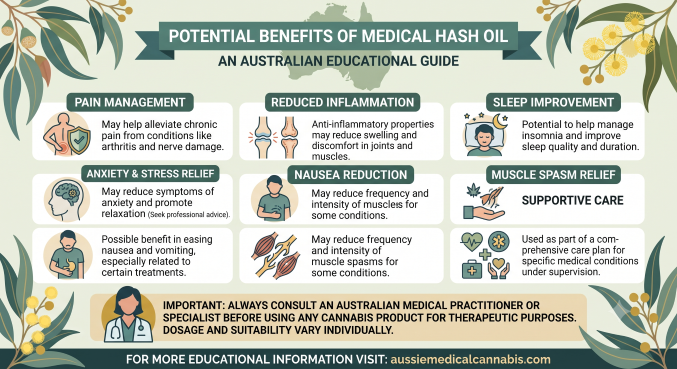
Aug
Hash oil is a concentrated cannabis extract that contains cannabinoids such as tetrahydrocannabinol (THC) and, depending on the product, cannabidiol (CBD). Because hash oil can contain much higher concentrations of cannabinoids than the cannabis plant itself, it has attracted interest from researchers studying medicinal cannabinoids as well as public health experts examining safety concerns.
It is important to distinguish regulated medicinal cannabis products from illicit cannabis concentrates. Aussie medical cannabis products are manufactured under quality standards and prescribed within the healthcare system where clinically appropriate. Illicit hash oil products may vary significantly in cannabinoid content, purity, and contaminants.
This educational guide explains what hash oil is, the potential therapeutic areas being researched, the current evidence, and the known risks.
What Is Hash Oil?
Hash oil is a concentrated extract made from the cannabis plant.
Depending on the extraction process and source material, hash oil may contain varying amounts of:
- THC (tetrahydrocannabinol)
- CBD (cannabidiol)
- Other cannabinoids
- Terpenes and plant compounds
The exact composition differs considerably between products.
How Cannabinoids Work
Cannabinoids interact with the body’s endocannabinoid system (ECS).
The ECS contributes to regulating many body functions, including:
- Pain perception
- Sleep
- Mood
- Appetite
- Memory
- Immune responses
Researchers continue investigating how different cannabinoids may influence these biological systems.
Potential Therapeutic Areas Under Investigation
Research focuses on cannabinoids themselves rather than hash oil as an unregulated product.
1. Chronic Pain
Some evidence suggests certain regulated cannabinoid medicines may help selected patients with specific types of chronic pain, particularly neuropathic pain.
Evidence varies depending on the condition and product.
2. Chemotherapy-Induced Nausea
THC-containing medicines have been studied for managing nausea and vomiting associated with chemotherapy in selected patients.
3. Multiple Sclerosis
Some cannabinoid medicines have shown benefits for reducing muscle stiffness and spasticity associated with multiple sclerosis in some patients.
4. Treatment-Resistant Epilepsy
Prescription CBD medicines have demonstrated benefits for certain rare forms of treatment-resistant epilepsy.
5. Palliative Care
Researchers continue studying cannabinoids for symptom management in palliative care, including pain, appetite changes, nausea, and sleep disturbance.
Important Distinction
Current scientific evidence generally relates to regulated medicinal cannabinoid products, not illicit hash oil.
Because illicit cannabis concentrates differ greatly in composition and quality, research findings from regulated medicinal products cannot automatically be applied to unregulated products.
Potential Risks
Cannabis concentrates with high THC content may increase the likelihood of adverse effects.
Reported effects include:
- Dizziness
- Drowsiness
- Anxiety
- Panic
- Impaired concentration
- Increased heart rate
- Reduced coordination
The likelihood and severity depend on the individual, the cannabinoid profile, and other factors.
Hash Oil vs Regulated Medicinal Cannabis
| Feature | Illicit Hash Oil | Regulated Medicinal Cannabis Products |
|---|---|---|
| Manufacturing Standards | Variable | Pharmaceutical quality standards |
| Cannabinoid Content | May vary widely | Standardised |
| Clinical Oversight | None | Used under healthcare supervision where appropriate |
| Evidence Base | Limited | Studied for selected medical conditions |
What Does the Research Say?
Researchers have identified evidence supporting selected cannabinoid medicines for certain medical conditions.
However:
- Evidence is stronger for some conditions than others.
- Many proposed therapeutic uses require further clinical trials.
- There is insufficient evidence to conclude that unregulated hash oil is safe or effective for treating medical conditions.
Australian Regulation
Aussie medical cannabis products are regulate through Commonwealth legislation together with state and territory requirements.
Healthcare professionals consider:
- Clinical evidence
- Potential benefits
- Potential risks
- Previous treatments
- Individual patient circumstances
before prescribing regulated medicinal cannabis products where appropriate.
Educational Comparison Table
| Topic | THC-Dominant Products | CBD-Dominant Products |
| Psychoactive | Yes | Generally no |
| Research Areas | Pain, nausea, spasticity | Epilepsy, anxiety research, inflammation |
| Intoxication | Possible | Typically no |
| Side Effects | More common | Usually milder, depending on dose |
Ongoing Research
Scientists continue investigating cannabinoids in relation to:
- Chronic pain
- Neurological disorders
- Cancer symptom management
- Anxiety disorders
- Sleep disorders
- Inflammatory diseases
More high-quality clinical research is needed to clarify benefits, risks, and long-term outcomes.
Where to Learn More
Reliable educational information is available at https://aussiemedicalcannabis.com/
- Therapeutic Goods Administration – Medicinal Cannabis
- Australian Government Department of Health, Disability and Ageing – Medicinal Cannabis
- Healthdirect Australia – Cannabis Information
PubMed Reference
Frequently Asked Questions
1. What is hash oil?
Hash oil is a concentrated cannabis extract that may contain varying amounts of THC, CBD, and other cannabinoids.
2. Has hash oil been proven to treat medical conditions?
Most clinical evidence relates to regulated medicinal cannabinoid products rather than unregulated hash oil. Evidence varies by condition and more research is needed.
3. What are the risks of hash oil?
High-THC cannabis concentrates may increase the risk of dizziness, anxiety, impaired coordination, drowsiness, and other adverse effects.
4. Is hash oil the same as medicinal cannabis?
No. Regulated medicinal cannabis products are manufactured to quality standards and used under medical supervision, whereas illicit hash oil products can vary greatly in composition and purity.
5. Is hash oil legal in Australia?
Medicinal cannabis products are regulated under Australian law. The legal status of cannabis concentrates depends on the product, its formulation, and the applicable legislation.
Conclusion
Hash oil is a concentrated cannabis extract, but current scientific evidence primarily supports specific regulated medicinal cannabinoid products rather than unregulated cannabis concentrates. While cannabinoids continue to be investigated for conditions such as chronic pain, chemotherapy-induced nausea, epilepsy, and multiple sclerosis-related spasticity, more research is needed to better understand long-term safety and effectiveness. Australians seeking reliable information should rely on qualified healthcare professionals, official health authorities, and peer-reviewed scientific research.
