
Cannabis Education
Cannabis in Canberra: Understanding the ACT Framework
Aug
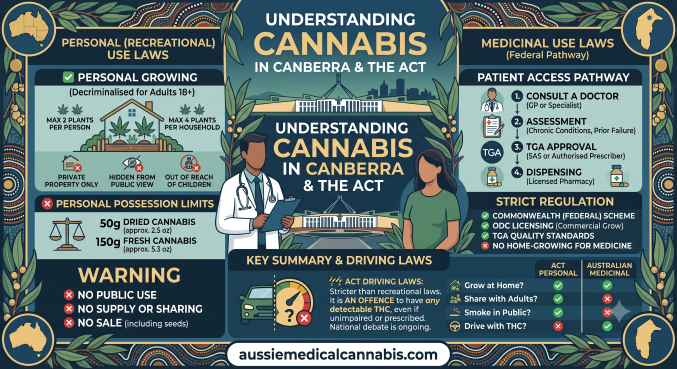
Cannabis laws in Canberra are governed by a combination of Australian Capital Territory (ACT) legislation and Commonwealth law. This makes it important to distinguish between recreational cannabis, medicinal cannabis, and activities involving commercial cultivation or supply.
The ACT has its own Medicines, Poisons and Therapeutic Goods Act 2008, which regulates medicines and controlled substances within the territory.
At the national level, medicinal cannabis is regulated as a therapeutic good by the Therapeutic Goods Administration (TGA). Most medicinal cannabis products in Australia are currently unapproved therapeutic goods and are subject to specific regulatory pathways.
Medicinal Cannabis in Canberra
Medicinal cannabis is different from recreational cannabis. It forms part of Australia’s healthcare system and may contain cannabinoids such as:
- CBD (cannabidiol)
- THC (tetrahydrocannabinol)
- A combination of cannabinoids
The TGA states that medicinal cannabis products include forms such as oral liquids, capsules, sprays and dried herb.
The evidence for medicinal cannabis varies considerably between medical conditions and products. Healthcare professionals therefore consider the available evidence, potential risks, and the patient’s circumstances.
Australia’s Medicinal Cannabis Regulation
The TGA regulates medicinal cannabis as a therapeutic good.
A small number of medicinal cannabis products are included in the Australian Register of Therapeutic Goods (ARTG). Many others are unapproved therapeutic goods and are supplied through regulated pathways such as the Special Access Scheme, Authorised Prescriber Scheme, or clinical trials.
This framework applies nationally, including in Canberra, alongside applicable ACT legislation.
CBD and THC
CBD and THC are two of the most researched cannabinoids.
| Characteristic | CBD | THC |
|---|---|---|
| Intoxicating | Generally no | Yes |
| Psychoactive effects | Generally absent | Possible |
| Possible impairment | Generally limited | Possible |
| Medicine interactions | Possible | Possible |
THC can affect attention, coordination, reaction time, memory and judgement. These effects are particularly relevant to safety-sensitive activities.
Cannabis and Health
Cannabis can affect people differently. Potential adverse effects associated with cannabis or cannabinoid medicines can include:
- Drowsiness
- Dizziness
- Fatigue
- Reduced concentration
- Dry mouth
- Changes in appetite
- Temporary cognitive effects
The risks depend on factors including the cannabinoid composition, individual circumstances, and interactions with other medicines.
Cannabis and Young People
Cannabis use can be particularly concerning during adolescence because the brain continues developing throughout the teenage years. Recreational cannabis use is therefore not considered a safe activity for young people.
Medicinal decisions for adolescents are a separate clinical matter and require appropriate healthcare oversight.
Cannabis Laws in the ACT
ACT legislation regulates medicines and controlled substances through the territory’s medicines and poisons framework. The current Medicines, Poisons and Therapeutic Goods Act 2008 is in force.
Commonwealth legislation also remains relevant because cannabis and cannabinoids are subject to national drug-control and therapeutic-goods requirements.
Because ACT and Commonwealth laws can interact, claims that cannabis is simply “legal” or “illegal” in Canberra can be misleading without explaining the particular activity involved.
Recreational Cannabis vs Medicinal Cannabis
| Area | Recreational Cannabis | Medicinal Cannabis |
|---|---|---|
| Purpose | Non-medical use | Therapeutic treatment |
| Healthcare framework | No | Yes |
| TGA therapeutic-goods framework | Generally not applicable | Applicable |
| Medical supervision | Not inherently required | Central to the medical framework |
| Product standards | Vary according to legal status | Regulated requirements apply |
Product Quality
The TGA maintains quality requirements for medicinal cannabis products. Therapeutic Goods Order 93 (TGO 93) establishes minimum quality requirements for medicinal cannabis products supplied in Australia.
Quality controls are important because cannabis products can vary substantially in cannabinoid composition and other characteristics.
Current Scientific Research
Researchers continue studying cannabinoids in areas including:
- Certain forms of treatment-resistant epilepsy
- Chronic pain
- Multiple sclerosis-related symptoms
- Chemotherapy-associated nausea and vomiting
- Selected palliative-care symptoms
The TGA notes that evidence remains limited for many proposed uses, so medicinal cannabis should not automatically be regarded as a treatment for every condition.
Frequently Asked Questions
Is cannabis legal in Canberra?
The answer depends on the particular activity and the applicable ACT and Commonwealth laws. Recreational cannabis, medicinal cannabis, possession, cultivation and supply are not governed by one simple rule.
Is medicinal cannabis regulated in Canberra?
Yes. Medicinal cannabis is regulated nationally as a therapeutic good, alongside applicable ACT medicines and controlled-substance legislation.
What are CBD and THC?
CBD and THC are cannabinoids found in cannabis. CBD is generally non-intoxicating, while THC is psychoactive and can cause impairment.
Are medicinal cannabis products all TGA-approved?
No. The TGA states that most medicinal cannabis products supplied in Australia are currently unapproved therapeutic goods, although regulated access pathways exist.
Where can I find reliable information?
The best sources are Australian Government and ACT Government health and legislation websites, rather than informal cannabis websites or social-media claims.
Official Sources
- ACT Legislation Register – Medicines, Poisons and Therapeutic Goods Act 2008
- Therapeutic Goods Administration – Medicinal Cannabis
- TGA – Medicinal Cannabis Access Pathways
- Australian Government Department of Health – Medicinal Cannabis
PubMed Research
Conclusion
Cannabis in Canberra is governed by both ACT and Commonwealth regulatory frameworks. Medicinal cannabis is treated differently from recreational cannabis and operates within Australia’s therapeutic-goods system, with the TGA responsible for national medicinal-cannabis regulation.
Because cannabis laws and regulatory requirements can change, current ACT Government and Australian Government information should be consulted when researching a specific legal question.
