
Cannabis Education
Medical Cannabis Dispensary: Understanding What It Means in Australia
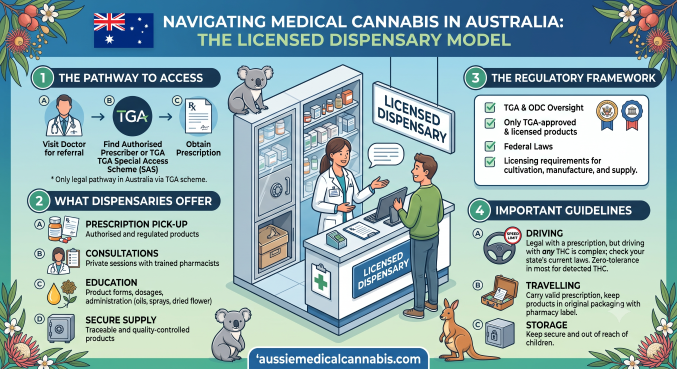
Aug
A medical cannabis dispensary generally refers to a healthcare or retail setting where medicinal cannabis products are supplied to eligible patients under the applicable medical and legal framework.
The terminology can be confusing in Australia because the country’s system is different from the dispensary models used in some overseas jurisdictions. Australia primarily uses a prescription and pharmacy-based healthcare model, rather than a nationwide recreational-style dispensary system.
Medicinal cannabis products may contain cannabinoids such as cannabidiol (CBD) and tetrahydrocannabinol (THC). Their supply is regulated through Australia’s therapeutic-goods and medicines framework, together with relevant state and territory requirements.
What Is Medicinal Cannabis?
Medicinal cannabis refers to therapeutic products containing cannabinoids derived from cannabis or manufactured to pharmaceutical standards.
Products can contain:
- CBD
- THC
- CBD and THC together
- Other cannabinoids
Different products have different compositions, indications, and safety considerations.
How Does a Medical Cannabis Dispensary Differ From a Recreational Dispensary?
The terms “medical dispensary” and “recreational dispensary” are often used interchangeably online, but they describe different systems.
| Feature | Medical Cannabis Supply | Recreational Dispensary |
|---|---|---|
| Primary purpose | Therapeutic treatment | Adult recreational use |
| Healthcare involvement | Yes | Generally no |
| Prescription framework | Relevant | Depends on jurisdiction |
| Product regulation | Therapeutic-goods framework | Recreational cannabis legislation |
| Australia’s national system | Yes for medicinal cannabis | No nationwide recreational system |
Australia has a regulated medicinal cannabis system but does not operate a nationwide recreational cannabis dispensary market.
The Role of Pharmacies
In Australia’s healthcare system, medicinal cannabis products may be supplied through appropriately authorised pharmacies and other lawful supply arrangements.
Pharmacies play an important role in medicine safety by helping with:
- Prescription dispensing
- Product identification
- Medicine information
- Storage requirements
- Potential interactions
- Patient counselling
The exact dispensing arrangements can depend on the product and applicable legislation.
The Role of Healthcare Professionals
Healthcare professionals are central to the medicinal cannabis framework.
Clinical decisions can take into account:
- Medical history
- Current medicines
- Previous treatments
- Available scientific evidence
- Potential benefits
- Potential risks
Medicinal cannabis should therefore be viewed as part of a broader healthcare system rather than simply as a retail cannabis product.
CBD and THC
The two best-known cannabinoids are CBD and THC.
CBD (cannabidiol) is generally considered non-intoxicating, whereas THC (tetrahydrocannabinol) is psychoactive and can affect perception, coordination, attention, and reaction time.
| Characteristic | CBD | THC |
| Intoxicating | Generally no | Yes |
| Psychoactive effects | Generally absent | Possible |
| Research areas | Certain neurological conditions and other applications | Pain, nausea, spasticity and other areas |
| Medicine interactions | Possible | Possible |
Product Quality and Regulation
One of the important differences between regulated medicinal cannabis and illicit cannabis is product oversight.
Regulated medicinal products are subject to applicable requirements concerning areas such as:
- Manufacturing
- Product quality
- Cannabinoid content
- Labelling
- Storage
- Safety monitoring
These controls are intended to provide greater consistency and protect patients.
Patient Safety
Medicinal cannabis can cause side effects, just like other medicines.
Possible effects include:
- Drowsiness
- Dizziness
- Fatigue
- Dry mouth
- Reduced concentration
- Changes in appetite
THC-containing products may additionally cause temporary impairment of coordination, reaction time, memory, or judgement.
Cannabinoids can also interact with other medicines, making professional medical oversight important.
Medicinal Cannabis and Driving
THC can affect skills that are important for safe driving, including:
- Attention
- Reaction time
- Coordination
- Judgement
Australian driving laws vary by jurisdiction. Patients using THC-containing medicinal cannabis should understand the laws that apply where they drive and discuss safety considerations with their healthcare professional.
Australia’s Regulatory Framework
Australia’s medicinal cannabis system involves several regulatory components.
The Therapeutic Goods Administration (TGA) regulates therapeutic goods, while the Office of Drug Control (ODC) administers important aspects of Australia’s controlled-drug framework, including medicinal cannabis cultivation and production.
State and territory governments also have responsibilities concerning medicines, prescribing, dispensing, and controlled substances.
This means Australia’s medicinal cannabis framework is not simply a conventional retail dispensary model.
Medical Cannabis Dispensary vs Pharmacy
The term “dispensary” can create the impression that medicinal cannabis is supplied through a specialised cannabis shop.
In Australia, however, medicinal cannabis is integrated into the broader healthcare and medicines system.
| Medical Cannabis Supply | Conventional Pharmacy |
| May supply prescribed medicinal cannabis | Supplies a broad range of medicines |
| Subject to relevant cannabis regulations | Subject to pharmacy and medicines regulation |
| Prescription requirements may apply | Prescription requirements depend on medicine |
| Patient safety and medicine counselling are important | Patient safety and counselling are important |
Why Medical Oversight Matters
Medical oversight can help identify:
- Potential medicine interactions
- Contraindications
- Side effects
- Appropriate monitoring requirements
- Changes in treatment response
This is particularly important because CBD and THC can affect individuals differently.
Current Areas of Medical Research
Researchers continue investigating cannabinoid medicines for selected conditions, including:
- Certain forms of treatment-resistant epilepsy
- Chronic pain
- Chemotherapy-associated nausea and vomiting
- Multiple sclerosis-related spasticity
- Selected palliative-care symptoms
Evidence varies considerably between conditions, and many proposed applications remain under investigation.
Frequently Asked Questions
1. What is a medical cannabis dispensary?
The term generally describes a place where medicinal cannabis is supplied to patients within a regulated medical system. In Australia, medicinal cannabis is primarily integrated into the prescription and pharmacy system.
2. Is there a nationwide recreational cannabis dispensary system in Australia?
No. Australia does not have a nationwide legal recreational cannabis retail system.
3. Is medicinal cannabis regulated in Australia?
Yes. Medicinal cannabis is regulated through Australia’s therapeutic-goods and medicines framework, alongside relevant state and territory laws.
4. Does medicinal cannabis contain THC?
Some products contain THC, some contain CBD, and others contain combinations of cannabinoids.
5. Can medicinal cannabis cause side effects?
Yes. Possible effects include drowsiness, dizziness, fatigue, dry mouth, and reduced concentration. THC-containing products may also temporarily impair coordination and judgement.
Official Australian Sources
For current regulatory information, consult https://aussiemedicalcannabis.com/
- Therapeutic Goods Administration – Medicinal Cannabis
- Australian Government Department of Health, Disability and Ageing – Medicinal Cannabis
- Office of Drug Control – Medicinal Cannabis
- Healthdirect Australia
PubMed Reference
Conclusion
A medical cannabis dispensary is generally understood as a regulated point of supply for medicinal cannabis products. In Australia, however, the system is primarily based around healthcare professionals, prescriptions, authorised supply arrangements, and pharmacy dispensing, rather than the recreational-style dispensary model found in some other countries.
Understanding this distinction is important when researching medicinal cannabis in Australia. Product quality, clinical evidence, patient safety, and compliance with Commonwealth and state or territory laws all form important parts of the system.
