
Cannabis Education, Uncategorized
Weed Pain Relief: An Evidence-Based Guide for Australians
Aug
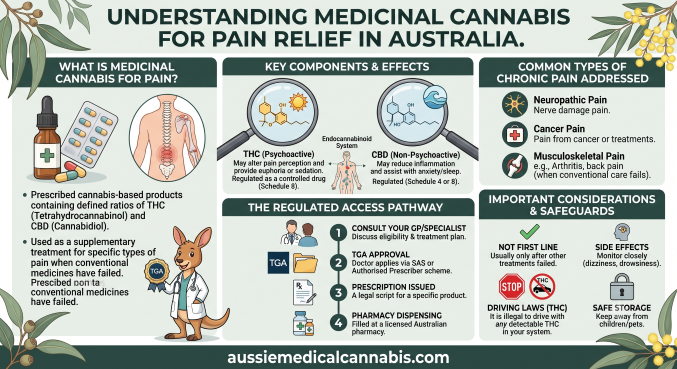
Pain is one of the most common reasons people seek medical care, and researchers continue to investigate new approaches to pain management. One area of growing interest is the use of cannabinoids—compounds found in the Cannabis sativa plant—for selected types of pain. The two best-known cannabinoids are tetrahydrocannabinol (THC) and cannabidiol (CBD), each of which interacts differently with the body’s endocannabinoid system (ECS).
In Australia medicinal cannabis products are regulated therapeutic goods that may be considered by appropriately authorised healthcare professionals when clinically appropriate. Research suggests that some cannabinoid medicines may help certain patients with specific pain conditions, but results vary depending on the type of pain, the cannabinoid formulation, and the individual.
This educational guide explains how cannabinoids may influence pain, what the current scientific evidence shows, possible side effects, and Australia’s regulatory framework.
Understanding Pain
Pain is a complex experience involving the nervous system, immune system, and brain. It can be broadly classified into several categories, including:
- Acute pain
- Chronic pain
- Neuropathic (nerve) pain
- Musculoskeletal pain
- Cancer-related pain
Different types of pain may respond differently to available treatments.
How Cannabinoids May Influence Pain
Cannabinoids interact with the body’s endocannabinoid system, which helps regulate:
- Pain perception
- Inflammation
- Mood
- Sleep
- Stress responses
- Immune activity
THC primarily activates cannabinoid receptors in the brain and nervous system, while CBD appears to influence the endocannabinoid system indirectly and may also interact with other signalling pathways involved in pain and inflammation.
What Does the Research Show?
Current scientific evidence suggests that some regulated medicinal cannabinoid products may provide modest pain relief for selected patients, particularly those with certain forms of chronic pain.
Evidence is strongest for:
Neuropathic Pain
Neuropathic pain results from injury or disease affecting the nervous system.
Some systematic reviews suggest selected cannabinoid medicines may reduce pain intensity in certain patients, although responses vary and not everyone benefits.
Multiple Sclerosis-Related Pain
Researchers have investigated cannabinoid medicines for pain and muscle spasticity associated with multiple sclerosis.
Some studies have reported improvements in selected symptoms.
Cancer-Related Pain
Cannabinoids continue to be studied as an additional option for managing pain associated with cancer, particularly when conventional therapies alone do not provide sufficient relief.
Evidence remains mixed, and further research is ongoing.
Musculoskeletal Pain
Research investigating cannabinoids for arthritis and other musculoskeletal pain conditions is continuing.
Current evidence is limited and varies depending on the specific condition.
CBD vs THC for Pain
CBD and THC have different pharmacological effects.
| Feature | CBD | THC |
|---|---|---|
| Psychoactive | Generally no | Yes |
| Produces intoxication | No | Yes |
| Pain Research | Under investigation | More extensively studied |
| Temporary Cognitive Effects | Generally uncommon | Possible |
Potential Benefits Under Investigation
Researchers continue exploring whether cannabinoids may help:
- Reduce pain intensity in selected conditions
- Improve sleep disrupted by chronic pain
- Improve quality of life in some patients
- Reduce muscle stiffness associated with neurological disorders
Many proposed benefits require further high-quality clinical research.
Possible Side Effects
Like all medicines, cannabinoid products may cause side effects.
Reported side effects include:
- Drowsiness
- Dizziness
- Dry mouth
- Fatigue
- Reduced concentration
- Appetite changes
THC-containing products may also temporarily impair coordination, judgement, and reaction time.
Why Individual Responses Differ
Responses to cannabinoid medicines vary depending on factors such as:
- The type of pain
- The cannabinoid formulation
- Dose
- Other medical conditions
- Concurrent medicines
- Individual biology
Healthcare professionals consider these factors when evaluating treatment options.
Educational Comparison Table
| Pain Type | Current Evidence for Selected Cannabinoid Medicines | Research Status |
| Neuropathic Pain | Moderate evidence for some patients | Ongoing |
| Multiple Sclerosis-Related Pain | Moderate evidence | Continuing |
| Cancer-Related Pain | Mixed evidence | Ongoing |
| Musculoskeletal Pain | Limited evidence | Continuing research |
| Acute Pain | Limited evidence | More research needed |
Australian Regulation
Medicinal cannabis products are regulated in Australia through the Therapeutic Goods Administration (TGA) together with Commonwealth, state, and territory medicines legislation.
Healthcare professionals consider:
- Medical history
- Previous treatments
- Current medicines
- Scientific evidence
- Potential benefits
- Potential risks
before determining whether a medicinal cannabis product may be clinically appropriate.
Ongoing Scientific Research
Researchers continue investigating cannabinoids for:
- Chronic pain
- Neuropathic pain
- Cancer symptom management
- Multiple sclerosis
- Inflammatory disorders
- Neurological diseases
Scientific understanding continues to evolve as more high-quality clinical trials are completed.
Where to Learn More
Reliable educational information is available at https://aussiemedicalcannabis.com/
- Therapeutic Goods Administration – Medicinal Cannabis
- Australian Government Department of Health, Disability and Ageing – Medicinal Cannabis
- Healthdirect Australia – Chronic Pain Information
PubMed Reference
Frequently Asked Questions
1. Can cannabis relieve pain?
Research suggests some regulated medicinal cannabinoid products may help certain patients with specific chronic pain conditions, particularly neuropathic pain. Results vary between individuals.
2. Is CBD or THC more commonly studied for pain?
THC-containing products have been studied more extensively for pain, while CBD continues to be investigated, often in combination with THC or for its potential anti-inflammatory properties.
3. Does cannabis work for every type of pain?
No. Evidence differs depending on the type of pain, and cannabinoids are not effective for every condition.
4. Can cannabinoid medicines cause side effects?
Yes. Possible side effects include drowsiness, dizziness, dry mouth, fatigue, and reduced concentration. THC-containing products may also temporarily impair coordination and judgement.
5. Is medicinal cannabis regulated in Australia?
Yes. Medicinal cannabis products are regulated under Australia’s therapeutic goods framework and may be considered by authorised healthcare professionals when clinically appropriate.
Conclusion
Cannabinoids continue to be an important area of research in pain medicine. Current evidence suggests that selected regulated medicinal cannabinoid products may provide modest benefits for some people with conditions such as neuropathic pain and multiple sclerosis-related symptoms, while evidence for other pain conditions remains limited or mixed. Ongoing research will continue to clarify the role of cannabinoids in pain management, helping healthcare professionals make evidence-based treatment decisions.
