
Cannabis Education
What Is Cannabis Distillate?
Aug
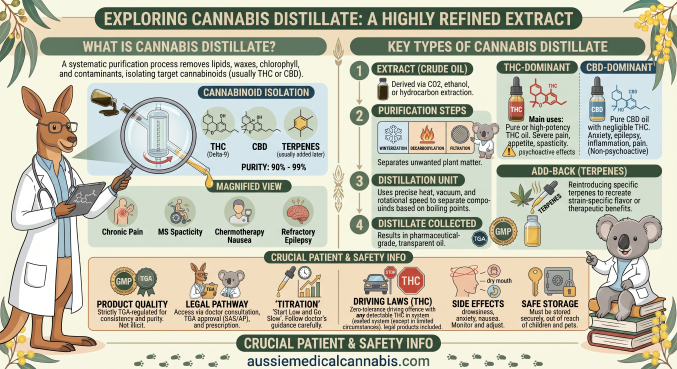
Cannabis distillate is a highly refined cannabis extract that has been processed to concentrate specific cannabinoids, such as tetrahydrocannabinol (THC) or cannabidiol (CBD), while removing many other plant compounds. The result is a purified cannabinoid extract that may contain very high concentrations of the target cannabinoid.
In Australia, regulated medicinal cannabis products that contain purified cannabinoids are subject to therapeutic goods and medicines legislation. These products differ from unregulated cannabis concentrates, which may vary considerably in composition, quality, and purity.
Researchers continue studying cannabinoid-based medicines to better understand their therapeutic potential, safety, and long-term effects. This guide explains what cannabis distillate is, how it differs from other cannabis extracts, and the current scientific evidence.
What Is Cannabis Distillate Made From?
Cannabis distillate begins with cannabinoids extracted from the Cannabis sativa plant.
Depending on the formulation, a distillate may contain primarily:
- Cannabidiol (CBD)
- Tetrahydrocannabinol (THC)
- Other purified cannabinoids
The refinement process removes many naturally occurring compounds such as waxes, chlorophyll, and other plant materials to produce a concentrated cannabinoid extract.
How Does Cannabis Distillate Differ From Other Extracts?
Cannabis extracts vary depending on how much of the plant’s natural chemical profile is retained.
Some extracts contain a broad range of cannabinoids and terpenes, while distillates are designed to contain predominantly one or a few cannabinoids.
Cannabis Distillate vs Other Cannabis Extracts
| Extract Type | General Characteristics |
|---|---|
| Cannabis Distillate | Highly refined extract with concentrated cannabinoids |
| Full-Spectrum Extract | Contains multiple cannabinoids and naturally occurring plant compounds |
| Broad-Spectrum Extract | Contains several cannabinoids with little or no THC, depending on the product |
| CBD Isolate | Primarily purified cannabidiol (CBD) |
How Cannabinoids Work
Cannabinoids interact with the body’s endocannabinoid system (ECS).
The ECS helps regulate many body functions, including:
- Pain perception
- Mood
- Sleep
- Appetite
- Memory
- Stress responses
- Immune function
CBD and THC interact with the ECS differently, which contributes to their differing pharmacological effects.
Potential Therapeutic Areas Being Studied
Current research focuses on regulated cannabinoid medicines rather than unregulated cannabis distillates.
Areas of investigation include:
Chronic Pain
Some evidence suggests selected cannabinoid medicines may benefit certain patients with chronic pain.
Treatment-Resistant Epilepsy
Prescription CBD medicines have demonstrated benefits for some rare forms of treatment-resistant epilepsy.
Chemotherapy-Induced Nausea and Vomiting
THC-containing medicines have been studied for managing nausea and vomiting associated with chemotherapy in selected patients.
Multiple Sclerosis-Related Spasticity
Some cannabinoid medicines may reduce muscle stiffness and spasms associated with multiple sclerosis.
Palliative Care
Researchers continue studying cannabinoids for selected symptoms including:
- Pain
- Appetite changes
- Sleep disturbance
- Nausea
Potential Side Effects
Like all medicines containing cannabinoids, products with CBD or THC may cause side effects.
Reported side effects include:
- Drowsiness
- Dizziness
- Dry mouth
- Fatigue
- Changes in appetite
- Reduced concentration
THC-containing products may also temporarily impair coordination, judgement, and reaction time.
Why Product Quality Matters
The composition of cannabis concentrates can vary considerably.
Regulated medicinal products are manufactured under quality standards intended to support:
- Consistent cannabinoid content
- Quality assurance
- Manufacturing controls
- Product testing
These standards help distinguish regulated therapeutic products from unregulated cannabis extracts.
Educational Comparison Table
| Topic | Regulated Medicinal Cannabinoid Products | Unregulated Cannabis Concentrates |
| Manufacturing Standards | Pharmaceutical quality standards | Variable |
| Cannabinoid Content | Standardised | May vary |
| Quality Testing | Required under applicable standards | Variable |
| Clinical Oversight | Used within healthcare when appropriate | Not part of regulated medical care |
Australian Regulation
Medicinal cannabis products are regulated in Australia through the Therapeutic Goods Administration (TGA) together with Commonwealth, state, and territory medicines legislation.
Healthcare professionals consider:
- Medical history
- Previous treatments
- Current medicines
- Available scientific evidence
- Potential benefits
- Potential risks
before prescribing regulated cannabinoid medicines where clinically appropriate.
Ongoing Scientific Research
Researchers continue investigating cannabinoids for possible roles in:
- Chronic pain
- Neurological disorders
- Epilepsy
- Anxiety disorders
- Inflammatory diseases
- Cancer symptom management
- Neurodegenerative disorders
Many proposed therapeutic applications remain under active investigation.
Where to Learn More
Reliable educational information is available at https://aussiemedicalcannabis.com/
- Therapeutic Goods Administration – Medicinal Cannabis
- Australian Government Department of Health, Disability and Ageing – Medicinal Cannabis
- Healthdirect Australia
PubMed Reference
Frequently Asked Questions
1. What is cannabis distillate?
Cannabis distillate is a highly refined cannabis extract that concentrates specific cannabinoids, such as CBD or THC, while removing many other plant compounds.
2. Is cannabis distillate the same as full-spectrum cannabis extract?
No. Distillate is typically more highly refined, whereas full-spectrum extracts retain a broader range of naturally occurring cannabinoids and other plant compounds.
3. Can cannabis distillate contain CBD or THC?
Yes. Depending on the formulation, a cannabis distillate may primarily contain CBD, THC, or another purified cannabinoid.
4. Are medicinal cannabinoid products regulated in Australia?
Yes. Medicinal cannabinoid products are regulated under Australia’s therapeutic goods and medicines framework.
5. What conditions are cannabinoids being researched for?
Researchers have investigated cannabinoids for chronic pain, treatment-resistant epilepsy, chemotherapy-induced nausea and vomiting, multiple sclerosis-related spasticity, and selected symptoms in palliative care.
Conclusion
Cannabis distillate is a highly refined cannabinoid extract that differs from broader cannabis extracts because it concentrates specific cannabinoids while removing many other plant compounds. Current scientific evidence primarily relates to regulated cannabinoid medicines rather than unregulated concentrates. As research continues, understanding the differences between cannabis extracts, their potential therapeutic roles, and Australia’s regulatory framework can help readers make informed, evidence-based decisions.
