
Cannabis Education
Cannabis Tablets: Understanding Oral Cannabinoid Medicines
Aug
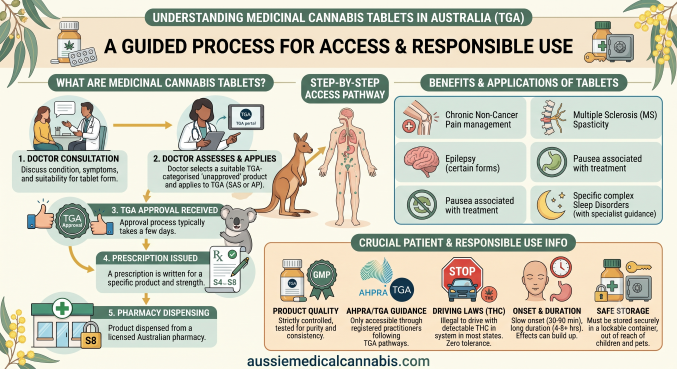
Cannabis tablets are oral medicinal cannabis products that contain one or more cannabinoids, most commonly tetrahydrocannabinol (THC), cannabidiol (CBD), or a combination of both. Unlike inhaled cannabis products, tablets are swallowed and absorbed through the digestive system, providing a measured dose in a pharmaceutical dosage form.
In Australia medicinal cannabis products are regulated within the healthcare system and may be prescribed by appropriately authorised healthcare professionals when clinically appropriate. Researchers continue to study cannabinoid medicines to better understand their effectiveness, safety, and potential role in managing selected medical conditions.
This educational guide explains what cannabis tablets are, how they work, current areas of medical research, possible side effects, and Australia’s regulatory framework.
What Are Cannabis Tablets?
Cannabis tablets are pharmaceutical oral formulations containing cannabinoids derived from cannabis or manufactured to pharmaceutical standards.
Depending on the product, tablets may contain:
- Cannabidiol (CBD)
- Tetrahydrocannabinol (THC)
- A combination of CBD and THC
- Other cannabinoids in regulated formulations
Because tablets are manufactured under quality standards, they are designed to provide consistent cannabinoid content.
How Do Cannabis Tablets Work?
Cannabinoids interact with the body’s endocannabinoid system (ECS).
The ECS helps regulate numerous physiological functions, including:
- Pain perception
- Mood
- Sleep
- Appetite
- Memory
- Immune responses
- Stress regulation
After a tablet is swallowed, cannabinoids are absorbed through the digestive system before entering the bloodstream.
CBD and THC: Understanding the Difference
The two best-known cannabinoids have different properties.
| Feature | CBD | THC |
|---|---|---|
| Psychoactive | Generally no | Yes |
| Produces intoxication | No | Yes |
| Primary Research Areas | Epilepsy, anxiety research, inflammation | Pain, nausea, spasticity |
| Temporary Cognitive Effects | Generally uncommon | Possible |
Conditions Being Studied
Researchers continue investigating cannabinoid medicines for several medical conditions.
1. Chronic Pain
Some evidence suggests selected cannabinoid medicines may help some patients with certain forms of chronic pain, particularly neuropathic pain.
2. Treatment-Resistant Epilepsy
Prescription CBD medicines have demonstrated benefits for certain rare forms of treatment-resistant epilepsy.
This remains one of the strongest areas of evidence supporting cannabinoid therapy.
3. Chemotherapy-Induced Nausea and Vomiting
THC-containing medicines have been investigated for managing nausea and vomiting associated with chemotherapy in selected patients.
4. Multiple Sclerosis-Related Spasticity
Some cannabinoid medicines may reduce muscle stiffness and spasms associated with multiple sclerosis.
5. Palliative Care
Researchers continue studying cannabinoids for symptom management in palliative care, including:
- Pain
- Appetite changes
- Sleep disturbance
- Nausea
Potential Benefits of Tablets
Compared with some other dosage forms, tablets may offer:
- Consistent dosing
- Pharmaceutical manufacturing standards
- Convenient administration
- Ease of storage
- Standardised cannabinoid content
The suitability of any formulation depends on individual clinical circumstances.
Possible Side Effects
Like all medicines, cannabis tablets may cause side effects.
Reported side effects include:
- Drowsiness
- Fatigue
- Dry mouth
- Dizziness
- Appetite changes
- Diarrhoea
- Reduced concentration
Products containing THC may also temporarily impair coordination, reaction time, and judgment.
Medicine Interactions
Cannabinoids may interact with certain prescription medicines.
Healthcare professionals consider:
- Current medications
- Liver function
- Medical history
- Potential drug interactions
- Individual health status
before recommending cannabinoid therapy.
Educational Comparison Table
| Topic | Cannabis Tablets | Other Oral Cannabis Formulations |
| Administration | Swallowed as a tablet | Oral liquid or capsule |
| Dose Consistency | Standardised | Standardised in regulated products |
| Medical Supervision | Recommended | Recommended |
| Research | Ongoing | Ongoing |
Australian Regulation
Medicinal cannabis products are regulated in Australia through the Therapeutic Goods Administration (TGA) together with Commonwealth, state, and territory medicines legislation.
Healthcare professionals evaluate:
- Medical history
- Previous treatments
- Available clinical evidence
- Potential benefits
- Potential risks
before determining whether a cannabinoid medicine is clinically appropriate.
Ongoing Research
Scientists continue investigating cannabinoid medicines for:
- Chronic pain
- Neurological disorders
- Epilepsy
- Cancer symptom management
- Multiple sclerosis
- Anxiety disorders
- Inflammatory diseases
Many proposed therapeutic applications remain under active investigation.
Where to Learn More
Reliable educational information is available at https://aussiemedicalcannabis.com/
- Therapeutic Goods Administration – Medicinal Cannabis
- Australian Government Department of Health, Disability and Ageing – Medicinal Cannabis
- Healthdirect Australia
PubMed Reference
Frequently Asked Questions
1. What are cannabis tablets?
Cannabis tablets are oral medicinal cannabis products containing cannabinoids such as CBD, THC, or both, manufactured in measured doses.
2. What conditions have cannabis tablets been studied for?
Research has investigated cannabinoid medicines for chronic pain, treatment-resistant epilepsy, chemotherapy-induced nausea and vomiting, multiple sclerosis-related spasticity, and selected symptoms in palliative care.
3. Do cannabis tablets contain CBD or THC?
Depending on the formulation, they may contain CBD, THC, or a combination of both cannabinoids.
4. Can cannabis tablets cause side effects?
Yes. Possible side effects include drowsiness, dizziness, fatigue, dry mouth, appetite changes, and gastrointestinal symptoms. THC-containing products may also impair coordination and reaction time.
5. Are cannabis tablets legal in Australia?
Yes. Regulated medicinal cannabis products may be prescribed within Australia’s healthcare framework in accordance with applicable laws and clinical judgement.
Conclusion
Cannabis tablets are one form of regulated medicinal cannabinoid therapy used within Australia’s healthcare system. Current evidence supports certain therapeutic uses for selected conditions, while research continues to investigate additional applications. Understanding how these medicines work, their potential benefits and risks, and Australia’s regulatory framework helps patients and the public make informed decisions based on scientific evidence.
