
Cannabis Education
Australia’s Medicinal Cannabis Prescription Framework: Understanding the Regulatory System
Aug
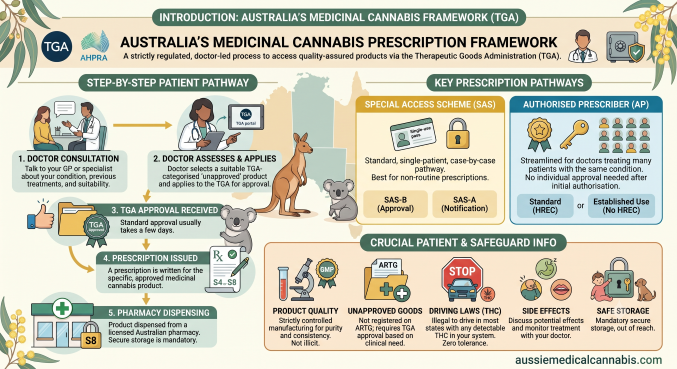
Australia has developed a nationally regulated framework for the prescribing of medicinal cannabis. The framework is designed to balance patient safety, product quality, and access to evidence-based healthcare while ensuring healthcare professionals prescribe cannabinoid medicines in accordance with Australian law.
Unlike many conventional medicines, most medicinal cannabis products available in Australia are unapproved therapeutic goods. This means they have not been included on the Australian Register of Therapeutic Goods (ARTG), although they may still be supplied through regulated pathways established by the Therapeutic Goods Administration (TGA).
Australia’s medicincal cannabis framework focuses on clinical oversight, evidence-based decision-making, product quality, and ongoing patient monitoring. This guide explains how the system operates and why regulation is an important part of patient safety.
What Is Medicinal Cannabis?
Medicinal cannabis refers to therapeutic products containing cannabinoids derived from the Cannabis sativa plant or manufactured to pharmaceutical standards.
These products may contain:
- Cannabidiol (CBD)
- Tetrahydrocannabinol (THC)
- A combination of CBD and THC
- Other cannabinoids in regulated formulations
Each product differs in cannabinoid composition, intended therapeutic purpose, and available scientific evidence.
Why Does Australia Have a Prescription Framework?
Australia regulates medicinal cannabis to ensure medicines supplied to patients meet appropriate standards for:
- Quality
- Manufacturing
- Clinical oversight
- Safety monitoring
- Appropriate prescribing
The framework also supports healthcare professionals by providing nationally recognised regulatory pathways.
The Role of the Therapeutic Goods Administration (TGA)
The Therapeutic Goods Administration (TGA) is Australia’s national regulator for therapeutic goods.
Its responsibilities include:
- Regulating therapeutic products
- Monitoring medicine safety
- Evaluating scientific evidence
- Overseeing access pathways for unapproved therapeutic goods
- Supporting pharmacovigilance and adverse event reporting
The TGA works with state and territory governments to maintain Australia’s medicinal cannabis regulatory framework.
Access Pathways
Because many medicinal cannabis products are unapproved therapeutic goods, they are commonly supplied through nationally regulated access pathways administered by the TGA.
These pathways provide a regulatory mechanism for healthcare professionals to prescribe products when clinically appropriate while maintaining oversight and patient safety.
Role of Healthcare Professionals
Healthcare professionals play a central role in Australia’s medicinal cannabis framework.
When considering any therapeutic option, clinicians evaluate factors such as:
- The patient’s medical history
- Previous treatments
- Current medicines
- Available clinical evidence
- Potential benefits
- Potential risks
Treatment decisions are individualised and based on professional clinical judgement.
Product Quality Standards
Medicinal cannabis products supplied through Australia’s regulatory framework are expected to meet quality requirements relating to:
- Manufacturing standards
- Product consistency
- Cannabinoid content
- Quality assurance
- Stability testing
These standards help distinguish regulated therapeutic products from unregulated cannabis products.
Patient Safety
Patient safety is one of the primary objectives of Australia’s medicinal cannabis framework.
Important safety considerations include:
- Clinical assessment before treatment
- Monitoring for side effects
- Medicine interaction assessment
- Ongoing review of treatment outcomes
- Reporting suspected adverse events
Like all medicines, cannabinoid products may cause adverse effects and are not suitable for every patient.
Current Areas of Clinical Research
Researchers continue studying cannabinoids in several therapeutic areas, including:
- Chronic pain
- Treatment-resistant epilepsy
- Chemotherapy-induced nausea and vomiting
- Multiple sclerosis-related spasticity
- Selected symptoms in palliative care
Evidence is strongest for some indications, while many proposed applications remain under investigation.
CBD and THC
The two most widely researched cannabinoids are CBD and THC.
| Feature | CBD | THC |
|---|---|---|
| Psychoactive | Generally no | Yes |
| Produces intoxication | No | Yes |
| Major Research Areas | Epilepsy, anxiety research, inflammation | Pain, nausea, spasticity |
| Temporary Cognitive Effects | Generally uncommon | Possible |
Educational Comparison Table
| Topic | Registered Medicines | Many Unapproved Medicinal Cannabis Products |
| Regulatory Oversight | TGA | TGA access pathways and relevant legislation |
| Manufacturing Standards | Required | Required under applicable standards |
| Clinical Supervision | Yes | Yes |
| Ongoing Safety Monitoring | Yes | Yes |
Why Ongoing Research Matters
Scientists continue investigating cannabinoids to improve understanding of:
- Long-term safety
- Effectiveness
- Appropriate clinical use
- Healthcare outcomes
- Product quality
- Public health impacts
New evidence helps inform future clinical practice and regulatory decisions.
Australian Regulation
Australia’s medicinal cannabis framework involves cooperation between:
- The Therapeutic Goods Administration (TGA)
- State and territory health authorities
- Registered healthcare professionals
Together, these organisations help ensure medicinal cannabis is regulated within Australia’s broader therapeutic goods and medicines framework.
Where to Learn More
Reliable educational information is available at https://aussiemedicalcannabis.com/
- Therapeutic Goods Administration – Medicinal Cannabis
- Australian Government Department of Health, Disability and Ageing – Medicinal Cannabis
- Healthdirect Australia
PubMed Reference
Frequently Asked Questions
1. What is Australia’s medicinal cannabis prescription framework?
It is the national regulatory system that governs how medicinal cannabis products are prescribed, supplied, and monitored within Australia’s healthcare system.
2. Who regulates medicinal cannabis in Australia?
The Therapeutic Goods Administration (TGA), together with state and territory governments, regulates medicinal cannabis within Australia’s therapeutic goods and medicines framework.
3. Why are many medicinal cannabis products described as unapproved therapeutic goods?
Many products have not been entered on the Australian Register of Therapeutic Goods (ARTG), although they may still be supplied through nationally regulated access pathways.
4. Why is patient monitoring important?
Monitoring helps healthcare professionals assess treatment outcomes, identify side effects, review medicine interactions, and support ongoing patient safety.
5. Why is research still important?
Although evidence supports certain therapeutic uses, many potential applications of cannabinoids require additional high-quality clinical research.
Conclusion
Australia’s medicinal cannabis prescription framework is designed to support safe, evidence-based healthcare while maintaining high standards for therapeutic products. Through oversight by the Therapeutic Goods Administration, cooperation with state and territory authorities, and ongoing clinical monitoring, the framework seeks to balance patient access with product quality, safety, and scientific evidence. As research continues to evolve, Australia’s regulatory system will continue to adapt to emerging knowledge about cannabinoid medicines.
