
Cannabis Education
Marijuana Clinics in Australia: Medicinal Cannabis Doctors, Telehealth, Prescriptions and Legal Access
Aug
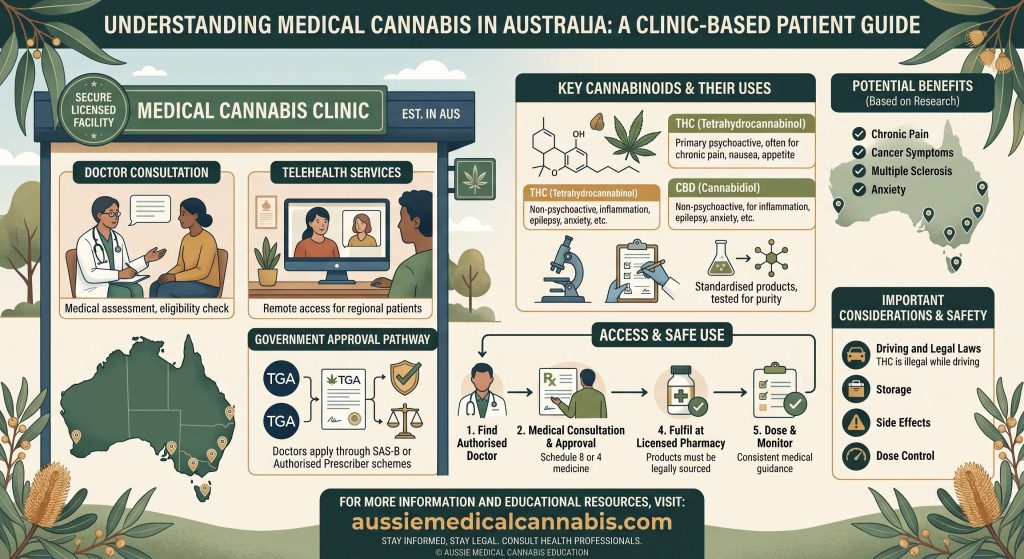
Marijuana clinics in Australia are more accurately described as medicinal cannabis clinics. They are healthcare services where registered practitioners assess whether medicinal cannabis may be appropriate for a patient’s condition. Unlike recreational cannabis dispensaries found in parts of North America, Australian marijuana clinics do not operate as ordinary retail shops where people simply choose cannabis products from a menu.
Medicinal cannabis is legal in Australia but remains highly regulated. Healthdirect states that medicinal cannabis must be prescribed by a registered healthcare professional and is generally not considered a first-line treatment.
Australians researching medicinal cannabis clinics, prescriptions, CBD and THC can also explore aussiemedicalcannabis.com for additional educational information.
What Are Marijuana Clinics?
A marijuana clinic is a medical service that focuses partly or primarily on cannabinoid-based medicines.
In Australia, these clinics may provide consultations through:
in-person appointments,
telehealth,
general practitioners,
specialist doctors,
or nurse practitioners where permitted.
The term marijuana clinic is informal. Australian regulators generally use terminology such as medicinal cannabis, prescriber, health practitioner and pharmacy.
The TGA says any registered doctor or nurse practitioner can decide whether medicinal cannabis is appropriate to prescribe, including a patient’s regular GP. Australia does not maintain a special government list of doctors who alone are allowed to discuss medicinal cannabis.
Therefore, using a specialised marijuana clinic is an option rather than a universal legal requirement.
Marijuana Clinic vs Regular GP
A dedicated clinic and an ordinary GP practice can both potentially be involved in medicinal cannabis treatment.
| Feature | Marijuana/Medicinal Cannabis Clinic | Regular GP |
|---|---|---|
| Can assess medicinal cannabis | Yes | Potentially yes |
| May offer telehealth | Commonly | Sometimes |
| Focuses heavily on cannabis treatment | Usually | Usually not |
| Can review CBD and THC options | Yes | Yes where clinically appropriate |
| Prescription guaranteed | No | No |
| Pharmacy dispenses medicine | Yes, separately | Yes, separately |
| Existing medical history | May need to obtain it | Often already known |
The major advantage of a specialised clinic may be familiarity with medicinal cannabis regulation and products. The advantage of a regular GP may be continuity of care and a more complete understanding of the patient’s broader health history.
Neither model automatically guarantees better treatment.
How Marijuana Clinics Work in Australia
A legitimate cannabis-clinic pathway generally begins with a medical assessment.
A practitioner may review the patient’s diagnosis, symptoms, previous treatments, current medications, allergies, mental-health history, treatment goals and potential risks.
If medicinal cannabis appears appropriate, the practitioner determines what type of medicine might fit the clinical situation.
The pathway generally looks like:
Consultation → clinical assessment → prescription if appropriate → TGA pathway where required → pharmacy dispensing → follow-up
The TGA explains that a practitioner may decide there is insufficient evidence to justify medicinal cannabis for a patient’s particular condition.
That means a responsible marijuana clinic should not promise every patient a cannabis prescription.
Do You Need a Referral to a Marijuana Clinic?
Not always.
Whether a referral is needed depends on the individual clinic and the type of practitioner involved.
Some specialised clinics accept patients directly, while others may request medical records or information from a regular GP.
From a regulatory perspective, the important question is not whether the clinic calls itself a marijuana clinic. What matters is whether an appropriately registered practitioner performs the assessment and whether the medicine is prescribed and dispensed lawfully.
Healthdirect recommends discussing medicinal cannabis with a doctor, who can assess whether it could be appropriate and determine which type of product may be considered.
Can Marijuana Clinics Operate Online?
Yes. Telehealth has become a major part of Australia’s medicinal-cannabis sector.
A patient may be assessed remotely rather than attending a physical clinic.
Australian research published in 2025 noted that telehealth has helped specialised medicinal cannabis clinics expand access across the country without requiring patients to attend face-to-face appointments.
However, telehealth does not remove prescribing standards.
An online cannabis clinic should still conduct an appropriate medical assessment rather than functioning as an online weed store.
For more background on online medicinal cannabis pathways, readers can explore Australian medicinal cannabis education..
What Can Marijuana Clinics Prescribe?
Medicinal cannabis products can contain:
CBD — cannabidiol
THC — tetrahydrocannabinol
or combinations of both.
Healthdirect explains that THC has strong psychoactive effects and produces the characteristic cannabis high, whereas CBD does not have the same intoxicating effect.
Medicinal cannabis formulations may include oral liquids, capsules, sprays, dried herbal cannabis, extracts and other regulated formulations.
Queensland Health currently lists examples including tinctures, dried plant material or concentrated extracts used with vaporisers, capsules, sprays and nabiximols.
A clinic should select a treatment based on the patient’s clinical circumstances rather than simply offering the strongest THC product available.
CBD Through Marijuana Clinics
CBD is commonly discussed in cannabis-clinic consultations.
Because CBD does not produce the same intoxication as THC, some patients assume it is automatically low-risk. That is too simplistic.
CBD can still cause side effects and interact with other medicines.
It can also fall under Australian prescription and therapeutic-goods requirements depending on the product and its composition.
A marijuana clinic should therefore consider:
other medicines,
liver function where relevant,
sedation,
treatment goals,
and potential interactions.
The decision should remain medical rather than purely consumer-driven.
THC Through Marijuana Clinics
THC-containing medicinal cannabis requires greater caution because THC is psychoactive.
Possible effects can include impaired attention, altered perception, drowsiness and reduced coordination.
Healthdirect identifies THC as the cannabinoid responsible for the characteristic cannabis high.
In Queensland, THC and THC:CBD medicinal cannabis products generally fall within Schedule 8 controlled-medicine requirements. Queensland Health states that medical practitioners and nurse practitioners can prescribe Schedule 8 THC or THC:CBD products without separate Queensland approval, although TGA requirements still apply to relevant unapproved products.
A responsible clinic should therefore discuss driving, other sedating medicines and possible psychological effects before prescribing THC.
Are Marijuana Clinics Legal?
Yes, specialised medicinal cannabis clinics can operate lawfully in Australia when their practitioners and prescribing practices comply with applicable healthcare, medicines and advertising regulations.
But the existence of a legitimate clinic does not mean every cannabis product associated with it has received full TGA approval.
The TGA stated in June 2026 that most medicinal cannabis products sold in Australia are unapproved therapeutic goods.
That means they have not completed the standard ARTG registration process.
However, Australian law provides alternative access mechanisms allowing practitioners to prescribe certain unapproved medicines when appropriate.
What Does “Unapproved Medicinal Cannabis” Mean?
The word unapproved can sound alarming, but it has a specific regulatory meaning.
An approved therapeutic good has been evaluated by the TGA and included on the Australian Register of Therapeutic Goods.
An unapproved product has not gone through that standard assessment pathway.
The TGA says unapproved medicinal cannabis may still be prescribed through lawful pathways such as the:
Special Access Scheme, or
Authorised Prescriber Scheme.
Patients should understand this distinction and ask their clinic whether a proposed medicine is ARTG-registered or supplied as an unapproved therapeutic good.
Special Access Scheme and Marijuana Clinics
The Special Access Scheme allows practitioners to access certain unapproved therapeutic goods for individual patients.
Queensland Health confirms that the TGA manages the Special Access Scheme and Authorised Prescriber pathways for medicinal cannabis products not included on the ARTG.
The prescribing practitioner is responsible for following the appropriate pathway.
Patients do not personally apply to the TGA and then purchase cannabis directly from the regulator.
The regulatory process occurs within the healthcare system.
Are Cannabis Clinics the Same as Dispensaries?
No.
A cannabis clinic primarily provides healthcare consultation and prescribing.
A pharmacy dispenses the prescribed medicine.
A recreational-style dispensary sells cannabis under a retail regulatory framework used in some overseas jurisdictions.
Australia generally separates prescribing from dispensing.
The TGA says legal medicinal cannabis can be obtained from a pharmacy with a prescription from a doctor or nurse practitioner. It also warns that obtaining medicinal cannabis from tobacconists, vape shops, convenience stores or online stores that are not registered pharmacies is unlawful.
Therefore:
marijuana clinic ≠ marijuana dispensary.
Marijuana Clinics for Chronic Pain
Chronic pain is one of the major reasons Australians investigate medicinal cannabis.
Healthdirect lists chronic pain, including neuropathic pain, among conditions for which medicinal cannabis may sometimes be considered. However, medicinal cannabis is generally not regarded as first-line treatment.
A good clinic should first establish what kind of pain the patient has.
Neuropathic pain, arthritis-related pain, cancer pain and unexplained musculoskeletal pain may have very different causes and treatment options.
A clinic should therefore not treat the phrase “chronic pain” as automatic eligibility for cannabis.
Marijuana Clinics for Anxiety and Mental Health
Mental-health symptoms are another common reason people approach cannabis clinics.
However, cannabis is not automatically calming.
THC can have different psychological effects among individuals and may produce feelings of unease or cognitive changes.
CBD has a different pharmacological profile and does not produce the same characteristic high.
A responsible clinic should assess mental-health history and other medicines carefully rather than assuming high-THC cannabis is appropriate simply because someone reports anxiety.
Marijuana Clinics for Sleep Problems
Sleep difficulties are also frequently discussed in medicinal-cannabis care.
But insomnia can result from chronic pain, anxiety, depression, sleep apnoea, medications or other health problems.
A cannabinoid causing drowsiness does not necessarily mean it treats the underlying sleep disorder.
A genuine clinic should investigate those factors rather than treating cannabis as an automatic sleeping medicine.
What Australian Research Says About Cannabis Clinics
An important Australian study published in 2025 compared people accessing medicinal cannabis through specialised clinics with those using generalist healthcare settings.
Among 2,394 people who reported prescribed medicinal cannabis use, 1,899—or 79.3%—reported obtaining treatment primarily through medicinal cannabis clinics.
The study found meaningful differences between the groups.
Compared with generalist healthcare patients, clinic patients were younger, were less likely to receive oral products, were more likely to seek treatment for mental-health conditions and were less likely to seek treatment primarily for chronic pain.
Interestingly, clinic patients reported lower satisfaction in several areas, including consultation duration, information about benefits and harms, discussion of other treatment approaches and treatment costs. Overall satisfaction was higher among respondents using generalist healthcare settings.
The study does not prove that every specialised clinic provides lower-quality care. The researchers specifically noted that further research is needed to examine other dimensions of quality and appropriateness.
It does demonstrate that patients should evaluate a cannabis clinic on the quality of medical care rather than its branding alone.
Marijuana Clinic Costs
Medicinal cannabis treatment can involve several expenses.
These may include:
initial consultation,
follow-up consultations,
prescription fees,
medicine,
and pharmacy dispensing or delivery charges.
Healthdirect notes that medicinal cannabis costs can vary significantly and may reach thousands of dollars annually depending on the condition, product and amount required.
Australian research involving people with endometriosis also found substantial costs among medicinal-cannabis patients. In that survey, 63.5% used a cannabis-clinic doctor, and median cannabinoid medicine expenditure was about AUD $300 per month.
Costs vary substantially, so patients should consider the entire ongoing treatment expense rather than only an introductory consultation price.
Should Marijuana Clinics Guarantee Prescriptions?
No.
Guaranteed prescribing would conflict with the principle that medicinal cannabis should be considered after individual clinical assessment.
The TGA explicitly states that a doctor or nurse practitioner may determine there is insufficient evidence to support medicinal cannabis for a person’s condition.
A credible clinic should therefore be able to conclude:
medicinal cannabis is appropriate,
another treatment should be tried first,
additional information is required,
or cannabis is unsuitable.
Websites advertising guaranteed approval or treating the consultation primarily as a gateway to buying THC deserve caution.
What Should a Good Marijuana Clinic Consultation Cover?
A thorough consultation should consider the whole patient rather than focusing entirely on cannabis products.
Important issues include the diagnosis, previous treatments, current medicines, expected benefits, adverse effects, driving, work requirements, mental-health history, follow-up and treatment cost.
The TGA’s June 2026 guidance emphasises that clinicians prescribing unapproved cannabis should explain potential benefits and risks, practical implications, costs, how the medicine will be supplied and the need for monitoring.
Patients should also have an opportunity to ask questions and provide informed consent.
These features are far more meaningful indicators of clinical quality than whether the service advertises hundreds of strains or products.
Pharmacy Access After a Marijuana Clinic Appointment
The clinic is not normally the final point in the supply chain.
After a prescription has been issued, the medicine is generally dispensed through a pharmacy.
The TGA says unapproved medicinal cannabis is not stocked by most pharmacies, meaning a pharmacist may need to order the specific prescribed medicine.
Pharmacists also have responsibilities to ensure supply is safe, appropriate and lawful.
The TGA’s medicinal cannabis product-category guidance says pharmacists must dispense according to the prescriber’s intentions and comply with relevant state and territory legislation.
Marijuana Clinics and Driving
Driving is one of the most important issues to discuss when THC is considered.
THC can impair attention, coordination and reaction time.
A prescription should not be assumed to provide a universal exemption from drug-driving laws.
State and territory road rules differ, so patients who rely on driving for employment or daily life should raise this during their consultation before treatment begins.
This issue can materially affect whether a THC-containing product is appropriate.
Marijuana Clinics and Recreational Cannabis
Medicinal access should not be confused with general cannabis legalisation.
Healthdirect states that cannabis remains illegal to use, possess, grow or sell in most Australian states and territories outside specific legal exceptions, while prescribed medicinal cannabis operates within a separate regulated framework.
A medicinal cannabis prescription therefore does not automatically authorise:
recreational cannabis,
unlicensed cannabis purchases,
personal cultivation,
or unrestricted possession of cannabis products.
The prescription applies to the specific medicinal treatment supplied through lawful channels.
Educational Resources
For official patient guidance, the TGA medicinal cannabis patient information page explains prescriptions, pharmacy supply and the role of doctors and nurse practitioners.
The Healthdirect medicinal cannabis guide covers CBD, THC, medical uses, costs and Australia’s legal framework.
For Queensland readers, the Queensland Health medicinal cannabis prescribing guide explains current prescribing rules for CBD, THC and THC:CBD medicines and was last updated on 4 August 2026.
For peer-reviewed evidence, see PubMed: Cannabis Clinics Versus Generalist Healthcare in Australia. The study compared 2,394 Australian medicinal cannabis patients and provides useful evidence about clinic use, patient characteristics and satisfaction.
Where to Explore Further
Australians researching marijuana clinics, medicinal cannabis doctors, telehealth clinics, CBD, THC, prescriptions and pharmacy access can continue exploring Australian-focused cannabis information through aussiemedicalcannabis.com.
For an individual treatment decision, a registered healthcare practitioner is the appropriate starting point. Current TGA and relevant state or territory health guidance should take priority over promotional claims made by cannabis-clinic websites.
Frequently Asked Questions
1. Are marijuana clinics legal in Australia?
Yes. Specialised medicinal cannabis clinics can legally provide healthcare consultations when their practitioners comply with Australian prescribing and healthcare regulations. Medicinal cannabis itself must still be prescribed and supplied through lawful channels.
2. Do I need a specialised marijuana clinic to get medicinal cannabis?
No. The TGA says any registered doctor or nurse practitioner can decide whether medicinal cannabis is appropriate, including a regular GP.
3. Can marijuana clinics prescribe THC?
Potentially. THC-containing medicines can be prescribed when clinically appropriate and applicable regulatory requirements are satisfied. In Queensland, THC and THC:CBD medicinal cannabis generally fall under Schedule 8 requirements.
4. Can marijuana clinics operate through telehealth?
Yes. Telehealth is widely used by Australian medicinal cannabis clinics, and research indicates it has helped clinics provide access nationally without requiring face-to-face consultations.
5. Are marijuana clinics better than ordinary GPs?
Not automatically. A 2025 Australian study found higher satisfaction among respondents receiving medicinal cannabis through generalist healthcare settings than among those using specialised clinics in several areas, although the researchers cautioned that further research is needed to assess overall quality and appropriateness of care.
