
Cannabis Education
Cannabis Clinic in Australia: Doctors, Prescriptions, CBD, THC, Telehealth and Legal Access
Aug
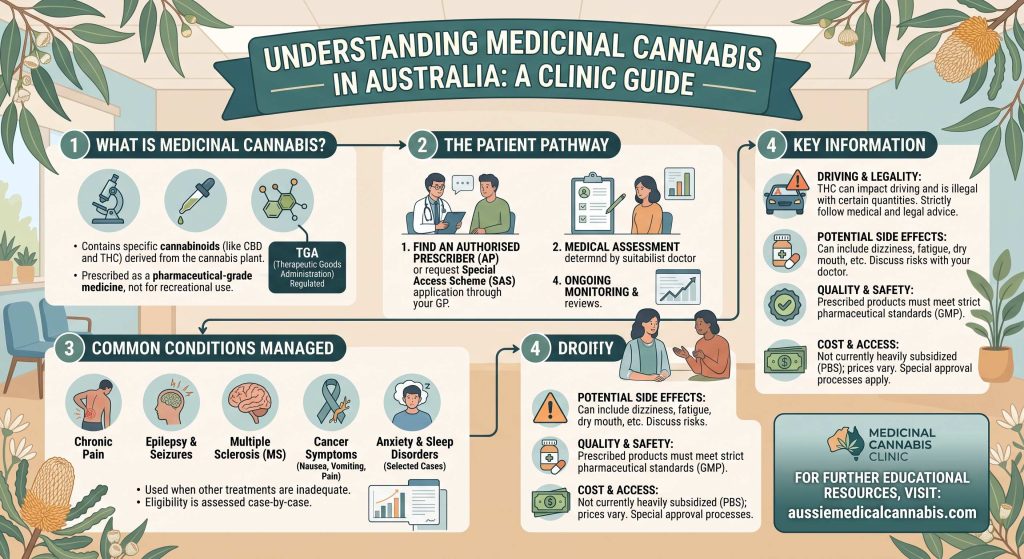
A cannabis clinic in Australia is a healthcare service where a registered practitioner assesses whether medicinal cannabis may be appropriate for a patient’s symptoms or medical condition. These clinics may operate from physical locations or through telehealth, and they commonly deal with products containing CBD, THC or combinations of both.
Importantly, a cannabis clinic is not the same thing as a recreational dispensary. Australian medicinal cannabis operates within a regulated medical system involving healthcare practitioners, prescriptions and pharmacy dispensing. The TGA states that medicinal cannabis can legally be obtained from a pharmacy with a prescription from a doctor or nurse practitioner.
For broader Australian educational information about CBD, THC, medicinal cannabis products and regulation, readers can explore aussiemedicalcannabis.com.
What Is a Cannabis Clinic?
A cannabis clinic is generally a medical practice that has practitioners experienced in assessing medicinal cannabis treatment.
A consultation may involve reviewing:
the patient’s diagnosis,
previous treatments,
current medicines,
treatment goals,
possible cannabis-related adverse effects,
CBD versus THC,
potential medicine interactions,
driving implications,
and follow-up requirements.
A legitimate clinic should not operate simply as a place where patients pay for guaranteed cannabis prescriptions.
Healthdirect explains that medicinal cannabis is not considered a first-line treatment in Australia. It is generally considered when other treatments have not provided suitable results.
Cannabis Clinic vs Regular GP
Australians do not have to attend a dedicated cannabis clinic before medicinal cannabis can be considered.
The TGA states that it does not maintain a special list of practitioners uniquely authorised to prescribe cannabis. Any registered doctor or nurse practitioner can decide whether medicinal cannabis is appropriate, including a patient’s regular GP.
| Feature | Cannabis Clinic | Regular GP |
|---|---|---|
| Can discuss medicinal cannabis | Yes | Yes |
| May prescribe CBD | Yes | Yes |
| May prescribe THC | Yes, subject to requirements | Yes, subject to requirements |
| Cannabis-focused experience | Often higher | Varies |
| Knows broader medical history | Depends | Often |
| Prescription guaranteed | No | No |
| Pharmacy supply still involved | Yes | Yes |
Dedicated clinics can offer convenience and practitioners who frequently work with cannabinoid medicines, but a cannabis-branded clinic does not have exclusive legal authority to prescribe.
Is a Cannabis Clinic Legal in Australia?
Yes. Cannabis clinics can legally operate as healthcare services when their practitioners comply with Australian medical, medicines and therapeutic-goods requirements.
Medicinal cannabis itself has been legally accessible through Australia’s medical framework since 2016, but it remains highly regulated. Healthdirect states that patients need a prescription from a registered healthcare professional or access through an appropriate clinical trial.
Most medicinal cannabis products currently prescribed are unapproved therapeutic goods.
The TGA reiterated in June 2026 that most medicinal cannabis products sold in Australia have not undergone the standard ARTG approval process. Nevertheless, lawful pathways exist that allow registered healthcare practitioners to prescribe eligible unapproved products in appropriate clinical situations.
How Does a Cannabis Clinic Appointment Work?
A cannabis clinic consultation should resemble a medical consultation rather than a retail transaction.
The practitioner may first establish why the patient is seeking treatment.
They may ask about chronic pain, sleep difficulties, neurological conditions, previous medications, mental-health history, allergies and other health factors.
The practitioner then considers whether medicinal cannabis is supported by sufficient evidence and whether the potential benefits justify the risks.
The TGA explicitly says a doctor or nurse practitioner may decide that there is not enough evidence to support medicinal cannabis for a patient’s condition.
Therefore, visiting a cannabis clinic should never be interpreted as automatic prescription approval.
Cannabis Clinic Prescriptions
If the clinician considers medicinal cannabis appropriate, they may prescribe a registered medicine or seek access to an unapproved medicinal cannabis product through an applicable pathway.
Two major pathways are:
Special Access Scheme (SAS)
and
Authorised Prescriber Scheme (AP).
The TGA manages these mechanisms for unapproved medicinal cannabis products.
State or territory requirements may also apply.
Once the relevant requirements have been satisfied, the practitioner can issue a prescription and the medicine can be supplied through a pharmacy.
Cannabis Clinics and Pharmacies Are Different
A cannabis clinic usually manages the clinical side of treatment.
A pharmacy handles medicine dispensing.
This distinction matters because some websites create the impression that a clinic functions like an overseas cannabis dispensary.
In Australia’s regulated medicinal system, the usual model is closer to:
Patient → clinician → prescription → pharmacy → medicinal cannabis
The TGA states that unapproved medicinal cannabis products are not routinely held in most pharmacies, so a pharmacist may need to order the prescribed medicine.
This is very different from browsing shelves of recreational cannabis products.
What Can a Cannabis Clinic Prescribe?
Australian medicinal cannabis includes much more than CBD oil.
Depending on the clinical situation, a practitioner may consider products containing:
CBD,
THC,
or combinations of CBD and THC.
Queensland Health’s August 2026 prescribing guidance, for example, identifies medicinal cannabis formulations including tinctures, vapourised dried plant material or extracts, capsules, sprays and pharmaceutical products such as nabiximols.
The exact product should be selected according to clinical need rather than recreational concepts such as the “strongest strain.”
CBD Cannabis Clinics
Many people search for a CBD cannabis clinic because cannabidiol does not cause the characteristic intoxication associated with THC.
Healthdirect explains that CBD does not produce a cannabis high, while THC has strong psychoactive effects.
However, CBD should not automatically be treated like an ordinary wellness supplement.
Medicinal CBD can be pharmacologically active, may interact with other medicines and remains part of Australia’s therapeutic-goods framework.
A clinic should therefore consider the patient’s medications and medical history before recommending a cannabinoid medicine.
THC Cannabis Clinics
THC-containing products require additional attention because THC is psychoactive.
Potential effects can include altered perception, sedation, dizziness, impaired attention and changes in mood.
Healthdirect lists possible medicinal cannabis side effects including dizziness, confusion, nausea, dry mouth, drowsiness and fatigue.
In Queensland, for example, medicinal cannabis products may fall into Schedule 4 or Schedule 8 categories. Queensland Health states that medical practitioners and nurse practitioners can prescribe Schedule 4 CBD and Schedule 8 THC or THC:CBD products without separate Queensland approval, although applicable TGA requirements continue to apply to unapproved products.
Online Cannabis Clinic and Telehealth
A growing number of Australian cannabis clinics operate using telehealth.
This can allow patients to speak with registered practitioners without travelling to a specialist clinic.
Telehealth does not turn medicinal cannabis into an ordinary online retail product.
The same principles still apply:
a genuine medical assessment,
registered healthcare practitioner,
appropriate prescription,
applicable regulatory pathway,
and lawful pharmacy supply.
The TGA specifically warns that obtaining medicinal cannabis from an online store that is not a registered pharmacy is unlawful. It gives the same warning regarding tobacconists, vape shops and convenience stores.
This makes it important to distinguish an online medical consultation from an online cannabis shop.
For more Australian-focused explanations of cannabis clinics and regulated treatment, readers can explore aussiemedicalcannabis.com.
Cannabis Clinic vs Online Weed Dispensary
| Service | Clinical Assessment | Prescription | Pharmacy Supply | Recreational Retail |
|---|---|---|---|---|
| Cannabis clinic | Yes | Possible | Usually yes | No |
| Regular GP | Yes | Possible | Yes | No |
| Registered pharmacy | No initial diagnosis | Fills prescription | Yes | No |
| Recreational dispensary overseas | Usually no | Usually no | No | Yes |
| Unregistered online cannabis seller | No reliable medical pathway | No | No | Not lawful medicinal supply |
This comparison explains why the phrases cannabis clinic and cannabis dispensary should not be treated as interchangeable in Australia.
Cannabis Clinics for Chronic Pain
Chronic pain is one of the major reasons Australians investigate medicinal cannabis.
Healthdirect identifies chronic pain, including neuropathic pain, among conditions for which cannabis may sometimes be considered.
However, this does not mean medicinal cannabis is appropriate for every person experiencing pain.
Different forms of pain can have very different causes.
Neuropathic pain, arthritis-related pain, cancer pain and musculoskeletal pain cannot necessarily be treated in the same way.
A good cannabis clinic should assess the actual pain condition rather than matching the keyword “pain” with a predetermined cannabis product.
Cannabis Clinics for Anxiety
Mental-health symptoms are another common reason people investigate cannabis clinics.
CBD has attracted research attention for anxiety, while THC may produce very different psychological responses.
Some people may experience relaxation, while others can experience unease, anxiety, confusion or other unwanted effects.
Healthdirect includes confusion and a sense of unease among potential medicinal cannabis adverse effects.
That is why a clinic should evaluate psychiatric history and explain differences between CBD-dominant and THC-containing medicines.
Cannabis Clinics for Sleep
Sleep problems frequently appear in medicinal cannabis consultations.
Yet sedation should not automatically be confused with treating insomnia.
Sleep disruption may arise from pain, anxiety, sleep apnoea, medication effects, depression or other medical conditions.
Healthdirect notes that cannabis research is continuing in areas including insomnia.
A responsible clinic should therefore investigate the reason for poor sleep rather than presenting cannabis as a guaranteed sleep medicine.
Cannabis Clinics for Epilepsy
Cannabidiol has a more established medical role for particular epilepsy conditions than it does for many other indications.
The TGA identifies Epidyolex (cannabidiol) as an approved medicinal cannabis product in Australia.
This distinction demonstrates why the phrase “CBD medicine” can cover products with very different levels of regulatory approval and supporting evidence.
A prescribed registered pharmaceutical is not necessarily equivalent to a generic product marketed simply as CBD oil.
Registered vs Unapproved Cannabis Products
Patients attending a cannabis clinic should ask whether the proposed product is registered on the ARTG or is an unapproved therapeutic good.
The TGA states that registered medicinal cannabis products include Sativex and Epidyolex.
Most other medicinal cannabis products supplied in Australia remain unapproved therapeutic goods.
“Unapproved” does not automatically mean illegal.
It means the medicine has not gone through the normal TGA pre-market approval process and is instead being supplied through an alternative lawful pathway.
Understanding that distinction helps patients make more informed treatment decisions.
Cannabis Clinics in Queensland
Queensland provides a useful example of how state requirements fit with Commonwealth rules.
Queensland Health states that any medical practitioner or nurse practitioner in Queensland can prescribe medicinal cannabis for any condition if they believe it is clinically appropriate, provided applicable TGA requirements are met for unapproved products.
Queensland practitioners do not need a separate Queensland approval to prescribe Schedule 4 CBD or Schedule 8 THC/THC:CBD medicinal cannabis.
Other states and territories may have different requirements, so patients should check the rules applying where they live.
Cannabis Clinic Near Me
When Australians search “cannabis clinic near me,” they may be looking for a physical medical service.
However, proximity should not be the only factor in selecting a clinic.
Patients should consider whether practitioners:
are appropriately registered,
take a complete medical history,
discuss previous treatments,
explain CBD and THC,
address interactions and side effects,
provide transparent costs,
offer appropriate follow-up,
and avoid guaranteeing prescriptions.
A local clinic offering a five-minute consultation and guaranteed cannabis may provide less comprehensive care than a remote practitioner offering a proper medical assessment.
Cannabis Clinic Costs
Cannabis treatment can involve several separate costs.
These may include the initial consultation, follow-up consultations, prescription management, the medicine itself and pharmacy charges.
Healthdirect notes that medicinal cannabis treatment can cost thousands of dollars per year depending on the medical condition, product and amount prescribed.
The TGA also recommends discussing price with the practitioner or pharmacist before a product is prescribed because treatment may be expensive.
Patients should therefore consider the total treatment cost, not simply the advertised first consultation fee.
Are Specialist Cannabis Clinics Better Than Regular Healthcare?
Not necessarily.
Australian research published in 2025 compared patient experiences in dedicated medicinal cannabis clinics with generalist healthcare settings.
The study included 2,394 adults who had used prescribed medicinal cannabis, and 1,899—or 79.3%—had accessed treatment through medicinal cannabis clinics.
Researchers found that cannabis-clinic patients reported lower satisfaction in several areas, including consultation duration, information about potential harms and benefits, consideration of alternative treatment approaches and treatment costs. Overall satisfaction was higher among patients treated in generalist health settings.
The findings do not prove that cannabis clinics provide poor care.
They do demonstrate that a specialist clinic label alone is not evidence of higher-quality healthcare.
What Australian Cannabis Patients Are Using
Another major Australian study, the CAMS-22 survey, included 3,323 respondents who reported using cannabis medicinally.
Of those respondents, 2,352—or 73%—mainly used prescribed medical cannabis, compared with 27% who mainly used illicitly sourced cannabis.
Prescribed users were substantially more likely to know the cannabinoid composition of their products and were more likely to use oral or vaporised products.
That illustrates an important advantage of regulated medical access: greater certainty about what the product actually contains.
Cannabis Clinics and Driving
Driving is particularly important when THC is prescribed.
A prescription does not automatically make driving lawful.
THC can impair cognition and reaction time, and driving laws differ across Australian jurisdictions.
Patients should ask their cannabis clinician:
whether the prescribed product contains THC,
whether trace THC could be present,
how it may affect impairment,
and what the applicable state driving rules are.
This conversation should happen before treatment begins, particularly for people who rely on driving for employment.
Cannabis Clinics and Medicinal Cannabis Advertising
Cannabis clinics operate in a healthcare environment where advertising rules matter.
Consumers should be cautious about services making claims such as:
“guaranteed cannabis prescription,”
“instant THC approval,”
“strongest cannabis available,”
or
“everyone qualifies.”
Those statements are difficult to reconcile with genuine clinical decision-making because the TGA specifically recognises that practitioners can decide medicinal cannabis is not appropriate.
Good medical care involves the possibility of saying no.
What Makes a Good Cannabis Clinic?
A useful cannabis clinic should behave like a medical practice.
The best indicators are not the number of strains on a product menu or how quickly a prescription can be issued.
More meaningful indicators include proper clinical assessment, informed consent, discussion of evidence, attention to other medicines, clear fees and ongoing monitoring.
Clinicians should also tell patients whether the medicine being considered is ARTG-registered or unapproved.
The TGA’s June 2026 guidance specifically encouraged greater patient awareness of this distinction because most medicinal cannabis products used in Australia remain unapproved therapeutic goods.
Educational Resources
The TGA’s Medicinal cannabis information for patients explains practitioner access, prescriptions, pharmacies, approved medicines and warnings about unlawful retailers.
Healthdirect medicinal cannabis guidance explains THC, CBD, possible medical applications, side effects, legal access and Australia’s prescription system.
For Queensland readers, Queensland Health medicinal cannabis prescribing guidance explains Schedule 4 CBD, Schedule 8 THC medicines and the current prescribing framework. The page was updated on 4 August 2026.
For peer-reviewed Australian evidence directly concerning clinic care, see PubMed: Cannabis clinics versus generalist health settings in Australia. The study compared treatment characteristics and patient satisfaction across the two healthcare models.
Where to Explore Further
Australians researching cannabis clinics, cannabis doctors, CBD clinics, THC treatment, telehealth, pharmacies and medicinal cannabis prescriptions can continue with educational material at aussiemedicalcannabis.com.
For personal treatment decisions, consultation with a registered healthcare practitioner is appropriate. Current regulatory information should be checked against the TGA and the relevant state or territory health authority.
Frequently Asked Questions
1. What is a cannabis clinic?
A cannabis clinic is a healthcare service where registered practitioners assess whether medicinal cannabis may be appropriate for a patient. It may provide consultations physically or through telehealth and may consider CBD, THC or balanced cannabinoid medicines.
2. Do I need to visit a cannabis clinic to get medicinal cannabis?
No. The TGA states that any registered doctor or nurse practitioner may decide whether medicinal cannabis is appropriate, including your regular GP.
3. Does a cannabis clinic guarantee a prescription?
No. A practitioner may conclude that medicinal cannabis is unsuitable or that there is insufficient evidence supporting it for your condition.
4. Can an online cannabis clinic prescribe medicinal cannabis?
Telehealth can form part of legitimate medical care when provided by appropriately registered practitioners and applicable prescribing requirements are met. Medicinal cannabis still needs to be supplied through lawful channels such as a registered pharmacy.
5. Are cannabis clinics better than regular GPs?
Not automatically. A 2025 Australian study involving 2,394 prescribed medicinal cannabis users found higher overall satisfaction among people accessing generalist healthcare settings than dedicated medicinal cannabis clinics, including in areas such as consultation time, information, alternative treatments and cost.
