
Cannabis Education
THC Tablets: Understanding Oral THC Medicines
Aug
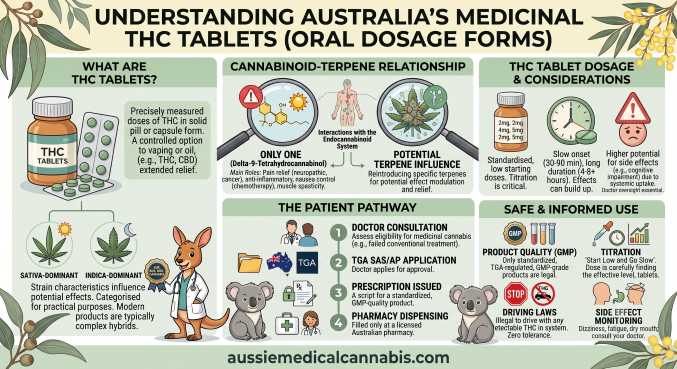
THC tablets are oral medicinal products that contain tetrahydrocannabinol (THC), the primary psychoactive cannabinoid found in the Cannabis sativa plant. Unlike inhaled cannabis, THC tablets are swallowed and absorbed through the digestive system, resulting in a different pattern of absorption and effects.
In Australia, THC-containing medicinal cannabis products are regulated within the healthcare system and may be prescribed by appropriately authorised healthcare professionals when clinically appropriate. Researchers continue to investigate THC-containing medicines for several medical conditions while evaluating their safety, effectiveness, and long-term outcomes.
This educational guide explains what THC tablets are, how they work, current areas of scientific research, possible side effects, and Australia’s regulatory framework.
What Are THC Tablets?
THC tablets are pharmaceutical oral formulations containing measured amounts of tetrahydrocannabinol (THC).
Compared with inhaled cannabis, tablets are designed to provide:
- A standardised dose
- Pharmaceutical manufacturing standards
- Oral administration
- Consistent cannabinoid content
Some regulated medicinal products may contain THC alone, while others contain THC in combination with cannabidiol (CBD).
How Do THC Tablets Work?
THC interacts primarily with CB1 receptors in the body’s endocannabinoid system (ECS).
The ECS helps regulate many important physiological functions, including:
- Pain perception
- Appetite
- Mood
- Sleep
- Memory
- Stress responses
Because THC tablets are taken orally, the cannabinoid is absorbed through the digestive tract before entering the bloodstream.
Potential Therapeutic Uses Being Studied
Researchers continue investigating THC-containing medicines for several conditions.
1. Chronic Pain
Some evidence suggests selected THC-containing medicinal products may provide modest benefit for certain people with chronic pain, particularly some forms of neuropathic pain.
2. Chemotherapy-Induced Nausea and Vomiting
THC has been studied for nausea and vomiting associated with chemotherapy, particularly when conventional anti-nausea treatments have not been sufficiently effective.
3. Multiple Sclerosis-Related Spasticity
Some cannabinoid medicines containing THC may help reduce muscle stiffness and spasms associated with multiple sclerosis.
4. Palliative Care
Researchers continue studying THC-containing medicines for selected symptoms experienced by people receiving palliative care, including:
- Pain
- Appetite changes
- Nausea
- Sleep disturbance
THC vs CBD
Although both cannabinoids come from cannabis, they have different pharmacological properties.
| Feature | THC | CBD |
|---|---|---|
| Psychoactive | Yes | Generally no |
| Produces intoxication | Yes | No |
| Main Research Areas | Pain, nausea, spasticity | Epilepsy, anxiety research, inflammation |
| Temporary Cognitive Effects | Possible | Generally uncommon |
Possible Side Effects
Like all medicines, THC-containing products may cause side effects.
Reported side effects include:
- Drowsiness
- Dizziness
- Dry mouth
- Fatigue
- Reduced concentration
- Temporary memory impairment
- Increased heart rate
- Anxiety in some individuals
Not everyone experiences these effects, and responses vary between individuals.
Medicine Interactions
THC may interact with certain prescription medicines.
Healthcare professionals consider factors such as:
- Existing medical conditions
- Current medicines
- Liver function
- Potential medicine interactions
before recommending cannabinoid therapy.
Driving and Safety
Because THC may temporarily affect attention, reaction time, judgement, and coordination, healthcare professionals advise patients to understand the applicable driving laws and safety recommendations in their state or territory.
Educational Comparison Table
| Topic | THC Tablets | CBD Tablets |
| Psychoactive | Yes | Generally no |
| Produces a “High” | Yes | No |
| Primary Research Areas | Pain, nausea, spasticity | Epilepsy, anxiety research, inflammation |
| Temporary Cognitive Impairment | Possible | Generally uncommon |
| Clinical Supervision | Recommended | Recommended |
Australian Regulation
Medicinal cannabis products containing THC are regulated in Australia through the Therapeutic Goods Administration (TGA) together with Commonwealth, state, and territory medicines legislation.
Healthcare professionals consider:
- Medical history
- Previous treatments
- Current medicines
- Available scientific evidence
- Potential benefits
- Potential risks
before determining whether a THC-containing medicinal product is clinically appropriate.
Ongoing Scientific Research
Scientists continue investigating THC-containing medicines for:
- Chronic pain
- Neurological disorders
- Cancer symptom management
- Multiple sclerosis
- Palliative care
- Appetite disorders
While evidence supports some therapeutic uses, many potential applications remain under active investigation.
Where to Learn More
Reliable educational information is available at https://aussiemedicalcannabis.com/
- Therapeutic Goods Administration – Medicinal Cannabis
- Australian Government Department of Health, Disability and Ageing – Medicinal Cannabis
- Healthdirect Australia
PubMed Reference
Frequently Asked Questions
1. What are THC tablets?
THC tablets are oral medicinal products containing tetrahydrocannabinol (THC), formulated in measured doses for therapeutic use within regulated healthcare systems.
2. What conditions have THC medicines been studied for?
Research has investigated THC-containing medicines for chronic pain, chemotherapy-induced nausea and vomiting, multiple sclerosis-related spasticity, and selected symptoms in palliative care.
3. How are THC tablets different from CBD tablets?
THC is psychoactive and may produce intoxicating effects, while CBD is generally non-intoxicating. They also have different areas of clinical research and different side-effect profiles.
4. Can THC tablets cause side effects?
Yes. Possible side effects include drowsiness, dizziness, dry mouth, fatigue, reduced concentration, and temporary cognitive impairment. Individual responses vary.
5. Are THC tablets legal in Australia?
THC-containing medicinal products are available within Australia’s regulated therapeutic framework when prescribed in accordance with applicable laws and clinical judgement.
Conclusion
THC tablets are one form of oral cannabinoid medicine that has been studied for selected therapeutic applications, including chronic pain, chemotherapy-induced nausea and vomiting, multiple sclerosis-related spasticity, and palliative care. Australia’s regulatory framework emphasises product quality, clinical oversight, and evidence-based use. As research continues, healthcare professionals rely on evolving scientific evidence to guide appropriate therapeutic decisions.
