
Cannabis Education
Legalizing Cannabis: Understanding the Australian Landscape
Aug
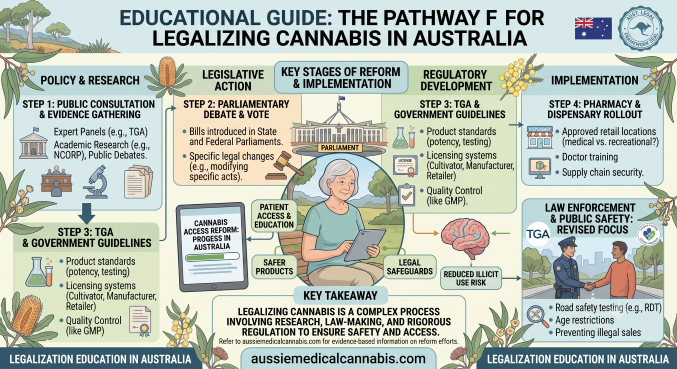
Cannabis legalization is one of the most widely discussed public policy topics in Australia. While aussie medical cannabis is available through regulated medical pathways, recreational cannabis remains illegal in most parts of the country, although laws and enforcement approaches vary between states and territories.
The discussion around legalization involves healthcare professionals, researchers, policymakers, law enforcement agencies, public health experts, and community groups. Rather than focusing on a single perspective, the debate considers potential health, social, legal, and economic impacts.
This educational guide explains what cannabis legalization means, how Australia’s laws currently operate, and the evidence being examined by researchers and governments.
What Does Cannabis Legalization Mean?
Cannabis legalization refers to creating a legal framework that allows cannabis to be possessed, produced, sold, or used under specified conditions established by law.
Legalization is different from:
- Decriminalisation, where certain offences may attract civil penalties rather than criminal charges.
- Medicinal cannabis regulation, which allows cannabis-based medicines to be prescribed under healthcare supervision.
Different countries have adopted different legal models.
Current Cannabis Laws in Australia
Australia has a mixed legal framework.
Key points include:
- Medicinal cannabis is regulated through Commonwealth legislation and state or territory laws.
- Recreational cannabis remains illegal under Commonwealth law.
- States and territories have different approaches to possession offences and diversion programs.
- The Australian Capital Territory (ACT) has specific laws allowing limited personal possession and cultivation for adults within the ACT, while Commonwealth laws continue to apply.
Understanding the distinction between medicinal and recreational cannabis is essential because they are regulated differently.
Why Is Cannabis Legalization Discussed?
Governments and researchers examine legalization from several perspectives.
Common areas of discussion include:
- Public health
- Criminal justice
- Patient access
- Road safety
- Youth protection
- Product quality
- Taxation and regulation
- Law enforcement resources
Different stakeholders may place different emphasis on these issues.
Potential Public Health Considerations
Researchers have identified both potential benefits and potential risks associated with legalization models.
Areas commonly studied include:
Product Quality
A regulated system may introduce manufacturing standards and quality controls designed to reduce contamination.
Public Education
Legal frameworks may provide opportunities for improved health education and consumer information.
Youth Protection
Many proposed legalization models include age restrictions intended to reduce youth access.
Monitoring Health Outcomes
Legal markets may improve data collection, allowing governments to monitor trends in use, hospital presentations, and public health outcomes.
Potential Challenges
Researchers also examine possible concerns.
These may include:
- Increased cannabis use in some populations
- Higher availability of high-THC products
- Road safety issues
- Mental health concerns in susceptible individuals
- Challenges associated with commercial marketing
The magnitude of these effects varies across jurisdictions and remains an area of active research.
What Does Current Research Show?
Research from countries with different cannabis policies has produced mixed findings.
Some studies suggest:
- Criminal justice outcomes may change following legalization.
- Patterns of cannabis use vary depending on the regulatory model.
- Public health outcomes differ between jurisdictions.
- Strong regulation, education, and enforcement continue to play important roles.
Because legalization models differ widely, findings from one country cannot always be applied directly to another.
Cannabis Legalization vs Medicinal Cannabis
| Feature | Medicinal Cannabis | Recreational Cannabis Legalization |
|---|---|---|
| Primary Purpose | Therapeutic use | Non-medical adult use |
| Medical Supervision | Yes | Not necessarily |
| Product Regulation | Therapeutic standards | Depends on legislation |
| Australian Status | Regulated nationally | Varies by jurisdiction |
Australian Policy Considerations
Australian governments consider numerous factors when evaluating cannabis policy, including:
- Scientific evidence
- Public health outcomes
- Community safety
- International experience
- Law enforcement priorities
- Healthcare system impacts
Changes to legislation generally require parliamentary processes and may differ between jurisdictions.
International Perspectives
Countries have adopted different approaches, including:
- Full prohibition
- Decriminalisation
- Medical-only access
- Regulated recreational markets
Researchers continue comparing these models to better understand their long-term effects.
Educational Comparison Table
| Policy Model | General Characteristics |
| Prohibition | Recreational cannabis remains illegal |
| Decriminalisation | Reduced criminal penalties for some offences |
| Medical Access | Therapeutic use under regulated healthcare pathways |
| Legalization | Legal framework established for specified non-medical use |
Ongoing Research
Researchers continue studying:
- Public health outcomes
- Mental health
- Driving safety
- Youth use
- Healthcare impacts
- Crime trends
- Economic outcomes
- Regulatory effectiveness
Evidence continues to evolve as more long-term studies become available.
Where to Learn More
Reliable educational information is available at https://aussiemedicalcannabis.com/
- Therapeutic Goods Administration – Medicinal Cannabis
- Australian Government Department of Health, Disability and Ageing
- Australian Institute of Health and Welfare – Alcohol, Tobacco and Other Drugs
PubMed Reference
Frequently Asked Questions
1. Is recreational cannabis legal throughout Australia?
No. Recreational cannabis laws differ between jurisdictions, and recreational use remains illegal in most of Australia.
2. Is medicinal cannabis the same as legalized recreational cannabis?
No. Medicinal cannabis is prescribed for therapeutic purposes within Australia’s regulated healthcare framework, while recreational legalization concerns non-medical adult use.
3. What is the difference between legalization and decriminalisation?
Legalization creates a legal regulatory framework for specified activities, whereas decriminalisation generally reduces or removes criminal penalties for certain offences without fully legalising the activity.
4. Why do governments study cannabis legalization?
Governments consider evidence relating to public health, community safety, criminal justice, economic impacts, and healthcare when evaluating cannabis policy.
5. Has Australia fully legalized cannabis?
No. Australia has regulated medicinal cannabis nationally, while recreational cannabis laws continue to differ across states and territories.
Conclusion
Aussie medical cannabis legalization remains an evolving policy issue in Australia. Current discussions focus on balancing public health, patient care, community safety, scientific evidence, and legal considerations. While medicinal cannabis operates within a regulated healthcare framework, recreational cannabis laws continue to vary between jurisdictions. As research develops and governments review evidence, cannabis policy will likely remain an important topic for public health and legal discussion.
