
Cannabis Education
Is Cannabis Addictive? Understanding Cannabis Dependence and Addiction
Aug
Cannabis is one of the most commonly used psychoactive substances worldwide. As Aussie medical cannabis research continues to expand , many people ask an important question: Is cannabis addictive?
The short answer is yes, cannabis can be addictive for some people. However, not everyone who uses cannabis develops dependence or addiction. The likelihood depends on several factors, including frequency of use, age at first use, genetics, mental health, and the amount of tetrahydrocannabinol (THC) in the product.
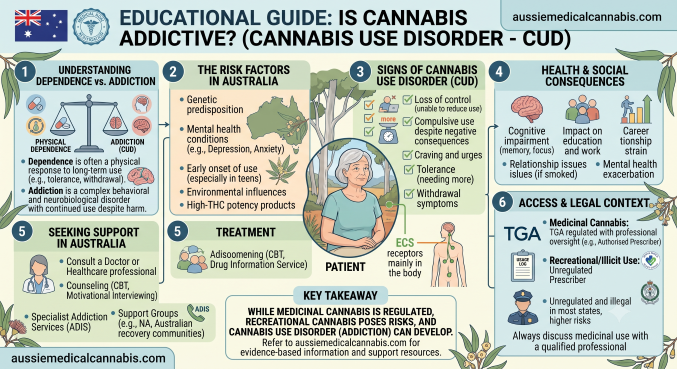
Researchers distinguish between occasional use, dependence, and Cannabis Use Disorder (CUD), a recognised medical condition characterised by continued cannabis use despite significant problems in daily life.
This educational guide explains what current scientific evidence says about cannabis addiction, who may be at greater risk, signs of dependence, and Australia’s approach to prevention and treatment.
What Does “Addictive” Mean?
Addiction is a complex medical condition in which a person continues using a substance despite experiencing harmful consequences.
Healthcare professionals often assess addiction by looking at factors such as:
- Difficulty controlling use
- Strong cravings
- Continued use despite problems
- Reduced ability to meet work, school, or family responsibilities
- Withdrawal symptoms after stopping
- Increasing tolerance over time
Not everyone who uses cannabis experiences these symptoms.
Can Cannabis Cause Dependence?
Yes.
Repeated cannabis use may lead to dependence in some individuals.
Dependence means the body and brain adapt to repeated exposure, making it more difficult to stop using the substance.
Research suggests the risk is higher among people who:
- Use cannabis frequently
- Begin using during adolescence
- Use products containing high levels of THC
- Have a personal or family history of substance use disorders
- Have certain mental health conditions
What Is Cannabis Use Disorder (CUD)?
Cannabis Use Disorder is a recognised medical diagnosis.
It exists on a spectrum ranging from mild to severe and is diagnosed based on patterns of behaviour rather than simply how often someone uses cannabis.
Examples of features include:
- Spending increasing amounts of time obtaining or using cannabis
- Strong urges or cravings
- Difficulty cutting down
- Continued use despite negative health or social effects
- Problems at work, school, or home related to cannabis use
Healthcare professionals assess these symptoms using established clinical criteria.
Can You Experience Withdrawal?
Yes.
Some people experience withdrawal symptoms after stopping regular cannabis use.
Common symptoms include:
- Irritability
- Difficulty sleeping
- Restlessness
- Anxiety
- Reduced appetite
- Mood changes
- Headaches
Withdrawal symptoms are usually temporary but can make it more difficult for some people to stop using cannabis.
What Makes Cannabis More Addictive?
Several factors may increase the likelihood of developing dependence.
Frequent Use
Daily or near-daily cannabis use is associated with a higher risk of dependence.
High-THC Products
Products containing higher concentrations of THC may increase the risk of developing problematic use in some individuals.
Age
People who begin using cannabis during adolescence appear to have a higher risk of developing Cannabis Use Disorder later in life.
Mental Health
People with anxiety, depression, or other mental health conditions may have different patterns of cannabis use and may benefit from professional assessment if concerns arise.
Is CBD Addictive?
Current evidence suggests CBD (cannabidiol) has a much lower potential for misuse than THC.
CBD is generally considered non-intoxicating and has not demonstrated the same pattern of dependence associated with THC-containing products in current research.
However, CBD products should still be used according to medical advice where prescribed.
Educational Comparison Table
| Feature | THC | CBD |
|---|---|---|
| Psychoactive | Yes | Generally no |
| Potential for Dependence | Higher | Considered much lower based on current evidence |
| Produces a “High” | Yes | No |
| Withdrawal Symptoms | Possible with repeated use | Not commonly reported |
Can Cannabis Addiction Be Treated?
Yes.
Cannabis Use Disorder is treatable.
Treatment may include:
- Counselling
- Cognitive behavioural therapy (CBT)
- Motivational interviewing
- Support groups
- Management of underlying mental health conditions
Treatment is individualised based on each person’s needs.
Prevention
Research suggests several factors may help reduce the risk of problematic cannabis use:
- Delaying initiation during adolescence
- Understanding the potential risks of frequent use
- Seeking early support if use becomes difficult to control
- Discussing concerns with a qualified healthcare professional
Australian Regulation
Medicinal cannabis is regulated in Australia through Commonwealth legislation together with state and territory requirements.
Patients prescribed medicinal cannabis should use it only as directed and discuss any concerns about dependence or side effects with their healthcare professional.
Ongoing Research
Researchers continue studying:
- Cannabis Use Disorder
- Long-term brain effects
- High-THC products
- Mental health outcomes
- Treatment approaches
- Public health interventions
Evidence continues to evolve as more high-quality clinical research becomes available.
Educational Comparison Table
| Topic | Occasional Cannabis Use | Cannabis Use Disorder |
| Frequency | Variable | Often repeated or persistent |
| Control Over Use | Usually maintained | Reduced ability to control use |
| Daily Functioning | Usually unaffected | May be impaired |
| Need for Treatment | Usually not | May benefit from professional support |
Where to Learn More
Reliable educational information is available at https://aussiemedicalcannabis.com/
- Therapeutic Goods Administration – Medicinal Cannabis
- Healthdirect Australia – Cannabis Information
- Australian Institute of Health and Welfare – Alcohol, Tobacco and Other Drugs
PubMed Reference
Frequently Asked Questions
1. Is cannabis addictive?
Yes. Cannabis can be addictive for some people, particularly with frequent use, although not everyone who uses cannabis develops dependence.
2. What is Cannabis Use Disorder?
Cannabis Use Disorder is a recognised medical condition involving persistent cannabis use despite harmful consequences or difficulty controlling use.
3. Can you experience cannabis withdrawal?
Yes. Some people experience irritability, sleep problems, anxiety, reduced appetite, and mood changes after stopping regular cannabis use.
4. Is CBD addictive?
Current evidence suggests CBD has a much lower potential for misuse than THC and is generally not associated with the same pattern of dependence.
5. Can cannabis addiction be treated?
Yes. Counselling, behavioural therapies, and support from qualified healthcare professionals can help people with Cannabis Use Disorder.
Conclusion
Cannabis has the potential to cause dependence and addiction in some individuals, particularly with frequent use, high-THC products, and early initiation during adolescence. However, many people who use cannabis do not develop Cannabis Use Disorder. Understanding the difference between occasional use, dependence, and addiction is important for making informed health decisions. Ongoing research continues to improve our understanding of cannabis-related health risks, while evidence-based treatment approaches are available for people experiencing problematic cannabis use.
