
Cannabis Education
Side Effects of CBD: What Australians Should Know
Aug
Cannabidiol (CBD) is one of the most extensively researched cannabinoids found in the Cannabis sativa plant. Unlike tetrahydrocannabinol (THC), CBD is generally considered non-intoxicating, meaning it does not typically produce the “high” associated with cannabis. Interest in CBD has increased significantly in Aussie medical cannabis as medicinal cannabis products have become available through regulated medical pathways.
Although CBD is generally well tolerated by many people, it is still an active therapeutic compound and may cause side effects or interact with certain medications. Understanding these effects is important for patients, caregivers, and healthcare professionals who are considering or using CBD-containing medicinal products.
This educational guide explains the possible side effects of CBD, current scientific evidence, safety considerations, and Australia’s regulatory framework.
What Is CBD?
CBD (cannabidiol) is a naturally occurring cannabinoid found in cannabis plants.
Researchers have identified more than 100 cannabinoids, but CBD remains one of the best studied because of its potential therapeutic applications and generally non-intoxicating properties.
CBD is found in regulated medicinal products including:
- Oils
- Capsules
- Oral liquids
- Sprays
- Other prescription formulations
Each product differs in cannabinoid composition and intended therapeutic use.
How Does CBD Work?
CBD interacts with the body’s endocannabinoid system (ECS) and several other biological pathways.
The ECS helps regulate:
- Pain perception
- Mood
- Sleep
- Appetite
- Memory
- Immune responses
- Stress regulation
- Inflammation
Unlike THC, CBD does not strongly activate CB1 receptors responsible for intoxication. Instead, it influences multiple signalling systems throughout the body.
Common Side Effects of CBD
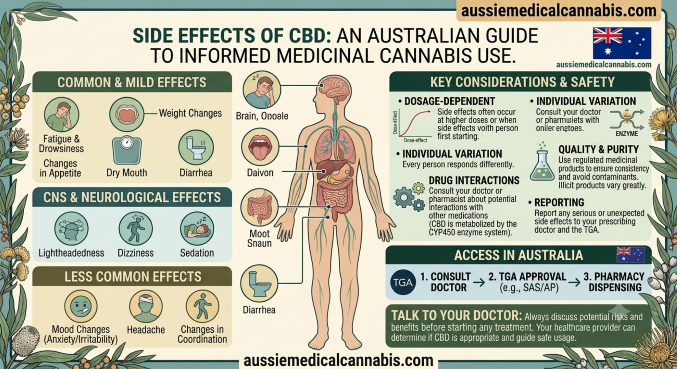
Most reported side effects are mild to moderate and may vary depending on the dose, product formulation, and the individual.
Commonly reported side effects include:
- Fatigue
- Drowsiness
- Dry mouth
- Diarrhoea
- Reduced appetite
- Dizziness
- Gastrointestinal discomfort
Many people tolerate CBD well, but not everyone experiences the same effects.
Less Common Side Effects
Less commonly reported effects include:
- Headache
- Nausea
- Changes in weight
- Irritability
- Sleep pattern changes
These effects may also be influenced by other medicines or underlying health conditions.
Can CBD Affect the Liver?
Some clinical studies have found that higher therapeutic doses of CBD may affect liver enzyme levels in certain individuals.
For this reason, healthcare professionals may monitor liver function in some patients receiving prescription CBD medicines, particularly if other medicines that affect the liver are also being used.
CBD and Medicine Interactions
CBD may interact with other prescription medicines.
Potential interactions may involve medicines used for:
- Epilepsy
- Blood thinning
- Heart conditions
- Mental health conditions
- Immune disorders
Because CBD may influence how some medicines are metabolised, patients should inform their healthcare professional about all medicines and supplements they are taking.
CBD vs THC Side Effects
Although both cannabinoids originate from the cannabis plant, their side-effect profiles differ.
| Feature | CBD | THC |
|---|---|---|
| Intoxicating | Generally no | Yes |
| May cause drowsiness | Yes | Yes |
| Cognitive impairment | Usually minimal | Possible |
| May impair coordination | Generally uncommon | More likely |
| Medicine interactions | Possible | Possible |
Who Should Use Extra Caution?
Healthcare professionals may recommend additional caution for:
- Older adults
- People with liver disease
- Pregnant or breastfeeding individuals
- People taking multiple prescription medicines
- Individuals with certain chronic medical conditions
Treatment decisions should always be based on an individual clinical assessment.
CBD and Driving
CBD itself is generally considered non-intoxicating, but driving considerations depend on the specific medicinal product and applicable Australian laws.
Some medicinal cannabis products contain THC, which may impair driving ability and may have legal implications under roadside drug testing laws. Patients should understand the legal requirements in their state or territory and follow medical advice.
Australian Regulation
CBD products are regulated in Australia through the broader medicinal cannabis framework.
Healthcare professionals consider:
- The patient’s medical condition
- Previous treatments
- Potential benefits
- Possible risks
- Current scientific evidence
before recommending or prescribing medicinal cannabis where appropriate.
Educational Comparison Table
| Topic | CBD | THC |
| Psychoactive | Generally no | Yes |
| Produces a “High” | No | Yes |
| Common Side Effects | Fatigue, diarrhoea, dry mouth | Drowsiness, dizziness, impaired coordination |
| Medical Supervision | Recommended | Required through regulated pathways |
Ongoing Research
Researchers continue investigating CBD for potential therapeutic applications in:
- Chronic pain
- Treatment-resistant epilepsy
- Anxiety disorders
- Sleep disturbances
- Inflammatory diseases
- Neurological disorders
Although evidence supports some uses, many proposed applications remain under active scientific investigation.
Where to Learn More
Reliable educational information about CBD and medicinal cannabis is available at https://aussiemedicalcannabis.com/
- Therapeutic Goods Administration – Medicinal Cannabis
- Australian Government Department of Health, Disability and Ageing – Medicinal Cannabis
- Office of Drug Control – Medicinal Cannabis
PubMed Reference
Frequently Asked Questions
1. What are the most common side effects of CBD?
Common side effects include fatigue, drowsiness, dry mouth, diarrhoea, dizziness, and reduced appetite. The likelihood and severity vary between individuals.
2. Does CBD make you feel high?
No. CBD is generally considered non-intoxicating and does not typically produce the psychoactive effects associated with THC.
3. Can CBD interact with other medicines?
Yes. CBD may affect how certain medicines are metabolised, so patients should discuss CBD use with a qualified healthcare professional.
4. Is CBD safe?
CBD is generally well tolerated in many people, but side effects and medicine interactions are possible. A healthcare professional can help determine whether it is appropriate based on an individual’s medical history.
5. Is CBD legal in Australia?
CBD products are regulated in Australia. Many therapeutic CBD products are available only through approved medical pathways.
Frequently Searched Terms
| Frequently Searched Terms |
| when will weed be legal in Australia |
| legalizing pot |
| where does wild cannabis grow |
| where does weed grow in the wild |
Conclusion
CBD has become one of the most extensively researched cannabinoids because of its potential therapeutic applications and generally non-intoxicating nature. While many people tolerate CBD well, it is not free from side effects or medicine interactions. Fatigue, dry mouth, dizziness, diarrhoea, and appetite changes are among the most commonly reported effects, and some patients may require additional monitoring depending on their health conditions and other medicines. Australians seeking reliable information about CBD should rely on trusted health authorities, peer-reviewed scientific research, and guidance from qualified healthcare professionals.
