
Cannabis Education
Medical Benefits of Medicinal Cannabis: An Evidence-Based Guide for Australians
Aug
Aussie medical cannabis has become an important area of clinical research and healthcare in Australia. Rather than being a single medicine, medicinal cannabis refers to regulated therapeutic products containing cannabinoids such as cannabidiol (CBD) and tetrahydrocannabinol (THC). These products are prescribed for selected patients when a qualified healthcare professional determines they may be clinically appropriate.
Research into medicinal cannabis has expanded considerably over the past decade. While evidence supports its use for some conditions, research continues for many others. Understanding both the potential benefits and the current limitations of the evidence is essential for patients, carers, and healthcare professionals.
This guide explores the medical benefits of medicinal cannabis, how cannabinoids work, what the scientific evidence shows, and how medicinal cannabis is regulated in Australia.
What Is Medicinal Cannabis?
Medicinal cannabis refers to therapeutic products derived from cannabis or containing cannabinoids that are used under medical supervision.
Common cannabinoids found in medicinal cannabis products include:
- CBD (Cannabidiol) – generally considered non-intoxicating.
- THC (Tetrahydrocannabinol) – the primary psychoactive cannabinoid.
- Other cannabinoids that continue to be investigated for potential therapeutic roles.
Different medicinal cannabis products contain different cannabinoid profiles depending on their intended therapeutic purpose.
How Cannabinoids Work
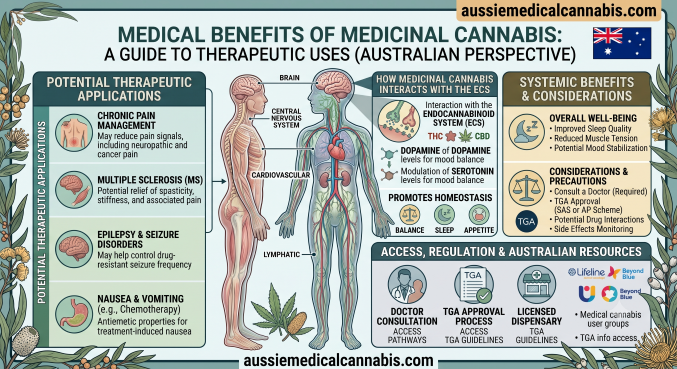
Cannabinoids interact with the body’s endocannabinoid system (ECS).
The ECS contributes to regulating numerous body functions, including:
- Pain perception
- Mood
- Sleep
- Appetite
- Memory
- Immune responses
- Inflammation
Researchers believe cannabinoids influence these systems in different ways, which explains why they continue to be studied across a range of medical conditions.
Potential Medical Benefits of Medicinal Cannabis
1. Chronic Pain
Chronic pain is one of the most extensively researched applications of medicinal cannabis.
Some evidence suggests certain medicinal cannabis products may help selected patients experiencing:
- Neuropathic pain
- Multiple sclerosis-related pain
- Cancer-related pain
- Persistent musculoskeletal pain
Medicinal cannabis is generally considered when other treatment options have not provided adequate symptom control.
2. Treatment-Resistant Epilepsy
One of the strongest areas of evidence relates to certain rare forms of treatment-resistant epilepsy.
Prescription CBD medicines have demonstrated benefits in reducing seizure frequency for some patients under specialist medical supervision.
3. Chemotherapy-Induced Nausea and Vomiting
THC-containing medicinal cannabis products have been investigated for helping manage nausea and vomiting associated with chemotherapy, particularly when standard antiemetic medicines are insufficient.
4. Multiple Sclerosis-Related Spasticity
Some cannabinoid medicines may help reduce:
- Muscle stiffness
- Muscle spasms
- Pain associated with spasticity
Research continues to improve understanding of which patients may benefit most.
5. Palliative Care
Medicinal cannabis has been studied as part of supportive care for people receiving palliative treatment.
Research has explored its potential role in managing symptoms such as:
- Pain
- Nausea
- Reduced appetite
- Sleep disturbance
6. Anxiety
CBD has attracted growing research interest for anxiety disorders.
Early studies suggest CBD may help reduce anxiety symptoms in some individuals, although larger, high-quality clinical trials are still needed.
7. Sleep Disturbance
Some patients prescribed medicinal cannabis report improvements in sleep quality.
Researchers continue investigating whether these benefits result directly from cannabinoids or indirectly through improved management of pain or anxiety.
Medical Use of Cannabinoids
Cannabinoids are being investigated in several areas of medicine.
Examples include:
- Chronic pain management
- Neurological disorders
- Palliative care
- Epilepsy
- Multiple sclerosis
- Chemotherapy-related symptoms
The suitability of cannabinoid therapy depends on the individual’s medical condition, overall health, and current scientific evidence.
Medicinal THC Explained
THC is the primary psychoactive cannabinoid found in cannabis.
Within regulated medicinal cannabis products, THC has been researched for:
- Chronic pain
- Chemotherapy-induced nausea
- Appetite stimulation
- Muscle spasticity
Because THC may impair coordination and judgment, products containing THC require careful medical supervision.
Educational Comparison Table
| Medical Condition | Evidence for Selected Medicinal Cannabis Products | Current Research Status |
|---|---|---|
| Chronic Pain | Moderate evidence for some patients | Ongoing |
| Treatment-Resistant Epilepsy | Strong evidence for selected CBD medicines | Well established for specific syndromes |
| Chemotherapy-Induced Nausea | Evidence for selected THC-containing medicines | Established for selected patients |
| Multiple Sclerosis Spasticity | Moderate evidence | Continuing |
| Anxiety Disorders | Early promising evidence | More clinical trials needed |
| Sleep Disturbance | Mixed evidence | Continuing research |
Possible Side Effects
Like all medicines, medicinal cannabis may cause side effects.
These may include:
- Drowsiness
- Dry mouth
- Dizziness
- Fatigue
- Changes in appetite
- Gastrointestinal discomfort
Products containing THC may also impair reaction time and affect driving ability.
Australian Regulation
Medicinal cannabis is legal in Australia through regulated prescribing pathways.
Healthcare professionals assess:
- The patient’s condition
- Previous treatments
- Potential benefits
- Possible risks
- Available clinical evidence
before determining whether medicinal cannabis may be appropriate.
Ongoing Scientific Research
Researchers continue investigating medicinal cannabis for potential roles in:
- Parkinson’s disease
- Neurodegenerative disorders
- Inflammatory diseases
- Autoimmune conditions
- Cancer symptom management
- Palliative medicine
Many proposed applications remain under active investigation.
Where to Learn More
You can read reliable educational resources at https://aussiemedicalcannabis.com/
- Therapeutic Goods Administration – Medicinal Cannabis
- Australian Government Department of Health, Disability and Ageing – Medicinal Cannabis
- Office of Drug Control – Medicinal Cannabis
PubMed Reference
Frequently Asked Questions
1. What are the main medical benefits of medicinal cannabis?
Current evidence supports selected medicinal cannabis products for some patients with treatment-resistant epilepsy, chronic pain, chemotherapy-induced nausea and vomiting, and multiple sclerosis-related spasticity. Research is ongoing for many other conditions.
2. What are cannabinoids used for in medicine?
Cannabinoids are being studied for their potential roles in pain management, epilepsy, neurological disorders, palliative care, and other medical conditions where conventional treatments may not provide sufficient symptom relief.
3. What is medicinal THC?
Medicinal THC is tetrahydrocannabinol used in regulated therapeutic products prescribed under medical supervision for selected clinical indications.
4. Is medicinal cannabis legal in Australia?
Yes. Medicinal cannabis is available through regulated prescribing pathways in Australia when considered clinically appropriate.
5. Does medicinal cannabis cure diseases?
Current evidence supports symptom management for certain conditions, but medicinal cannabis is not considered a cure for diseases. Its effectiveness varies depending on the condition, product, and individual.
Frequently Searched Terms
| Frequently Searched Terms |
| medicinal weed QLD |
| medicinal THC |
| medical use of cannabinoids |
Conclusion
Medicinal cannabis continues to play an expanding role in modern healthcare, supported by growing scientific research and Australia’s regulated prescribing framework. Evidence is strongest for selected conditions, including treatment-resistant epilepsy, chemotherapy-induced nausea and vomiting, chronic pain in some patients, and multiple sclerosis-related spasticity. As research evolves, healthcare professionals remain central to determining whether medicinal cannabis is an appropriate treatment option based on the best available evidence and each patient’s individual circumstances.
